
Bald Eagle Biology
Bald Eagle Breeding timing (phenology) in Maryland
The Bald Eagle nesting season in Maryland starts in October, with pair formation and construction of large stick nests in the upper crotch of tall trees. Eggs are usually laid in February, but pairs in southern parts of Maryland occasionally start laying their eggs in January. The clutch of 1-3 eggs usually hatch by mid April, and the nestlings fledge out of their nest in May-June.
Breeding Distribution of the Bald Eagle
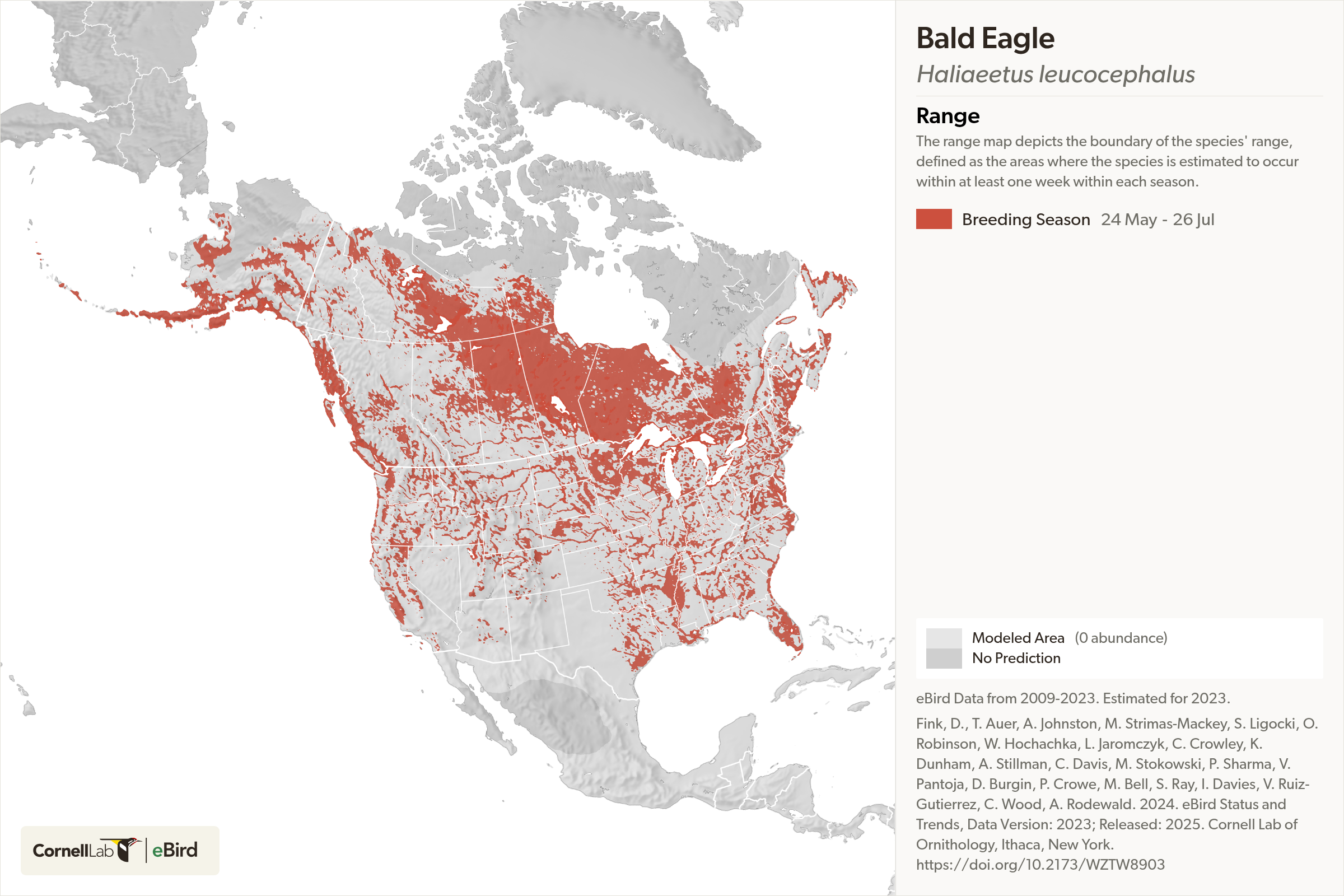
Breeding distribution of the Bald Eagle. Source: Cornell Lab of Ornithology eBird Status and Trends.
Bald Eagle Behavior during MONITORING TIME PERIODS
The following is a summary chronology and description of Bald Eagle behavior that indicates breeding during the monitoring time periods for recording nest visits in Maryland.
1. Nov-December: Courting and Nest Maintenance
Adults investigate a nest, fix damaged areas sporadically, and may start to defend territory against intruders. You may also observe courtship behavior, such as the cartwheel display.
January-February: Nest Building/Maintenance
Copulation occurs and nest maintenance becomes more regular. Adults actively defend the territory from other eagles. They may or may not roost (spend the night) next to the nest. Most of their day is away from the nest, foraging, but they will regularly come back to the nest.
2. February-March: Egg-laying and Incubation
Most egg-laying happens somewhere in mid- to late February. Incubation begins immediately after the first egg is laid; incubating adults will sit on the nest almost continuously, so the continual presence of an adult on the nest is a good indication the female has laid eggs. Incubation will take an average of 35 days until the chicks hatch.
Mid-March-April: Hatching and Rearing Young
At first it may be difficult to determine when a nest status changes from eggs to young chicks, since the female spends a lot of time brooding small chicks and the behavior is similar to incubation. However, if you stay a while you will observe the male deliver food to the nest, and the female stand, tear off small pieces, and lean downward to feed it to the eaglets.
April-June: Rearing Young (continued)
As the eaglets grow you should be able to see their heads poke out of the nest rim, especially by about 4-5 weeks of age.
3. June-July: Fledging
Fledging (first flight out of the nest) can happen anywhere between 11-14 weeks after chicks hatch, and more typically around 11-12 weeks. As the young birds grow, they build flight muscles by flapping across the nest and even up onto limbs immediately adjacent to the nest. These behaviors become more frequent and more adventuresome as the young approach fledging. Fledglings may continue to rely on their parents for food 4-6 weeks after fledging.
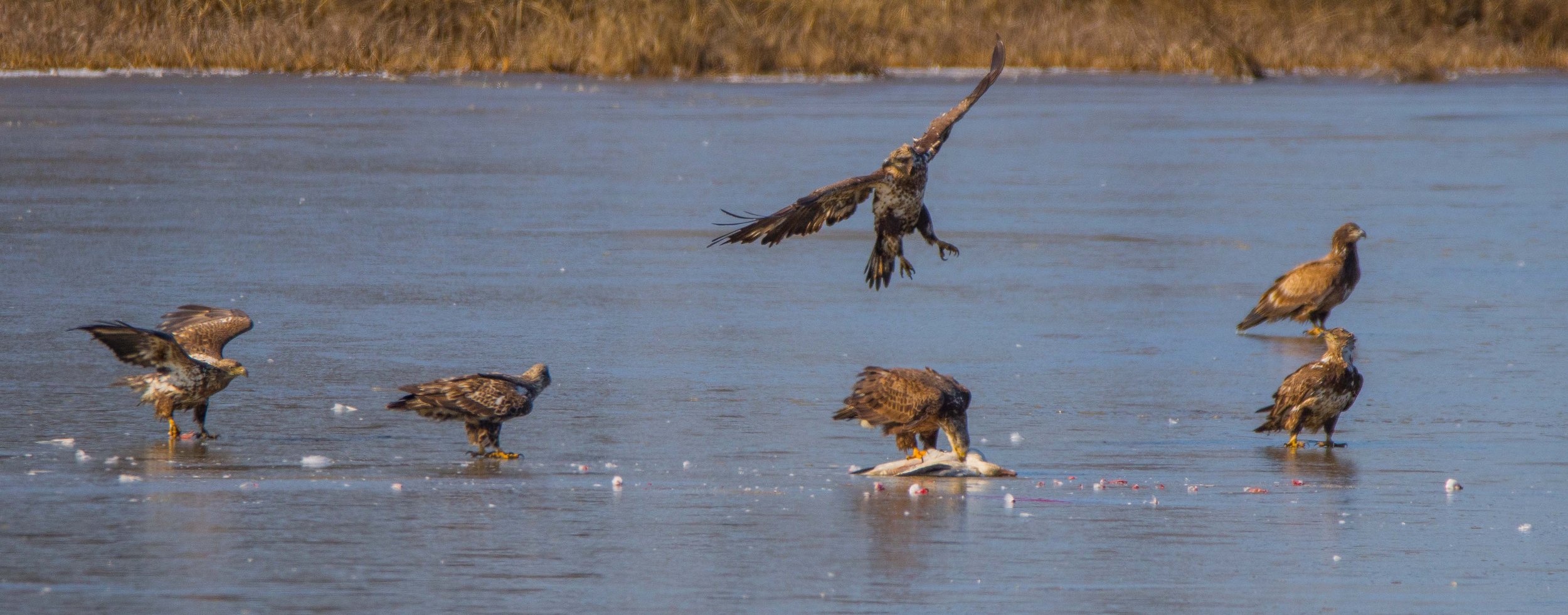
Banner photo of juvenile Bald Eagles consuming a Snow Goose by Barbara J. Saffir.