Volunteer Resources
Volunteer Requirements
Good community science depends upon dedicated, trained individuals making careful observations of eagle nests and the behavior of the adult Bald Eagles near the nest. The following volunteer requirements are fundamental to the success of this program.
1. Follow Protocols
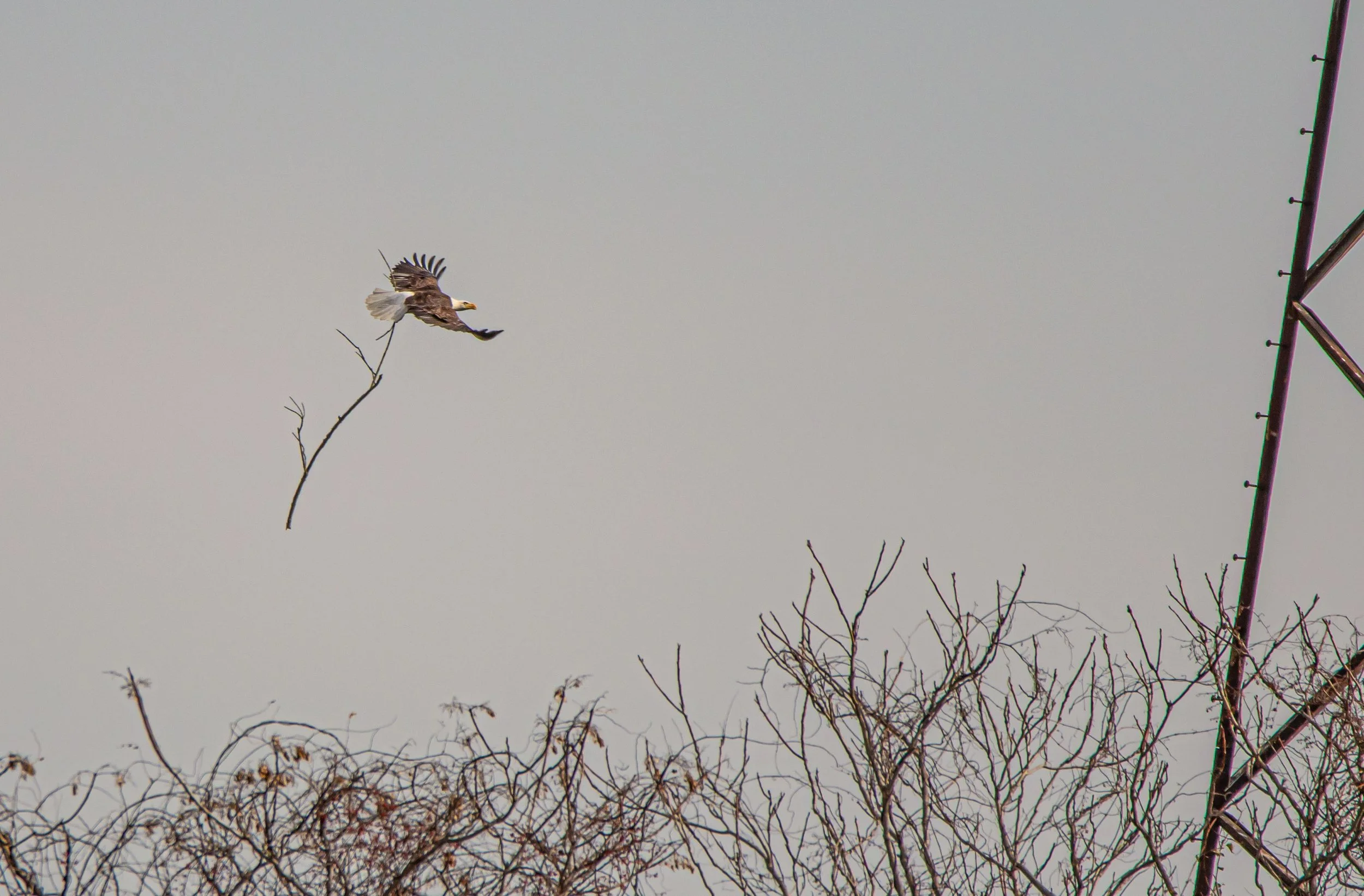
Bald Eagle carrying a stick to the nest. Photo by Barbara J. Saffir
To ensure that the data collected about Bald Eagle nests is useful for evaluating the status of the breeding population in Maryland, nest monitors must all follow the same protocol. As a monitor, you need to be able to
Identify and roughly age Bald Eagles
Recognize breeding behaviors
Observe the nest without disturbance
Collect accurate data to the best of your ability
Submit data in the required format to our organization.
This website provides training resources to make sure volunteers are able to perform these activities. A key protocol is to use the online application NestStory to record your observations. Training on how to use Nest Story and other program protocols is provided at the bottom of this web page.
2. Time Commitment
Before beginning to monitor nests, volunteers must invest some time in training. This will ensure that all monitors are collecting observations that will be comparable to those of other observers.
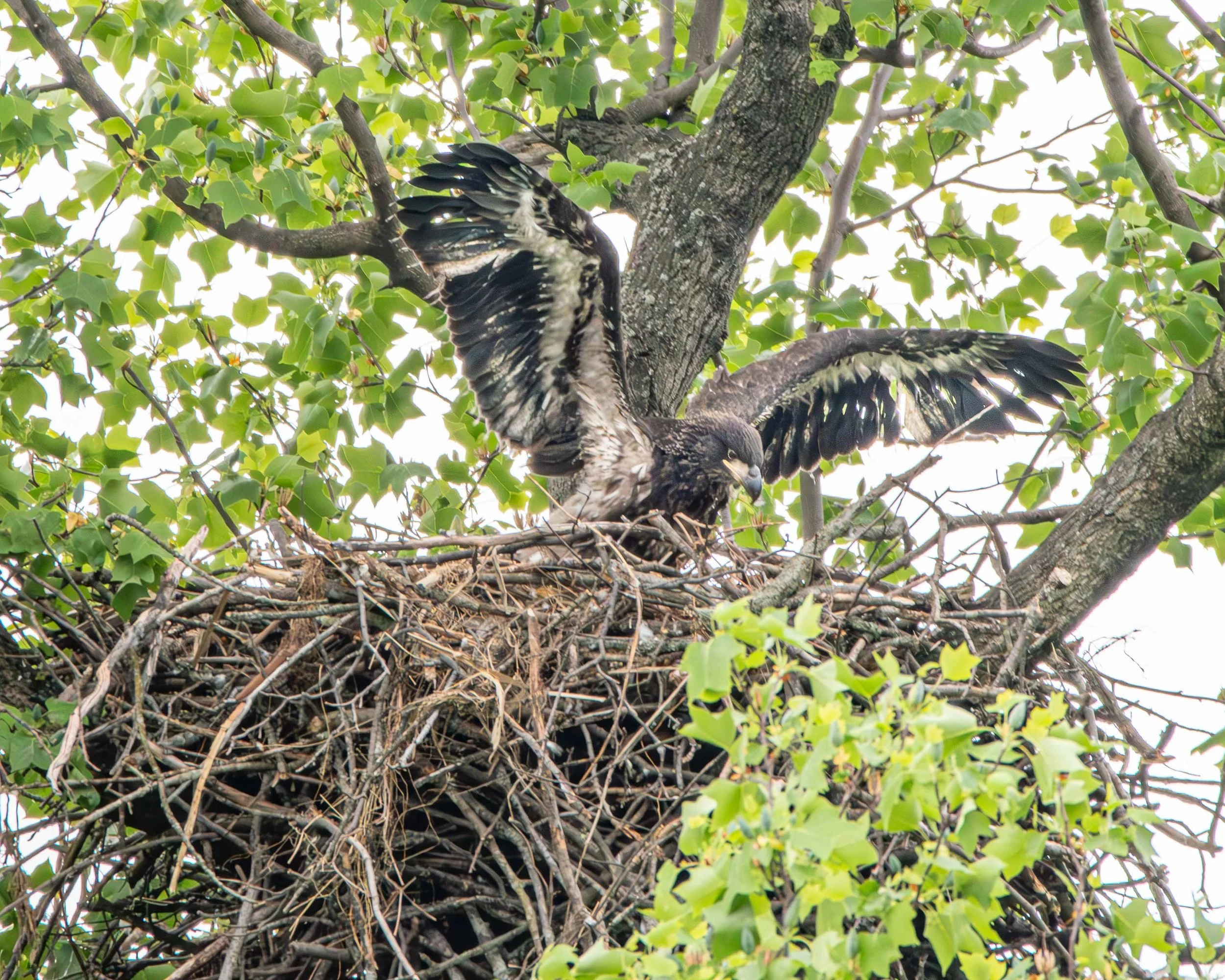
Juvenile Bald Eagle in nest. Photo by Barbara J. Saffir
Time spent monitoring is not significant, but volunteers need to commit to making nest observations three times during the nesting season:
January-March to record adult and nest activity
April to count chicks in nest
June-July to count fledged young
Finally, with each nest observation, monitors will need to spend some time entering data into NestStory.
3. Equipment Needed
Volunteers typically observe nests using binoculars and/or a spotting scope. Volunteers must also provide accurate geographic coordinates (latitude and longitude) of a nest site by using a smart phone or other GPS device, or using an online map such as Google maps.
4. Additional Requirements
Volunteers must provide personal contact information so that MBCP can communicate about the project (we do not share your information with anyone).
Important! Great care must be taken to respect private property and to not disturb the nesting eagles, especially during the sensitive egg laying and incubation period.
Questions?
If you have any questions about these requirements, do not hesitate to contact our Volunteer Coordinator at eagles@marylandbirds.org.
Register as a Nest monitor and select nest
The first step to becoming a Bald Eagle Nest Monitor with the Maryland Bird Conservation Partnership is to register on the NestStory registration page.
When you register, you’ll be creating your personal NestStory account with a username and password. You will also select the nest you want to monitor from a map. If you don’t see the nest on the map, that means either another volunteer is already monitoring it, or the nest hasn’t been entered into the NestStory database yet. To enter a new nest, return to the main page and follow the instructions for checking the map and reporting a new nest.
Once registered in NestStory, review the NestStory video tutorials and Nest Monitoring Training Workshop video in the Nest Monitor Training Program section of this web page.
Nest Monitor Training Program
Bald Eagle Nest Monitors will learn a great deal about Bald Eagles through their observations. Investing a modest amount of time in training upfront will make the process easier and more fulfilling for the volunteer, and will ensure that volunteers are able to fulfill their program responsibilities accurately and thoroughly. Next to each skill or task required of nest monitors is the associated training resource:
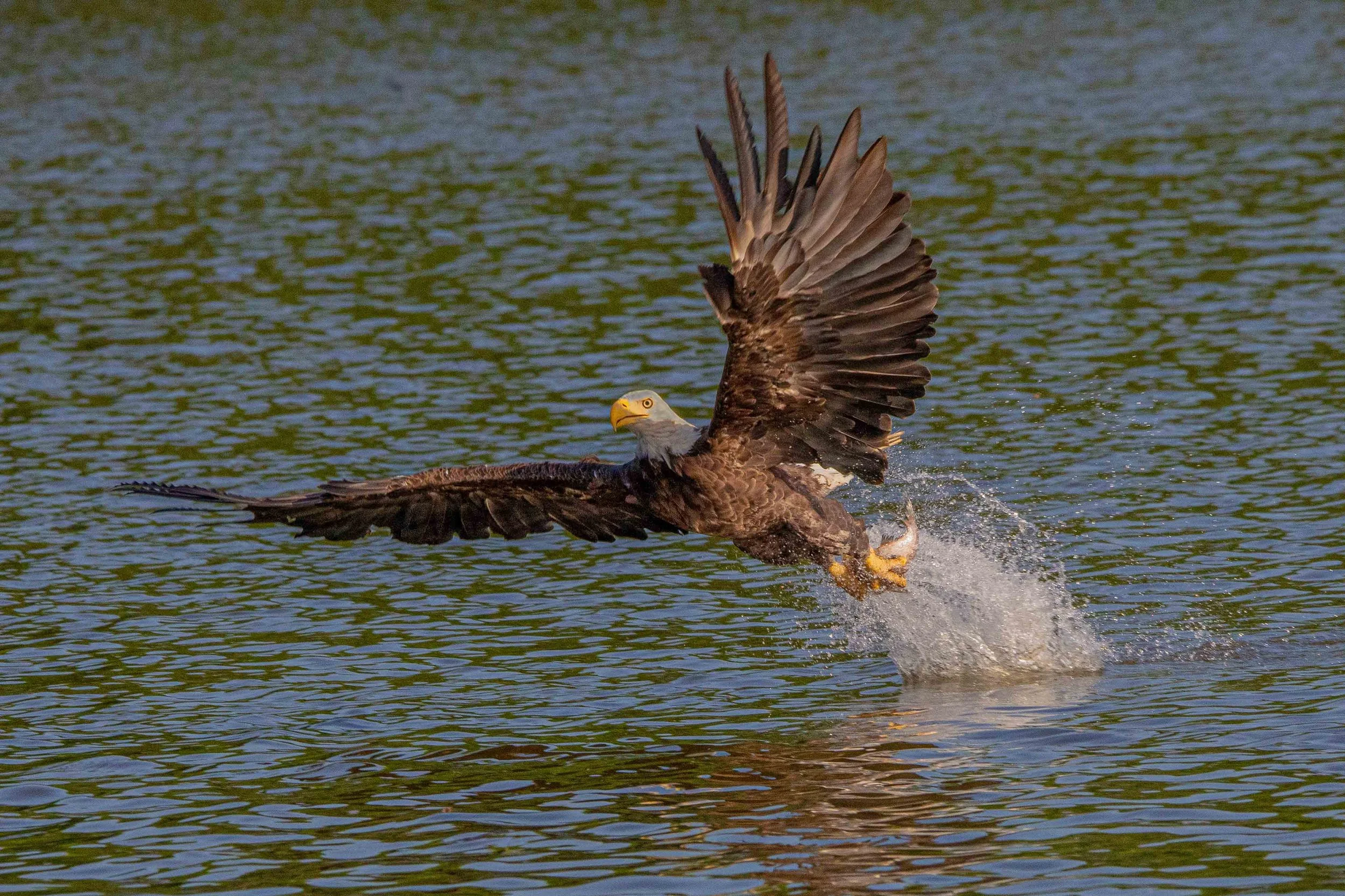
Bald Eagle fishing. Photo by Barbara J. Saffir
Identify and roughly age Bald Eagles: Use the Bald Eagle ID web page to determine the age of bald eagles.
Recognize breeding behaviors: Read the Bald Eagle Biology web page and become familiar with expected bald eagle behavior during the three monitoring time periods.
Observe the nest without disturbance: Read “Guidance for Observing Bald Eagles” below
Collect accurate data to the best of your ability: Watch the Nest Monitor Training Workshop video
Submit data in the required format to our organization: Watch the NestStory training videos
Guidance for Observing Bald Eagles
The United States Fish and Wildlife Service recommends that active nest sites not be approached from closer than 100 meters (330 feet). You should do your best to have some sort of screen or blind between you and the nest, as research shows that eagles are more likely to be bothered by an activity when it happens in full view. Of course, as an observer you need a clear view of the nest to gather accurate data about eagle activity, so you’ll need to work out a balance between seeing the nest and staying out of sight. Sometimes a road will offer an ideal vantage point for viewing a nest. In general, if human activity (including road traffic) was present prior to a pair moving in to a site, they will be tolerant of that activity. In general, birds seem to be bothered less by people in a car than people outside of one, and so cars make excellent bird blinds.
Nest Monitor Training Workshop
This webinar, recorded by the Natural History Society of Maryland on December 5, 2020, is an essential part of the training program. However, since the webinar was recorded, the registration process and website have changed. Please ignore the registration instructions in this video (about 10 minutes of the video beginning at 48 minutes) and follow the instructions on the website. MBCP Board Member and former Executive Director Chris Eberly gave the presentation.
NestStory Training
For an overview of how NestStory works, start here.
Use the Quick Reference Guide to help with the process of recording data in NestStory.
Watch these short video training tutorials to learn how to use NestStory:

NestStory Quick Start

NestStory Overview

Using NestStory in the Field

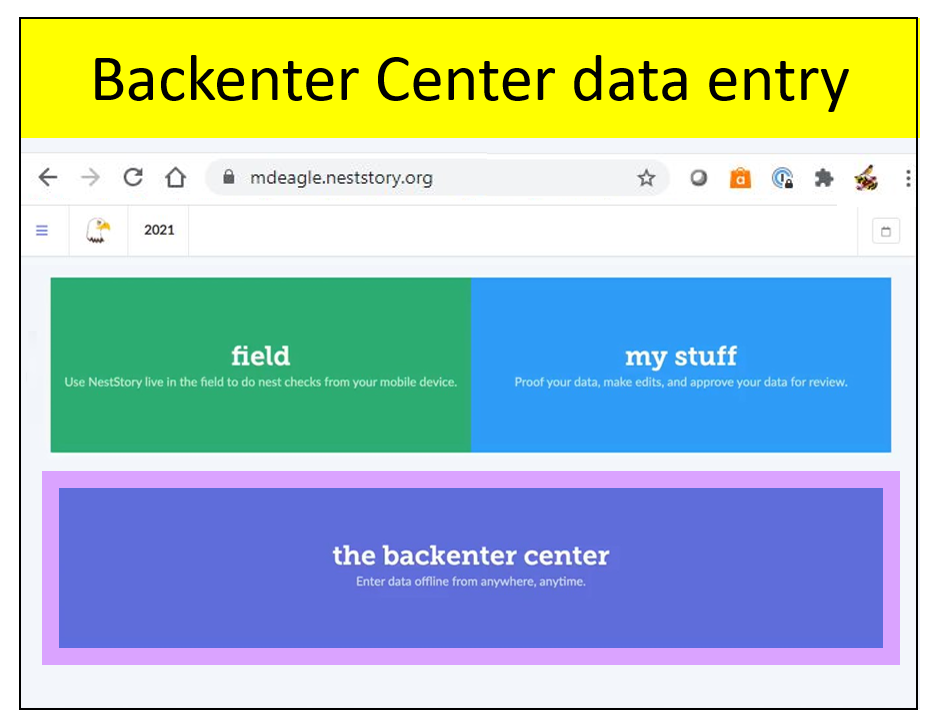
Backenter Center: Enter Data Anytime
Forms and Other Resources
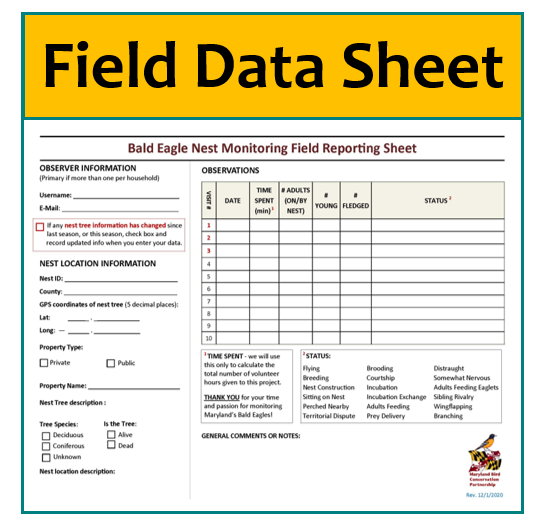
Download and print out the Field Data Sheet and the Vehicle placard.

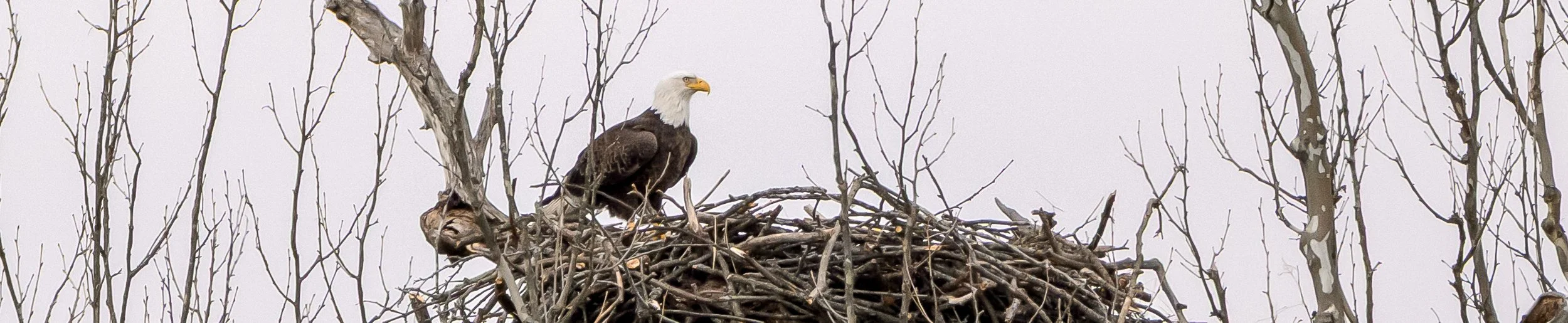
Banner photo of Bald Eagle in nest on an island in the Potomac River in Maryland by Dick Creps.