Bird-loving Neighbors Help Each Other Create Native Plant Gardens
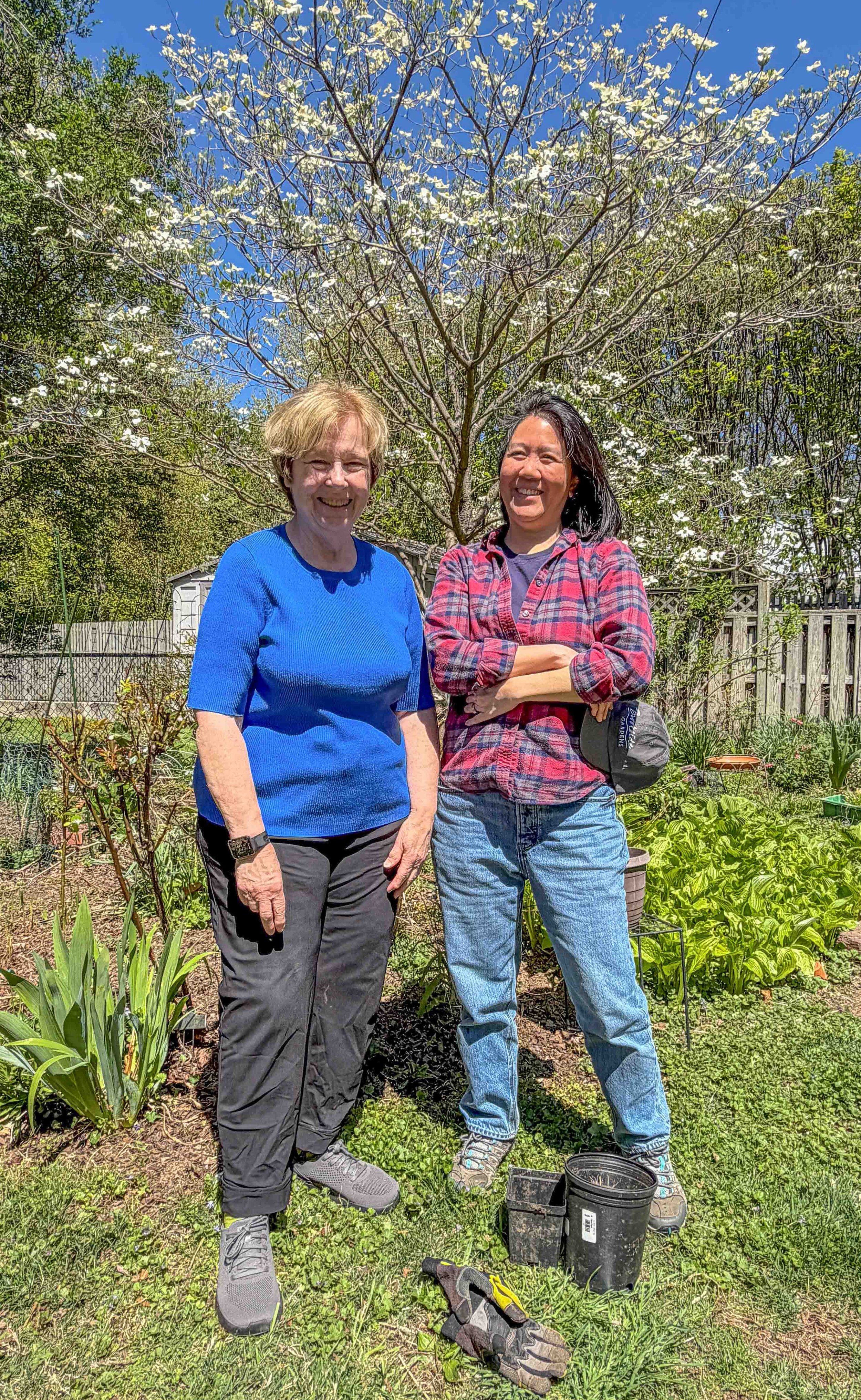
Karen Cyr (left) and Emily Huang (right): friends, neighbors, gardeners, Montgomery Bird Club officials, and County co-coordinators of the Maryland & DC Breeding Bird Atlas 3. Photo by Margaret Poethig
Tucked between a stretch of Rock Creek Park and Rockville Pike, a major thoroughfare in Kensington, Maryland, live Emily Huang and Karen Cyr—birders, neighbors, and native gardeners. On a recent beautiful spring day, I visited to find out how the two friends helped each other create their native gardens. We also talked about the declining breeding habitat in Maryland for three bird species—Eastern Towhee, Northern Flicker, and Baltimore Oriole—one topic of Maryland Bird Conservation Partnership’s upcoming Spring webinar.
What Is a Garden for Birds?
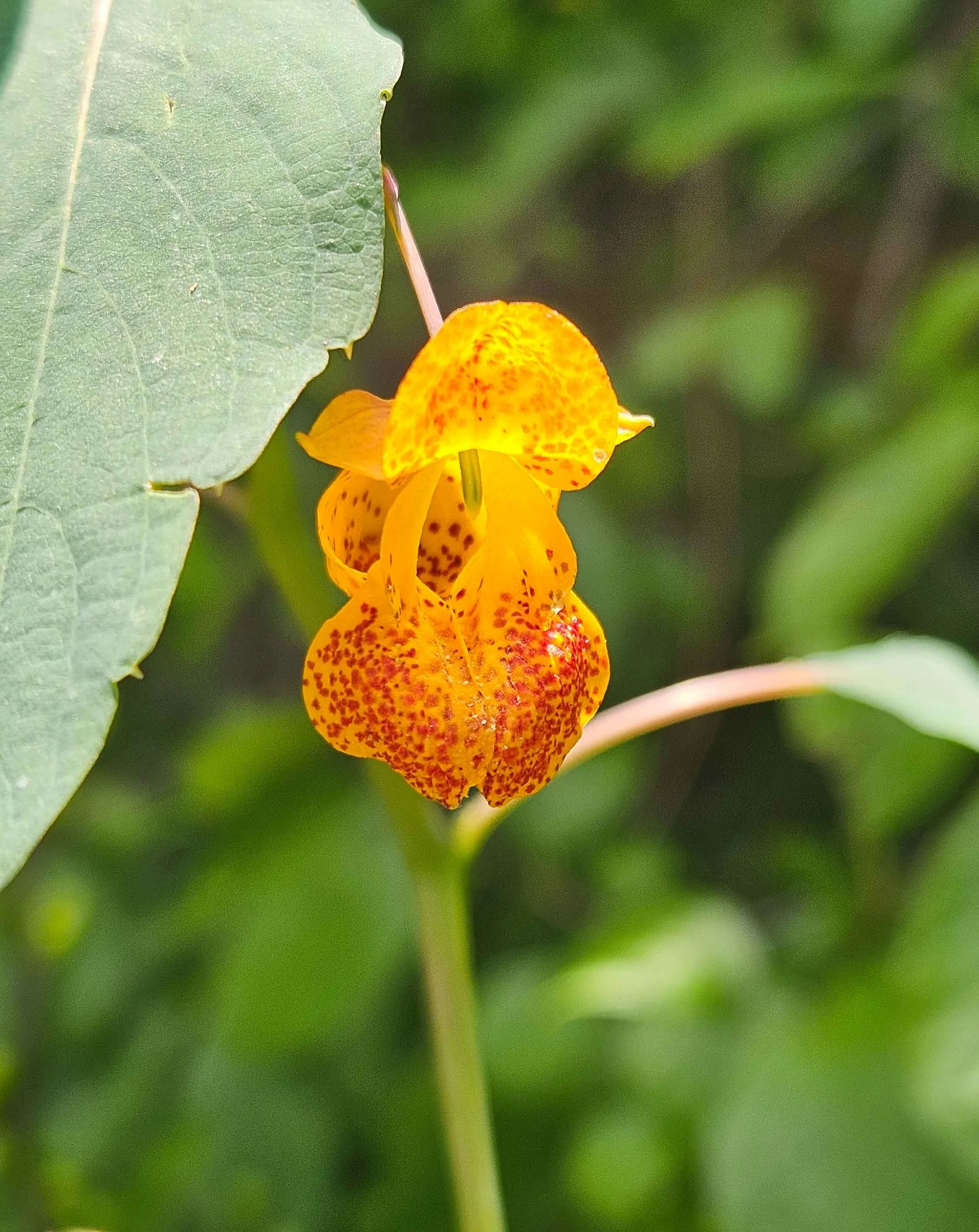
Jewelweed is a recent additions to Emily’s garden and the hummingbirds love it. Photo by Emily Huang
Native plants support the insects that birds need to feed their young, and the seeds and fruit that help fatten them up for migration.
“When I started, I was looking to feed the birds—flowers for hummingbirds, seeds for the goldfinches, and berries for the catbirds, for instance,” said Emily, President of the Montgomery Bird Club (2024-2026). By her own admission, she planted “haphazardly, without plan or skill, just filling in space from the fenceline outward.”
Emily didn’t expect anything to do well in her yard, and yet five years later she is the proud caretaker of a wide garden bed thick with flowering herbaceous plants that supports both insects and birds.
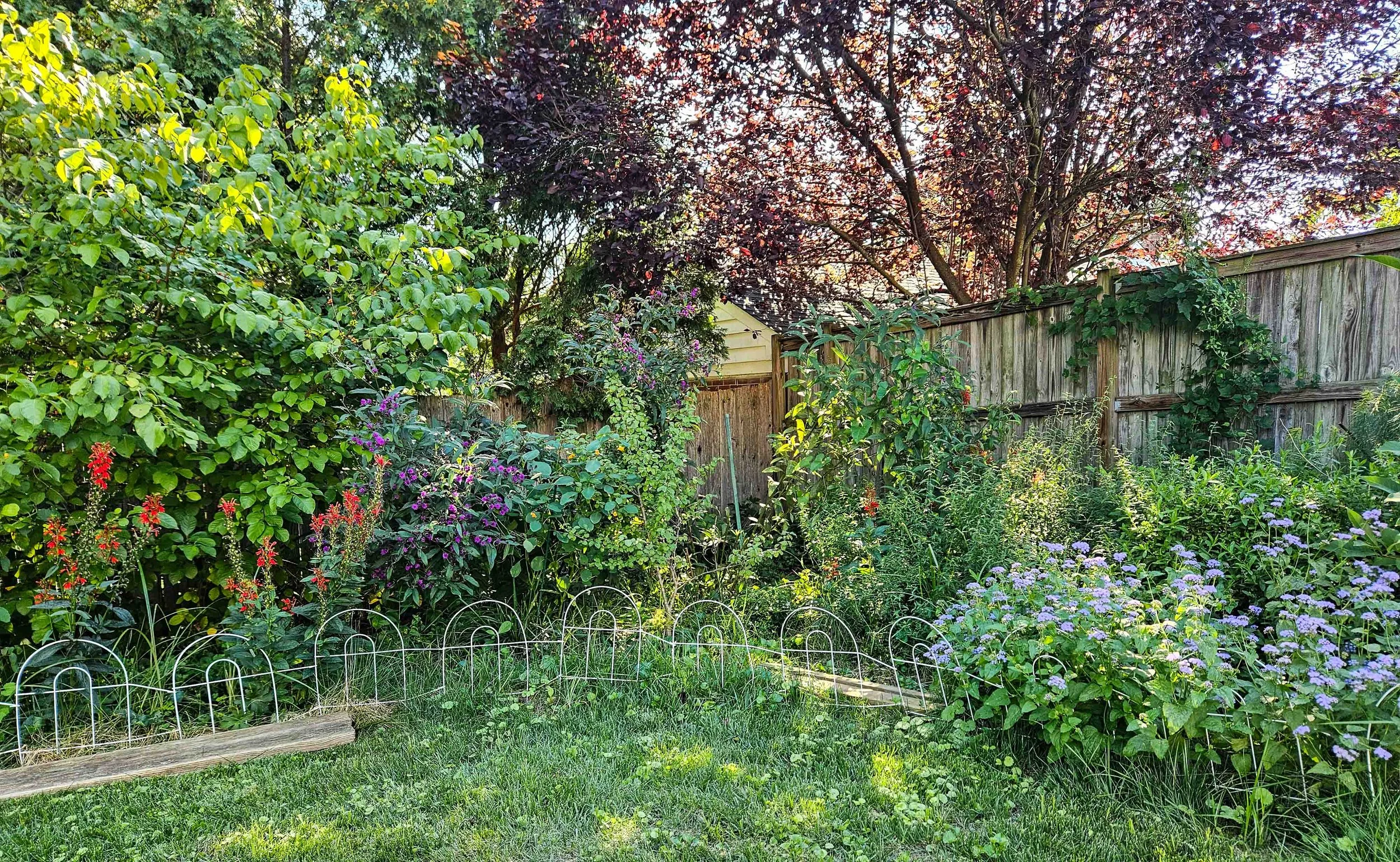
Emily’s flowering native plant beds showing flowers in colorful bloom (from left to right): red cardinal flower, purple New York ironweed, orange jewelweed, and lavendar mist flower. The tall shrubs on the left are spicebushes. Photo by Emily Huang
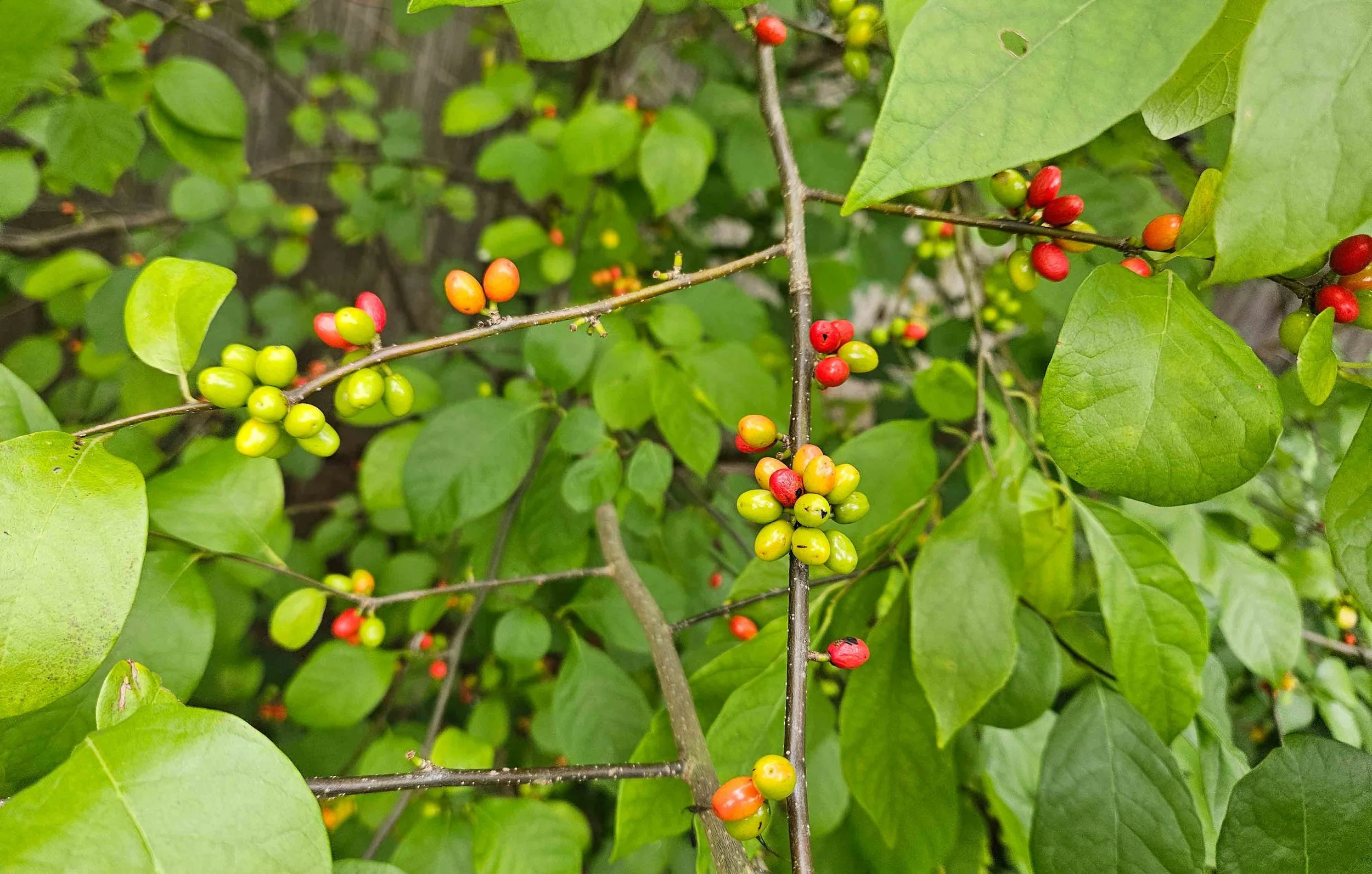
Spicebush berries that birds love by Emily Huang
Transporting Native Plants Across the Street
Emily’s and Karen’s story is familiar to many native gardeners—sharing plants with other gardeners who are just starting out or who want to replace their non-native plants with natives.
“A Garden Story” by Emily Huang. Video by Margaret Poethig
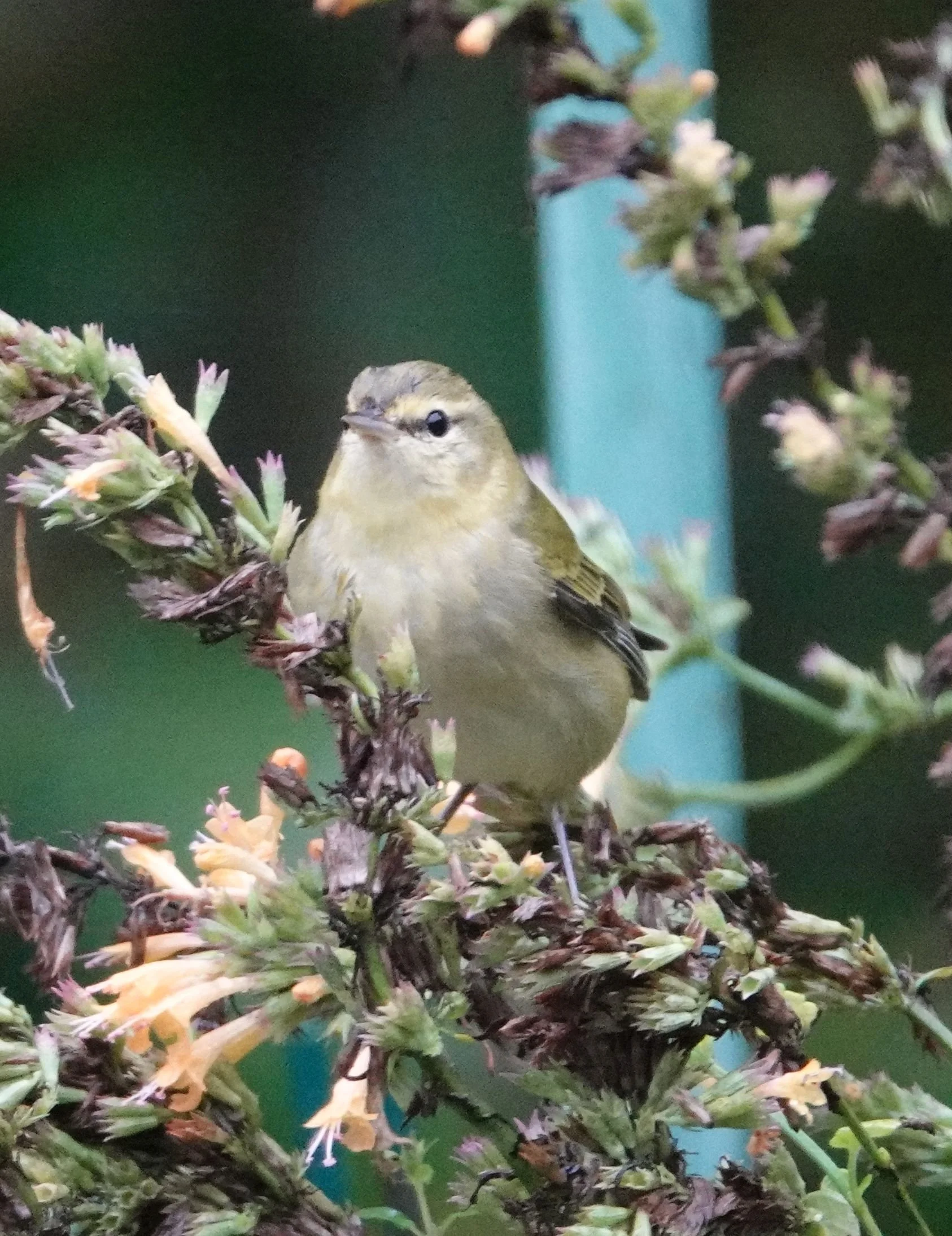
A Tennessee Warbler visits an Agastache native flowering plant. Photo by Karen Cyr.
“When I wanted to start a garden for birds, I turned to my neighbor Karen.” This is how Emily begins her story, captured in this short video on YouTube. Many of the flowers in her backyard were transplanted from Karen’s thriving native garden.
Emily and Karen soon discovered that though their houses are only 50 yards apart, the growing conditions in their yards seemed to be quite different—they face different directions and different conditions. Some of the plants that don’t do well in Karen’s yard took off in Emily’s yard, and vice versa. Having a garden like this requires being open to the fact that the gardener is not always in charge.
“I’ve had to learn to accept that certain plants thrive in my yard and certain plants do not thrive and to just really foster the ones that thrive, because they’re the ones that are true natives to my backyard,” explained Emily.
It’s not just gardeners who move plants to better growing conditions. “It’s also the plants themselves,” added Karen, an experienced native plant gardener and a State Director of the Montgomery Bird Club. “Virginia Bluebells have moved 10 feet from where I planted them, and other plants have done that as well. They are seeking out whatever environment is most favorable to them.”
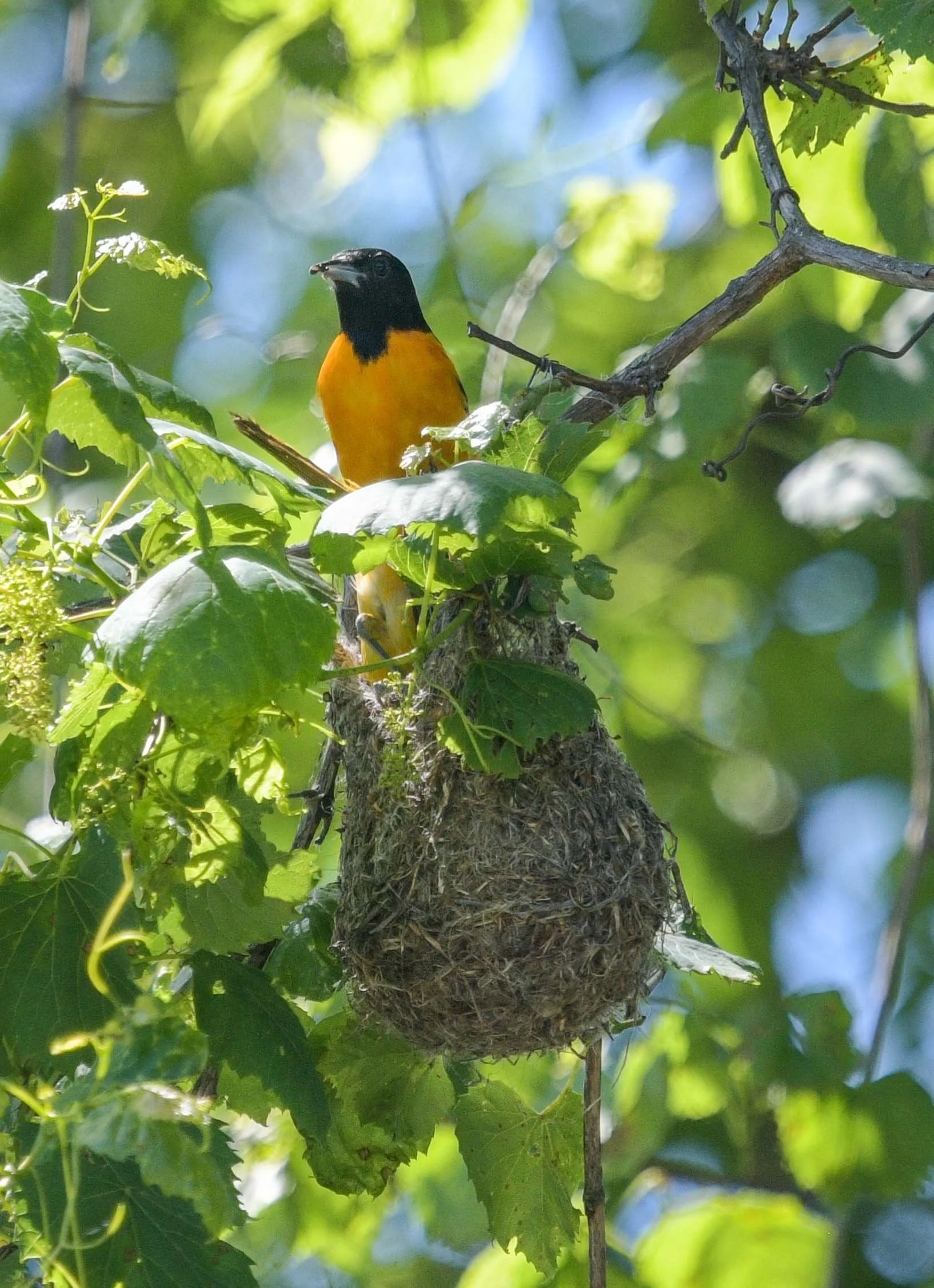
Pair of Baltimore Orioles feeding young in nest by Margaret Poethig
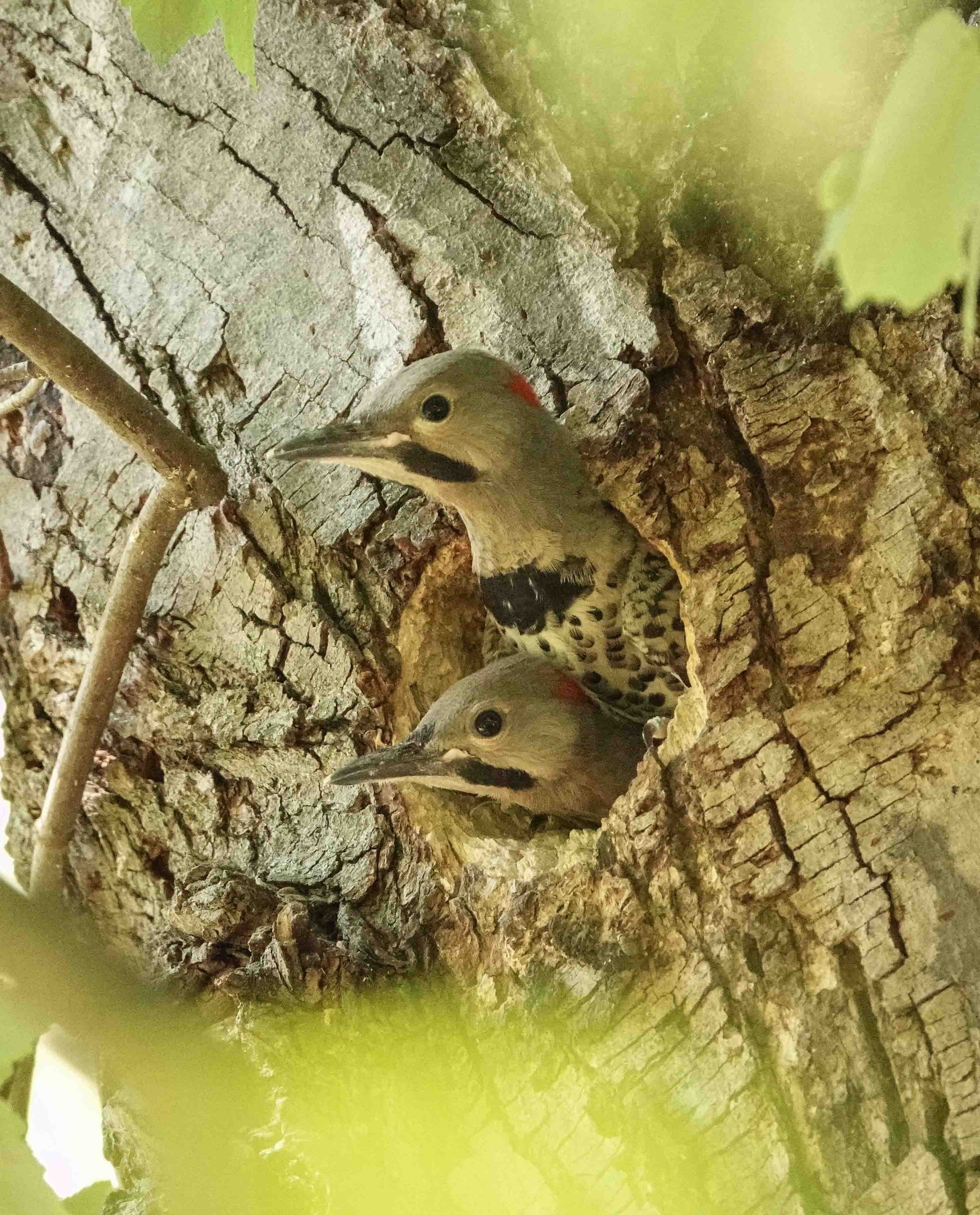
Northern Flicker nestlings soon to fledge from a street tree by Karen Cyr
What Orioles, Towhees, and Flickers Need
Birds do this too, of course. Baltimore Orioles breed in the stream valley parks that are common in Montgomery County; Rock Creek Park is one of several. Fortunately for these and other bird species, the community has favored conserving these spaces as county parkland.
“It has created corridors for birds like Orioles to nest and survive,” Karen said.
“I think they like trees that overhang over a creek or a lake–a bit of water, a tall tree,” Emily added.
“A Garden Story” by Karen Cyr. Video by Margaret Poethig
Emily and Karen know where to find breeding Baltimore Orioles. They were Montgomery County co-coordinators for the Maryland & DC Breeding Bird Atlas 3 from 2020-2024. BBA3 was a comprehensive five-year survey of the birds breeding in Maryland and the District of Columbia. So far, the data have shown that breeding distributions of beloved “backyard birds”—such as Eastern Towhee, Northern Flicker, and Baltimore Oriole—are declining in Maryland.
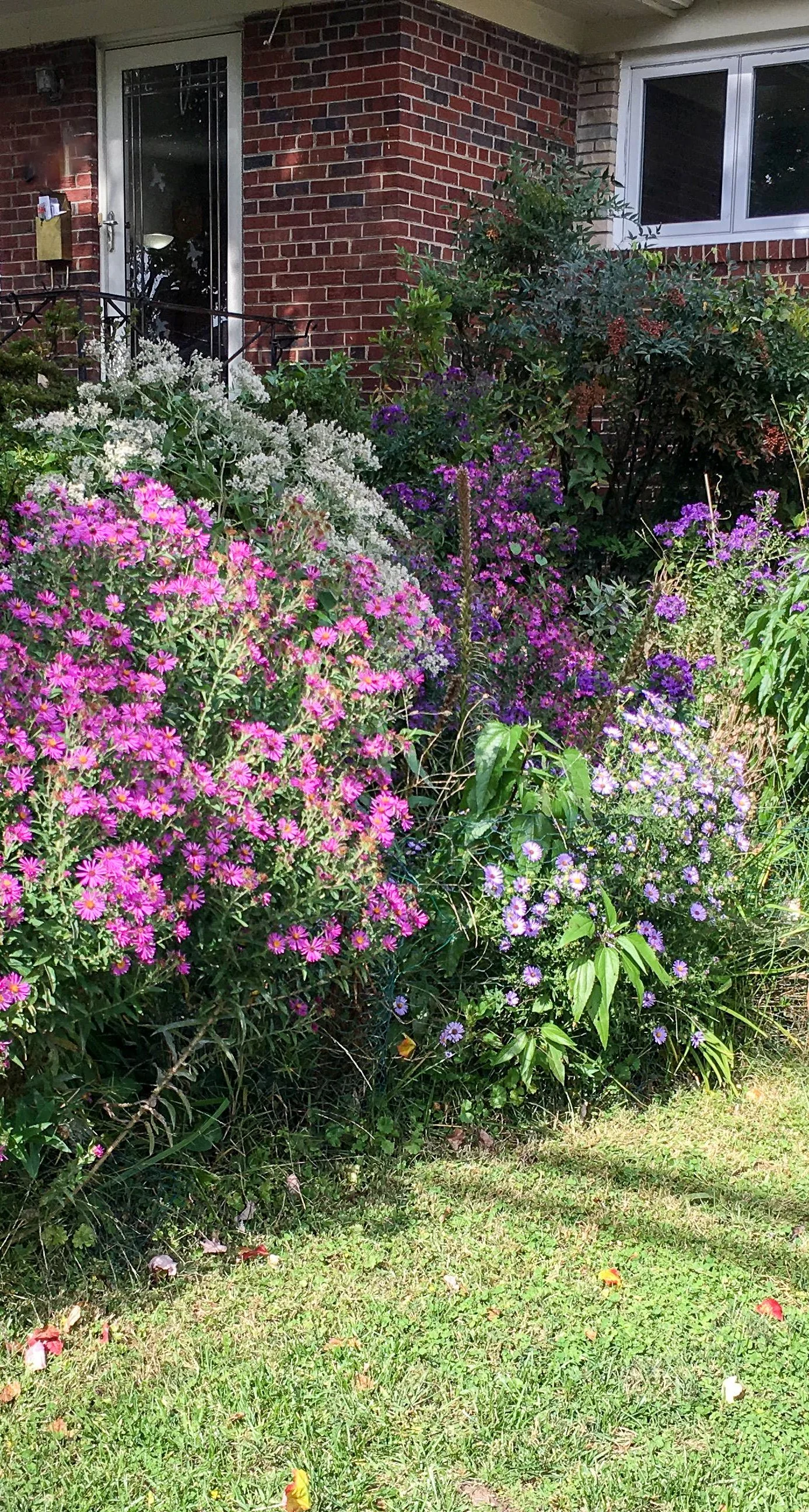
Karen’s front yard, thick with blooms in the summer, by Karen Cyr
As we walked across the street to Karen’s house, Karen pointed out a street tree in front of her house—a Red Maple. To her surprise, two years ago a pair of Northern Flickers built a nest in this tree, which is approaching the end of its life, and the young successfully fledged.
“It’s unusual--this is a street tree, it borders right on the street--as opposed to a more wooded area,” said Karen. “I think it’s a sign that there are declining options for them to nest, because there aren’t many dead trees or dying trees with soft enough wood for them to be able to build a nest.”
Both gardeners said the next thing they plan to do in their yards to help birds is to plant more shrubs. Shrubs provide protection for certain species, like Eastern Towhee, to nest.
“We get Eastern Towhee during migration, and I have seen them in pairs, nesting, in the area behind my yard, which backs up to a park,” said Karen. “I think I might be able to create an environment in my yard where they would like to nest, as well as just pass through.”
MBCP’s Spring Webinar
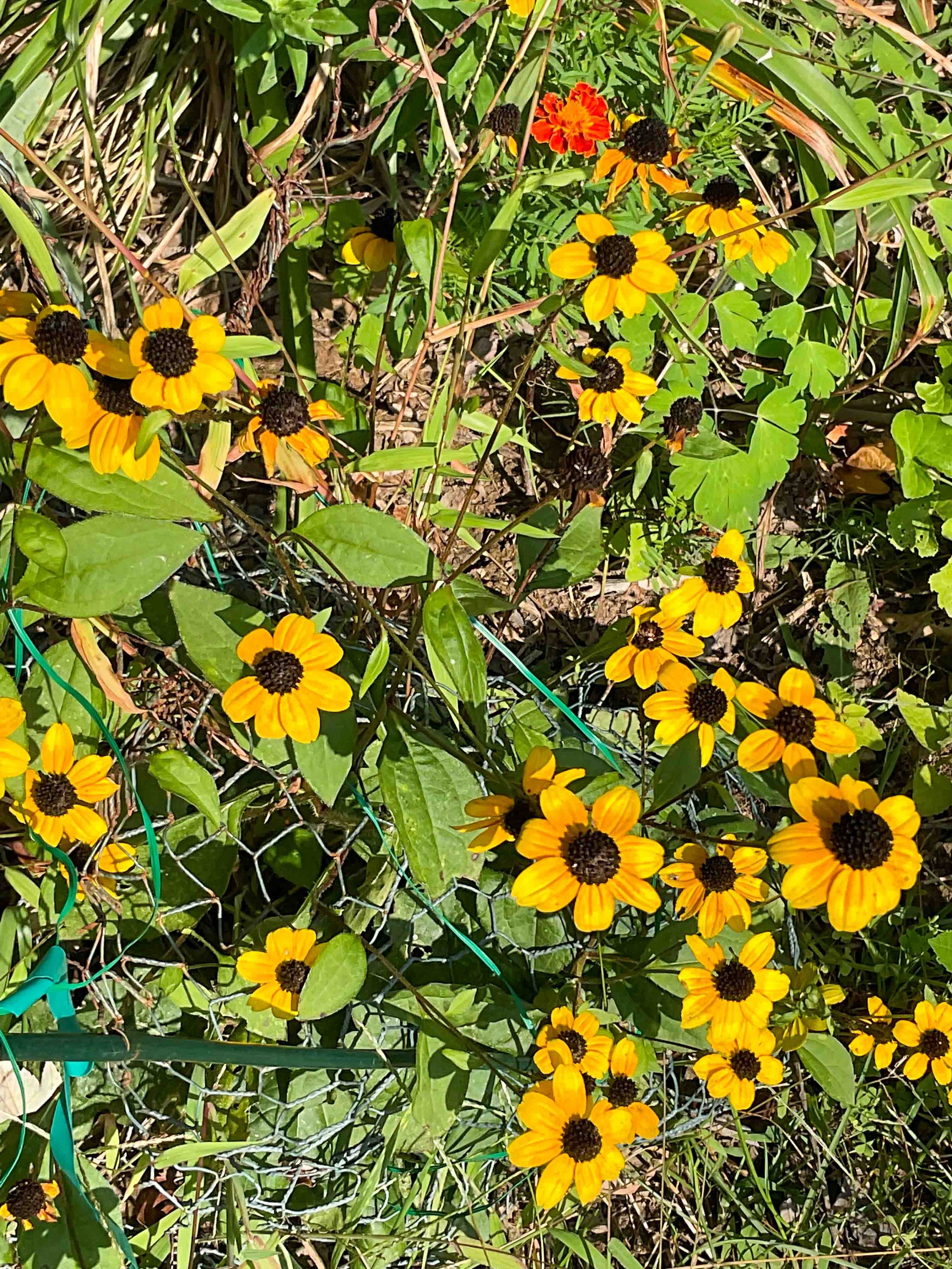
A cheerful native garden flower: rudbeckia by Karen Cyr
Emily and Karen readily agreed for their story to be told via video and audio to help promote MBCP’s Spring webinar, “Invite Backyard Birds to the Front Yard.” Watch to learn how you can take action to help familiar bird species through prioritizing native plants, reducing pesticides, and making sure your efforts aren't hidden in your backyard, but extend to your front yard to connect with your neighbors.
Webinar Speakers:
Becca Rodomsky-Bish, Project Leader, Garden for Birds, Cornell Lab of Ornithology
Dr. Christine Morano Magee, Director of Education at Dumbarton Oaks Park Conservatory, and certified Maryland Master Naturalist, Master Gardener, and DC Weed Warrior
Gabriel Foley, MBCP director
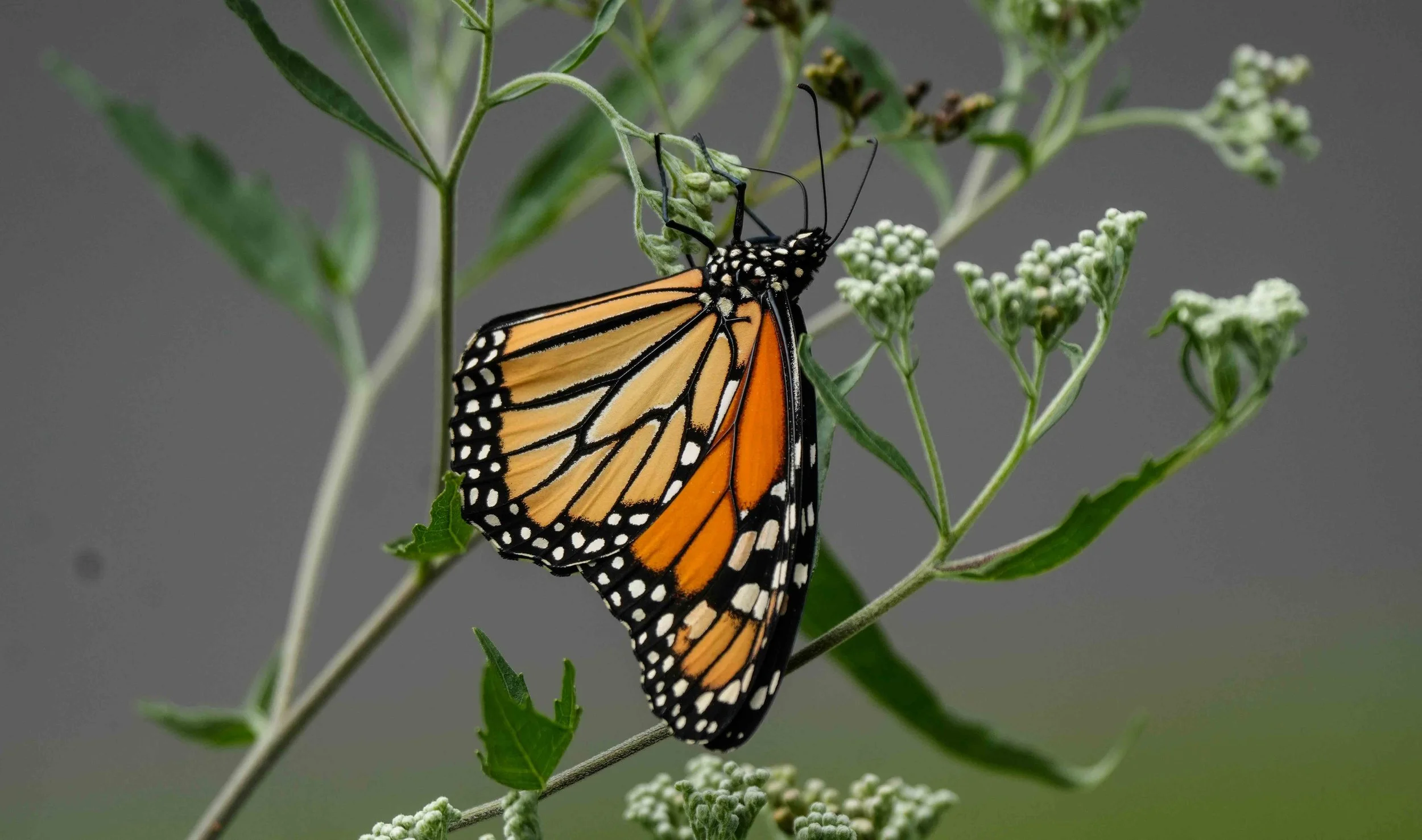
Monarch Butterfly on boneset by Karen Cyr