Student Internships with the Maryland Farmland Raptor Program
YouTube video about the internship program.
College students are gaining college credit and field research experience with MBCP’s Farmland Raptor Program. Interns participate in the program’s conservation efforts, which includes a nest box program for the two cavity-nesting species, the American Barn Owl and American Kestrel. Interns also assist in trapping, banding, and taking morphological data from the four focus raptor species, which also include Short-eared Owl and Northern Harrier.
“The data that our interns are collecting are contributing to global research. This research will help to guide conservation actions,” explains Andy Brown, manager of the Farmland Raptor Program and an internship supervisor. “The program currently has internship arrangements with Hood College in Frederick County and with the University of Maryland, and we are eager to expand to other colleges and universities, so we can engage more students in these valuable field research opportunities.”
FUN AND RESUME-WORTHY
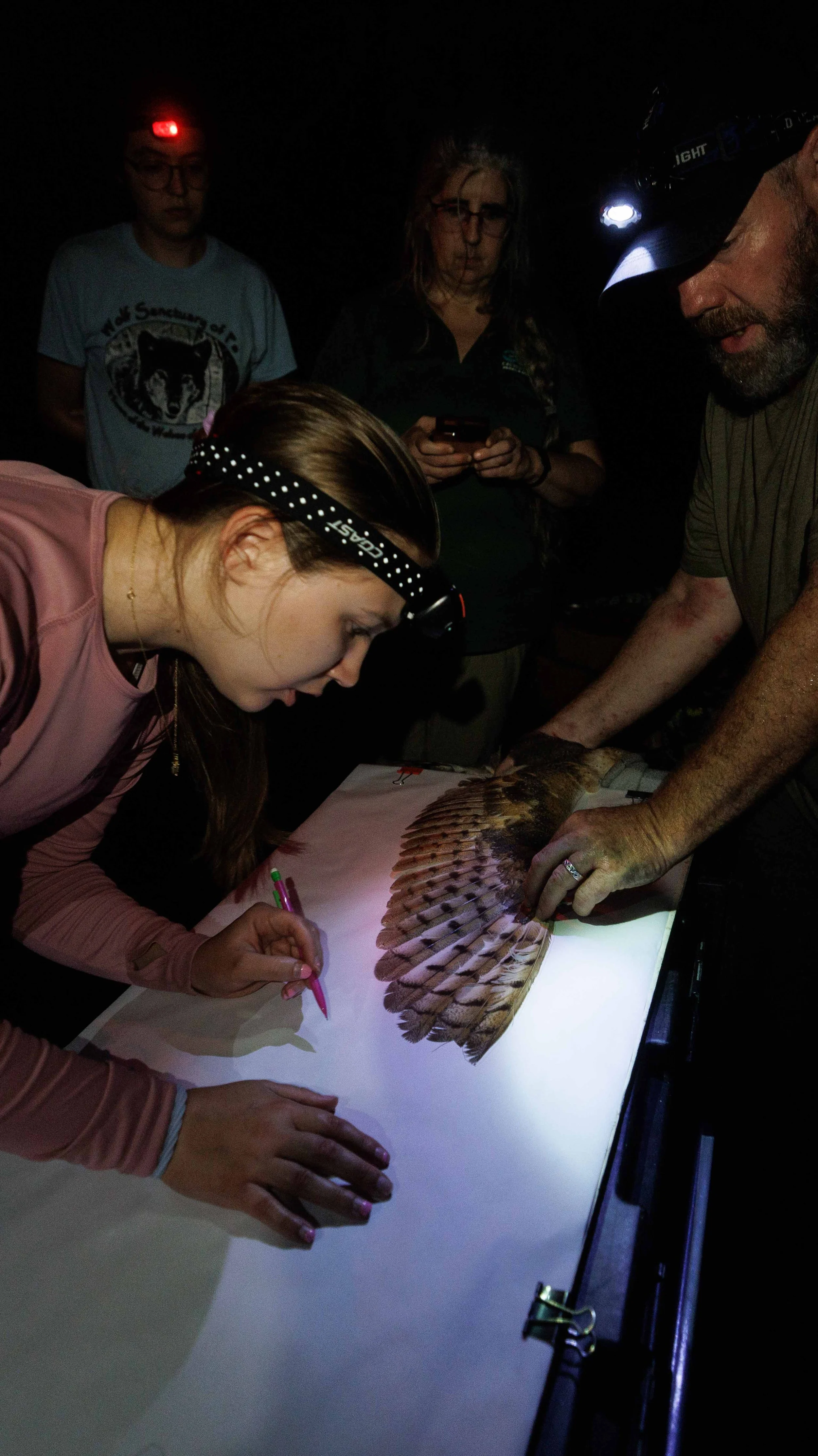
Intern Alena Roskowinski traces a barn owl wing. Photo by Matt Felperin
“It’s a lot of fun,” said Alena Roskowinski, a graduate student in environmental science at Hood College. “I assisted Andy early in the program when we were cleaning out the barn owl nest boxes. Later on in the season, I helped Andy with handling and processing the birds when we banded the adults and the chicks.”
“This is going straight on the resume,” grinned Kostek Schiavone, a biology student from Bennington College in Vermont. Kostek, who completed his internship while at home in Maryland during the winter break, was involved in capturing and documenting data on multiple Short-eared Owls, a barn owl, and a Northern Harrier. Kostek said he’s learned “a tremendous amount” from seeing how field research works first-hand, including the process of banding and taking measurements. Kostek arranged his internship independently.
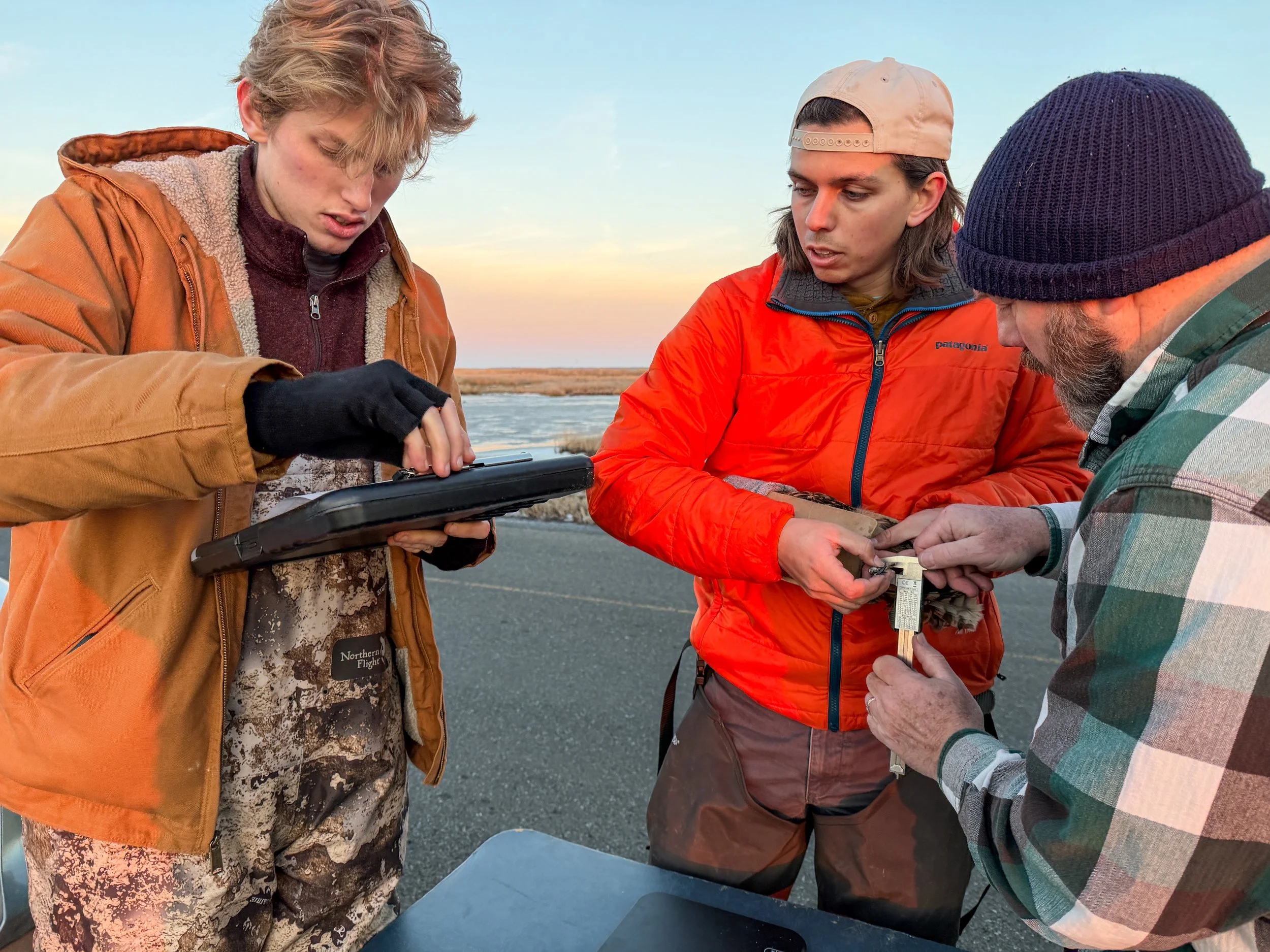
Kostek Schiavone helped document morphological data about a Short-eared Owl captured at Blackwater National Wildlife Refuge as part of his internship. Photo by Margaret Poethig
PROFESSIONAL EXPERIENCE IN ENVIRONMENTAL SCIENCE
Shannon Browne, internship coordinator for the University of Maryland’s Department of Environmental Science and Technology, explained that all students in the environmental science major must complete and pass an approved internship, for which they receive three college credits. The purpose of the internship requirement is to ensure that students have the opportunity to learn and practice skills applicable to their future career field, going beyond what they learn during coursework.
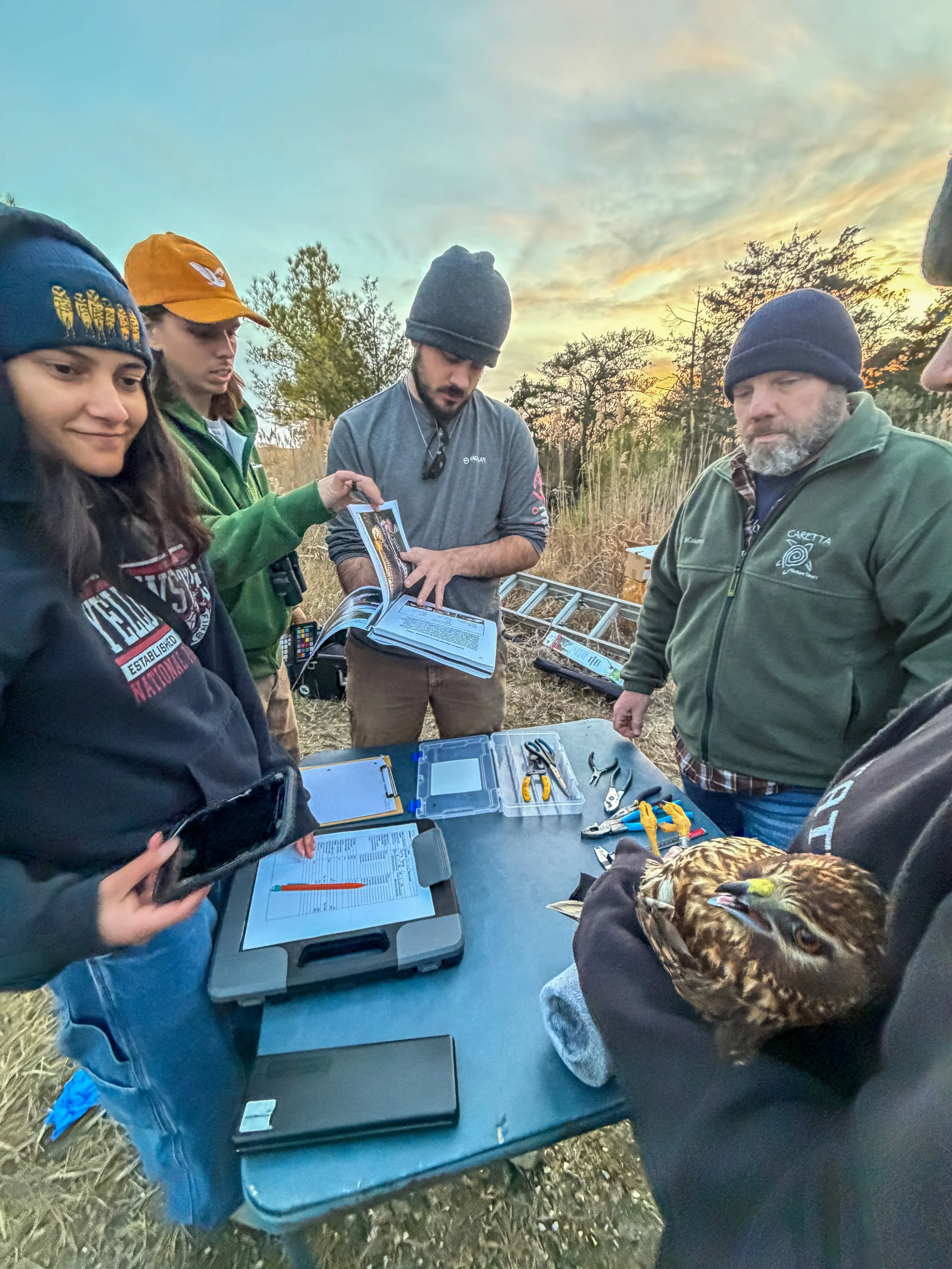
Recent graduates Sofia Dindyal and Sebastian Pennisi volunteer with the Farmland Raptor Program to gain research experience from mentors Andy and Alex. On one banding expedition the group captured a Northern Harrier, one of the four farmland raptor species. Photo by Margaret Poethig
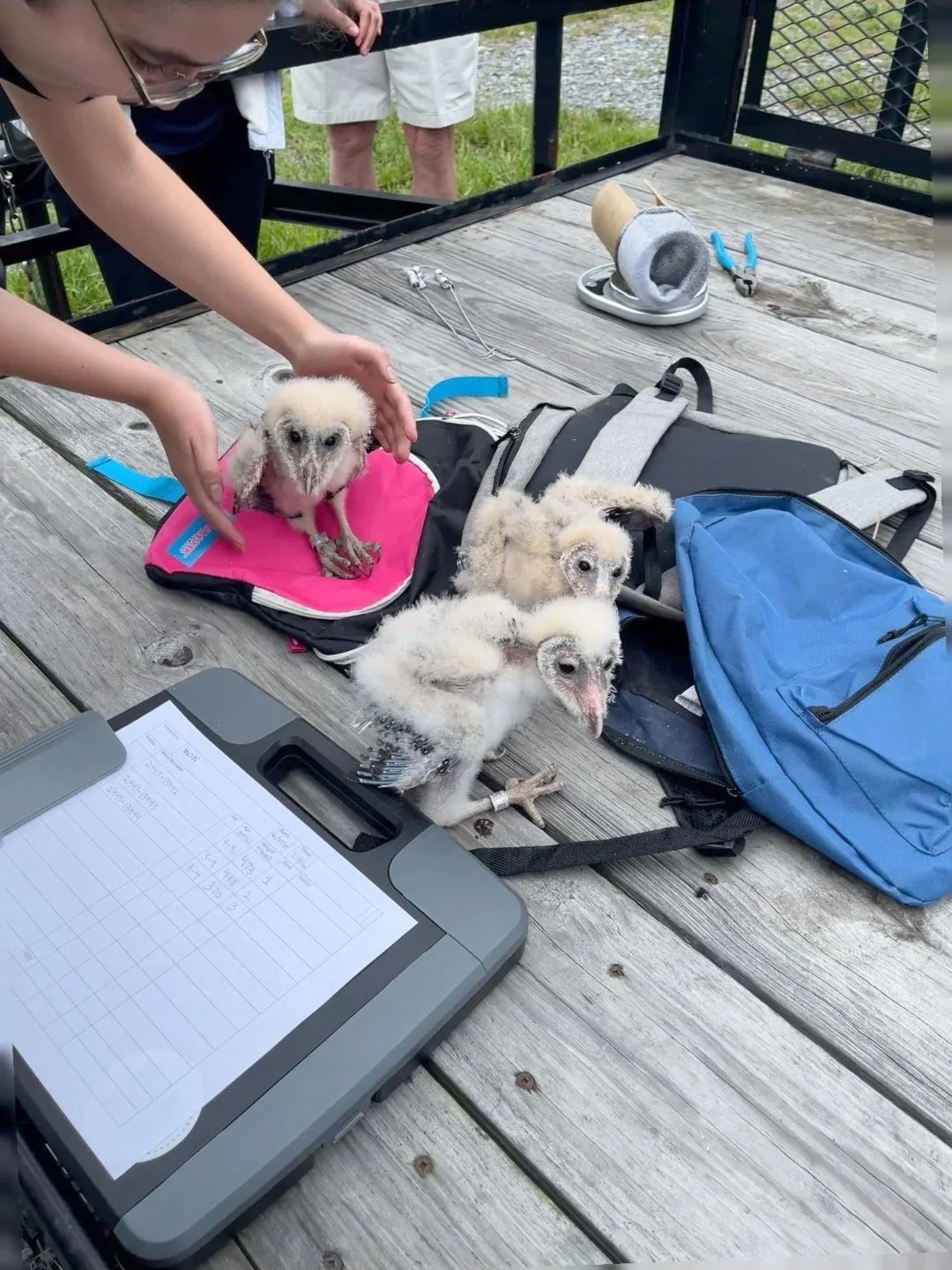
Intern Cari Gameson with a brood of barn owl chicks. Photo by Alena Roskowinski
In MBCP’s Farmland Raptor Program internship, students are exposed to and develop relationships with raptor experts Andy Brown and Alex Pellegrini, the program coordinator, by working closely with them throughout the semester. Andy was a naturalist for 34 years with the Calvert County Natural Resources Division in Maryland. Andy received his bird banding license at age 16, began working with barn owls in the Patuxent River Valley in the early 1990s, and is active in research with the Global Owl Project. Alex Pellegrini is a wildlife biologist specializing in avian ecology. Alex’s extensive field experience includes work with Osprey, in addition to farmland raptors. Alex is contributing to work on owl taxonomy with the Global Short-eared Owl Working Group.
SPRING, SUMMER, OR FALL
Students’ field experiences are different, depending on the internship semester:
Spring semester is primarily focused on Short-eared Owl research, including trapping, banding, taking morphological data, and contributing to a global data repository for Short-eared Owls. It also includes installation and cleaning of kestrel and barn owl nest boxes throughout the state, in preparation for the breeding season.
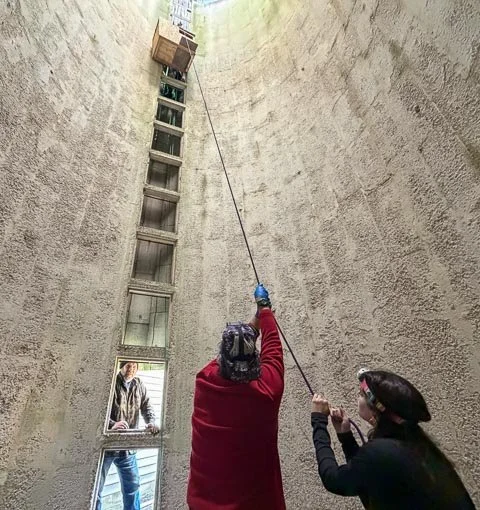
Salisbury University student Rachel Stone will be gaining valuable experience helping to monitor nest boxes that she helped install on the Lower Eastern Shore. Photo by Margaret Poethig
Summer semester is focused on nest box monitoring and banding kestrels and barn owls from the nest box program.
Fall semester interns help identify key locations in the state that are suitable habitat for nest boxes for kestrels and barn owls and includes some work with Short-eared Owl research.
Students benefit from the Farmland Raptor Program internship by “learning new skills which makes them more marketable in the job place, networking with others in this career field, receiving helpful evaluation about their performance, developing a strong relationship with a supervisor who could serve as a professional reference in the future, and so much more,” said UMD’s Shannon Brown.
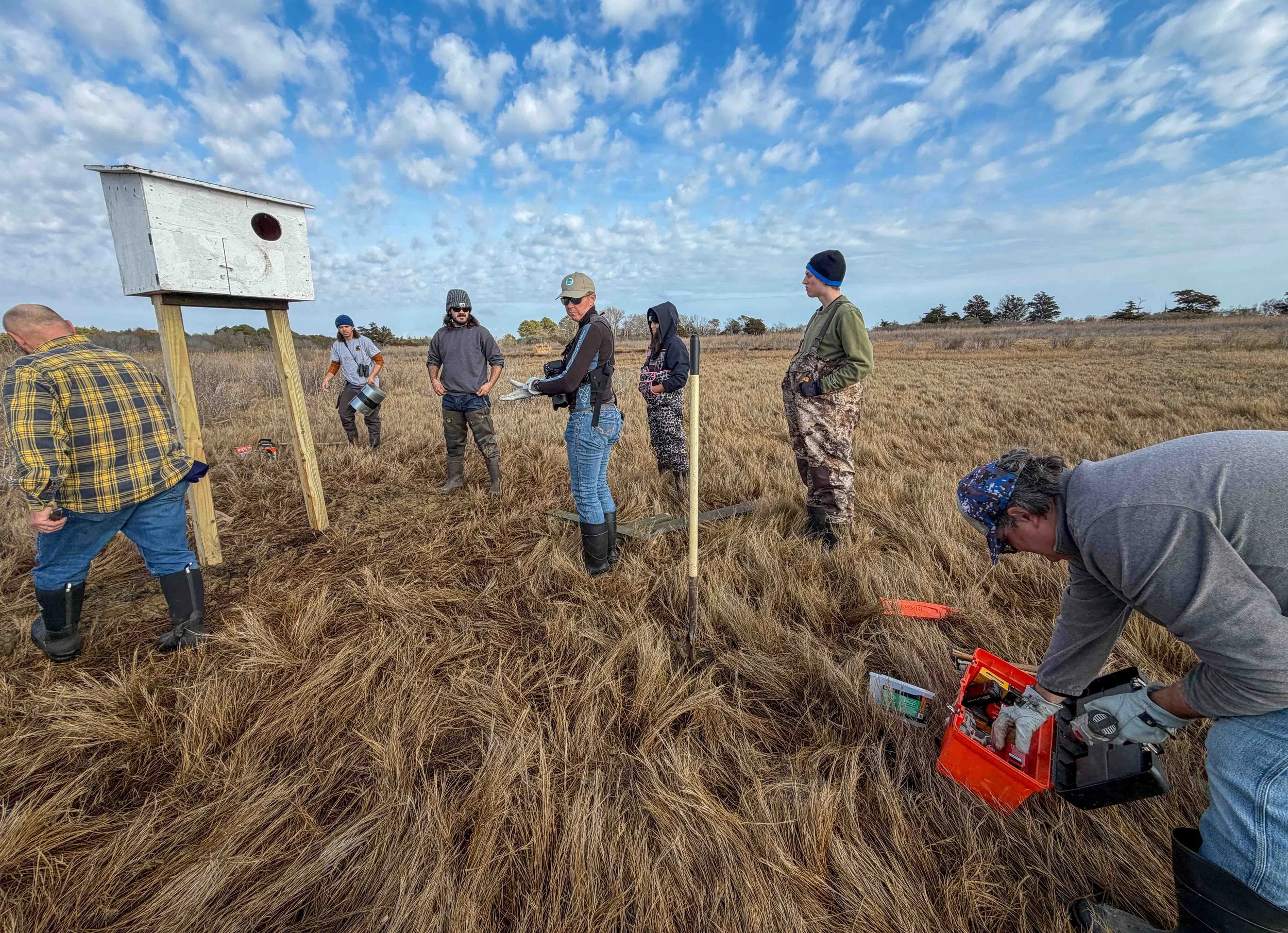
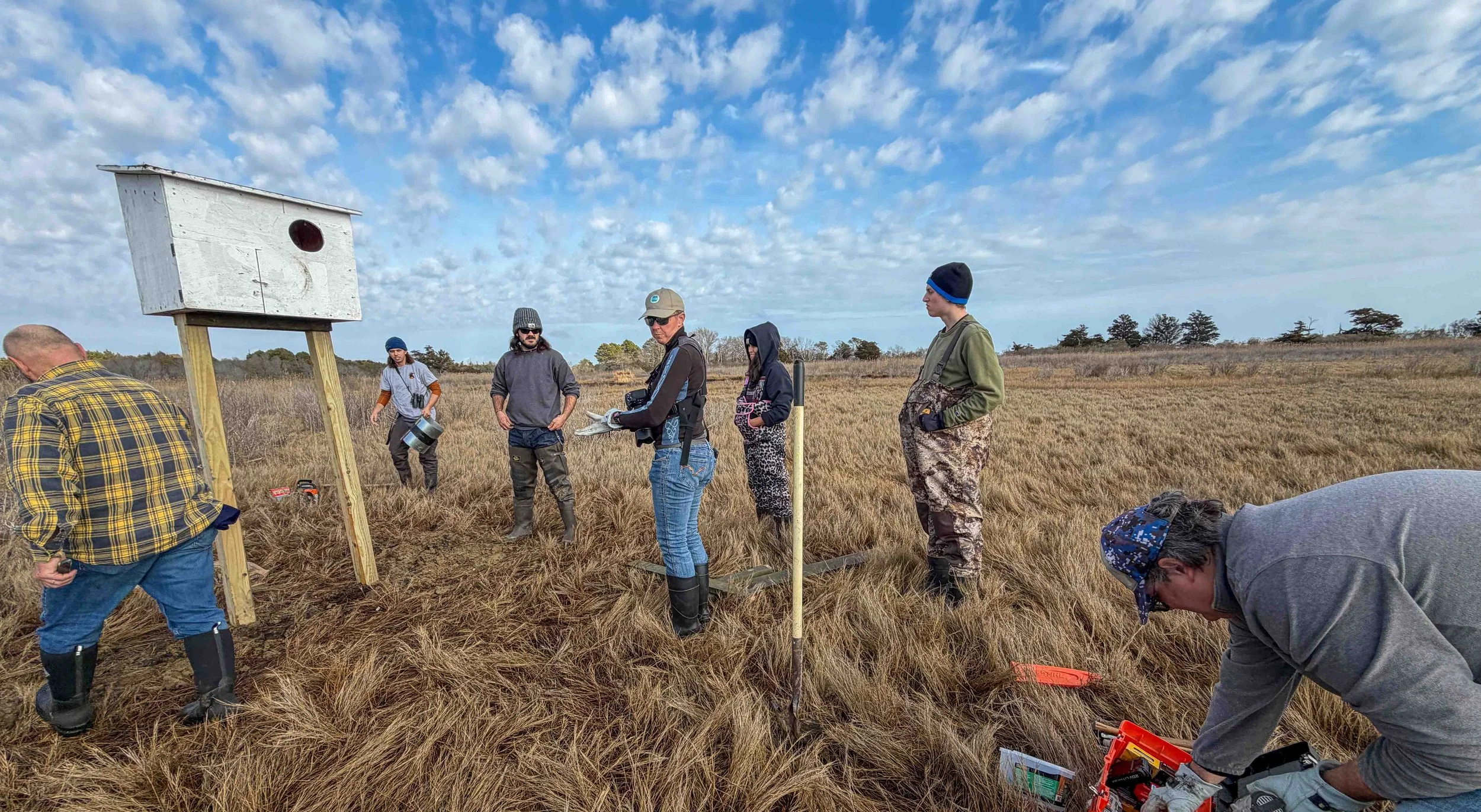
Student volunteers and interns helped to install a barn owl nest box on a marsh on Maryland’s Eastern Shore. Photo by Margaret Poethig