Students Help Campus Reduce Pesticide and Pesticide Use
The University of Maryland Arboretum and Botanical Gardens is celebrating two years as an officially recognized Bird City Maryland “High Flyer” Bird Campus. The campus earned its first Bird City recognition in 2024, and the “High Flyer” status is awarded to campuses who complete 20 or more action points. As part of its renewal application the campus undertook a new, innovative project using student volunteers to reduce pesticide and herbicide use on campus. The student volunteers hand-weeded and hand-removed pests in the community campus food garden. All produce from the garden is donated to the campus food pantry to support campus community members experiencing food insecurity. The University of Maryland Arboretum and Botanical Gardens is also recognized as a Tree Campus and a Bee Campus. Maryland is the first state in the Bird City Network to recognize campuses.
The University of Maryland Arboretum and Botanical Gardens completed actions in four categories: Habitat, Threats to Birds, Education and Engagement, and Sustainability.
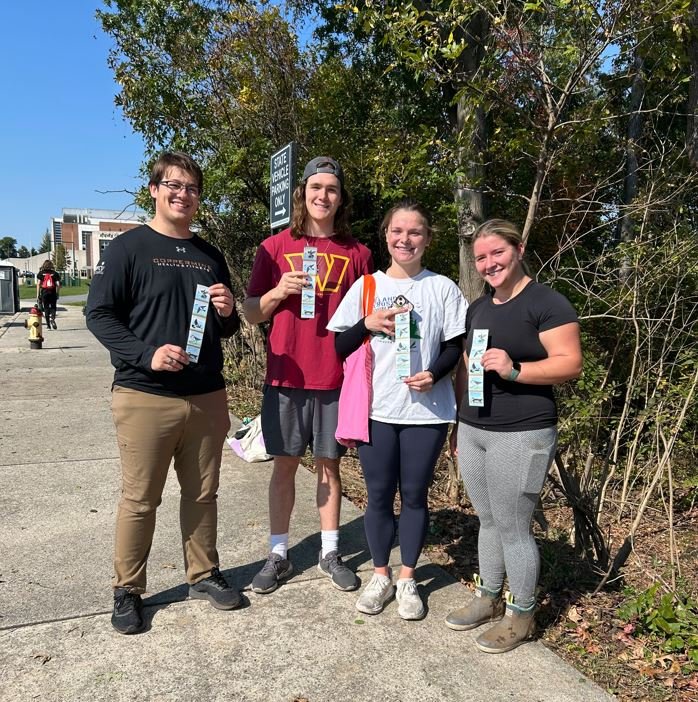
Students participate in the 2025 World Migratory Bird Day activities. Photo by Meg Smolinski.
Habitat loss is a major threat to birds and each Bird Campus must complete a minimum of three actions in the habitat category. The University of Maryland Golf Course has more than 14 acres of native areas on the course. It is one of only 19 International Certified Audubon Cooperative Sanctuaries for Golf in the state of Maryland and has maintained this certification since 2003.
Student volunteers assist in research about bird window strikes on campus as part of a comprehensive effort to identify buildings that are at high risk for collision. Glass buildings are a large contributor to bird mortality due to their reflective properties.
As part of the 2025 World Migratory Bird Day celebration, students made 125 bird feeders to adorn the campus orchard and provide additional nesting opportunities for campus birds. Bird Campuses are required to commit to an annual celebration of World Migratory Bird Day. World Migratory Bird Dayñ has an annual conservation action theme and is sponsored by the Environment for the Americas, a Western Hemispheric organization that connects diverse people to birds and nature. This year’s theme is “Every Bird Counts: Your Observation Matters.”
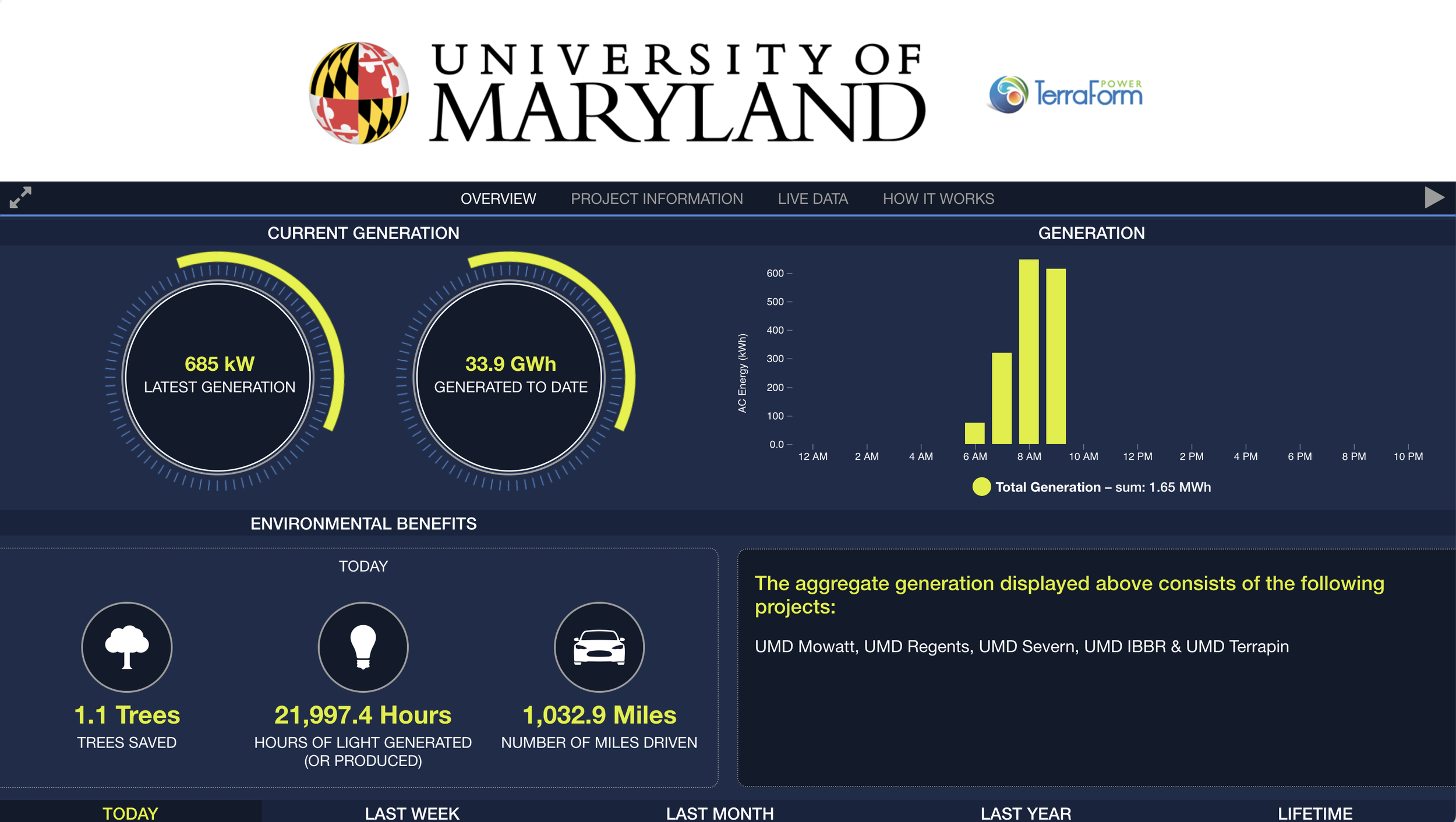
The University has installed solar panels as part of its commitment to renewable energy and reducing its carbon footprint. There are 9,000 solar panels on campus and a data dashboard for energy use. The stormwater irrigation system at the Community Learning Garden is powered by a solar panel and there are solar panels on all three parking garages on campus.
The UMD website’s data dashboard displaying statistics related to its solar panels on campus. Source: UMD’s Solar Kiosk website.
The Bird City Maryland program, an initiative of the Maryland Bird Conservation Partnership (marylandbirds.org), was started in 2019 as a way to encourage communities in Maryland to enhance the environment for birds and educate the public about the contributions birds make to a healthy community. Campuses must complete three actions in the Habitat category and at least one action each in the other three categories. In 2023, Bird City Maryland joined the National Bird City Network, a joint venture of the American Bird Conservancy and Environment for the Americas. The Network unites and connects independent Bird City programs throughout the hemisphere who work directly with local communities to envision and complete bird-friendly actions. Together we form a powerful collaborative force, connecting people and helping birds across the hemisphere. As part of Maryland’s flagship university, the University of Maryland Arboretum and Botanical Gardens leads the way in educating students and the broader community on the benefits of operating a bird friendly campus.