MBCP Launches New Initiative in Important Bird Area
Maryland Bird Conservation Partnership (MBCP) is excited to join the new Monocacy Grassland Birds Initiative, a collaborative effort focused on the Monocacy Grasslands Important Bird Area (IBA) in Frederick and Carroll counties. At more than 185,000 acres, the Monocacy Grasslands IBA is not a single park or preserve. It is a large working landscape of primarily privately-owned farms, fields, rural communities, and open habitats that remain critically important for some of Maryland’s most vulnerable birds.
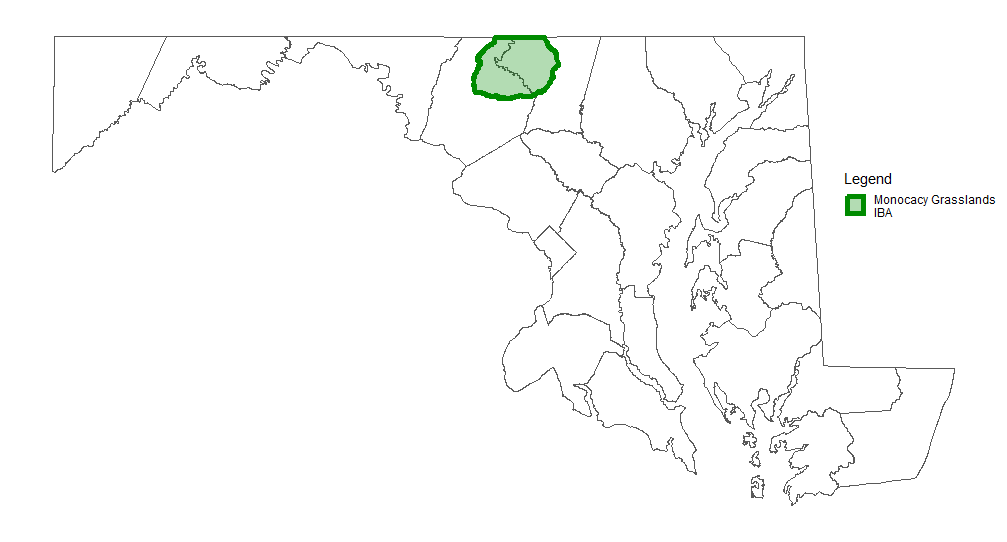
The Monocacy Grasslands Important Bird Area is located in the northern end of Frederick and Carroll counties, illustrated by the area shaded green on this map of Maryland. Image courtesy of Maryland Bird Conservation Partnership.
The need for this work is urgent. Grassland birds are declining faster than any other group of birds in North America, and Maryland’s own Breeding Bird Atlas data show just how much has changed over the last four decades in the state alone. From Maryland’s first Breeding Bird Atlas, conducted in the 80s, to its third, conducted from 2020 to 2024, Vesper Sparrow declined by 74%, Eastern Meadowlark by 30%, and Grasshopper Sparrow by 10%. Upland Sandpiper, Maryland’s only grassland shorebird, has been extirpated as a breeding species in the state. These losses are closely tied to the decline of grassland habitat and land management practices that do not always align with the needs of grassland birds.
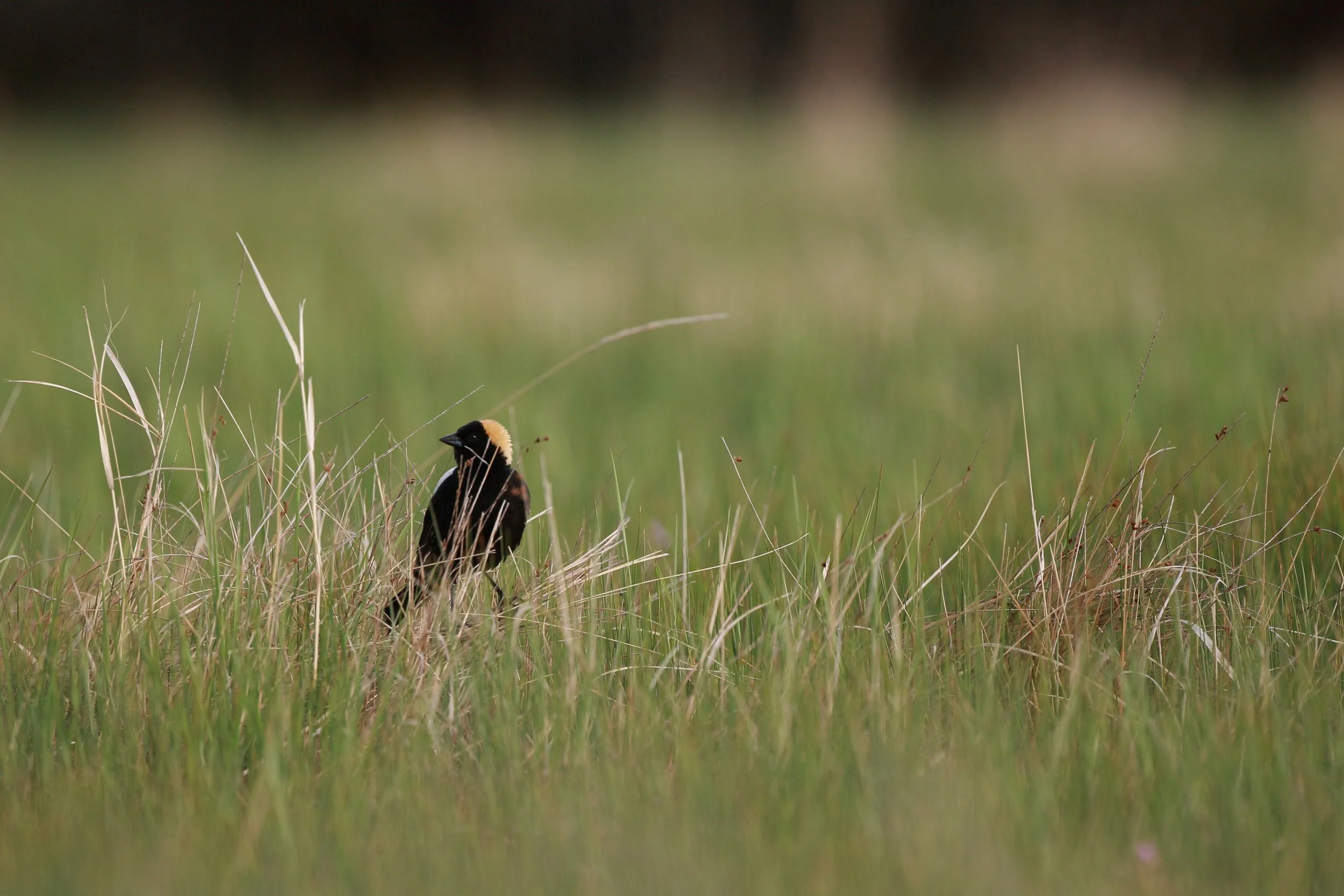
Bobolinks are a declining grassland bird that nest within the Monocacy Grasslands Important Bird Area. They are particularly susceptible to early summer hayfield mowing, when their nests are cut down. Photo courtesy of Maryland Bird Conservation Partnership.
The Monocacy Grasslands were designated as an Important Bird Area because this large working landscape supports at-risk birds and open-country habitat. During the original IBA nomination effort in 2008, volunteer surveys documented notable numbers of Grasshopper Sparrows, Eastern Meadowlarks, Vesper Sparrows, American Kestrels, Dickcissels, and Bobolinks, even though surveys reached less than half of the suitable habitat for at-risk species. That unfinished picture is part of why a fresh assessment matters now.
MBCP’s role in this first phase is to lead an assessment of the Monocacy Grasslands IBA. That work will include reviewing satellite imagery, identifying places with strong existing or potential grassland bird habitat, and ground-truthing priority locations in the field. The goal is to narrow a very large conservation priority area into specific places where future outreach, restoration, and stewardship could have the greatest impact, including overlooked areas with strong habitat potential. Readers interested in learning more about MBCP’s broader IBA monitoring work can visit our IBA Monitoring page. This phase is planning work, but planning with a clear purpose: giving partners, landowners, and communities a stronger roadmap for protecting Maryland’s grassland birds before more of these open landscapes are lost.
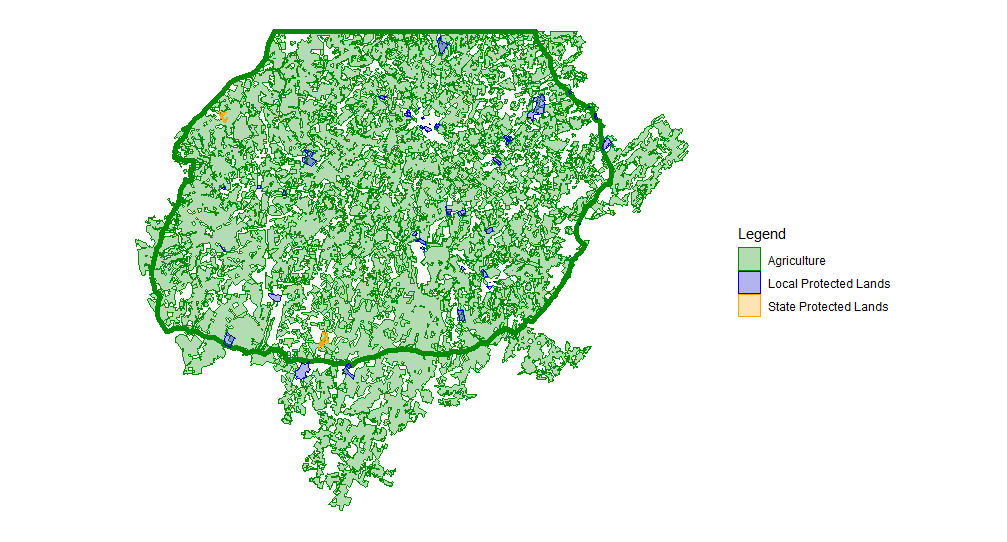
This figure shows that the vast majority of the Monocacy Grasslands Important Bird Area is privately owned agricultural land, with only a few protected parcels. The IBA’s boundary is within the thick green line, protected parcels are shaded in orange and blue, and agricultural land is shaded green. Image courtesy of Maryland Bird Conservation Partnership.
The Monocacy Grasslands IBA is important to grassland birds because of the existing habitat that farmers are maintaining. This Initiative will support the work that these farmers have already been doing for generations and provide guidance to make their land management practices even more bird friendly. As is often the case in conservation, these private landowners will provide the foundation for the Initiative’s success.
The Initiative is part of the Heart of Maryland Collaborative and brings together a vibrant group of partners with expertise in bird conservation, land protection, agricultural outreach, watershed restoration, and community engagement. Working alongside MBCP, Catoctin Land Trust serves as the lead convener of other partners including Chesapeake Bay Foundation, Smithsonian’s Virginia Working Landscapes and Virginia Grassland Bird Initiative, The REED Center, Wild Potomac, Frederick County Division of Energy and Environment, Frederick County Agricultural Preservation Program, and Stream Link Education. Together, these partners will help build a long-term plan for grassland bird conservation in the Monocacy watershed.