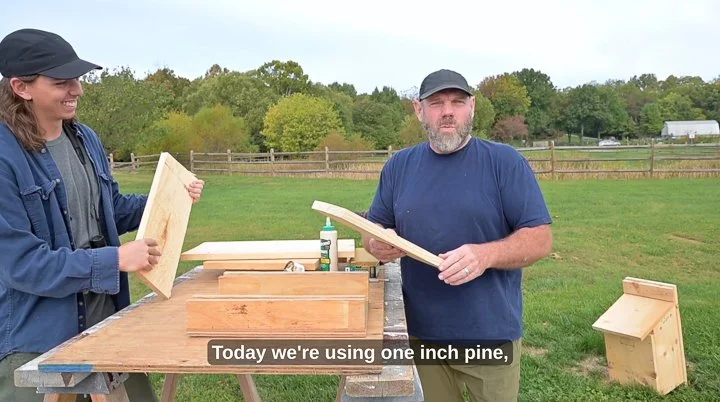
Follow Along with Andy Brown and Alex Pellegrini
American Barn Owls and American Kestrels are cavity nesters, but in the Maryland landscape and throughout North America, there are not enough natural cavities in trees or cliffs, not enough safe places for these birds to raise their broods. Because of this and other reasons, barn owl and kestrel populations have been declining rapidly over the past 50 years. By providing nest boxes in the appropriate habitat, conservation programs like the Maryland Bird Conservation Partnership’s Farmland Raptor Program are helping to reverse the decline in population of these two species.
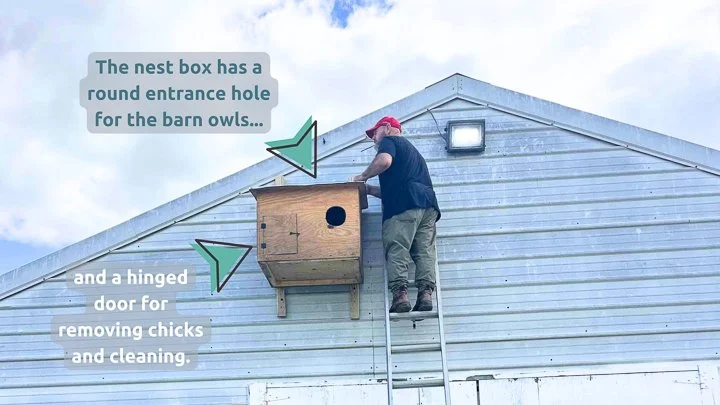
Andy Brown installs a barn owl nest box on the outside of a barn (frame from MBCP’s YouTube video).
Following the 2024 nesting season, the Farmland Raptor Program installed 20 new Barn Owl boxes and 59 new Kestrel boxes, and more nest boxes will go up on poles, on barns, and in silos in 2026. There are many awesome ways for volunteers to help: construct nest boxes, help install them, monitor the nest boxes for breeding activity, or donate materials or funds to support program activities.
Now on YouTube: How-to Construct Nest Box Videos
Any time is a perfect time to construct nest boxes for the Maryland Farmland Raptor Program so that they are ready to be installed before kestrels and barn owls begin looking for places to nest at the end of winter and in early spring. The Farmland Raptor program has made it easier than ever to help. Program manager Andy Brown and program coordinator Alex Pellegrini set up shop at a local park and demonstrated for the camera and for anyone with a drill how to construct nest boxes for kestrels and barn owls.
In a YouTube video, Alex Pellegrini and Andy Brown demonstrate how to construct an American Kestrel nest box, one of three nest box designs.
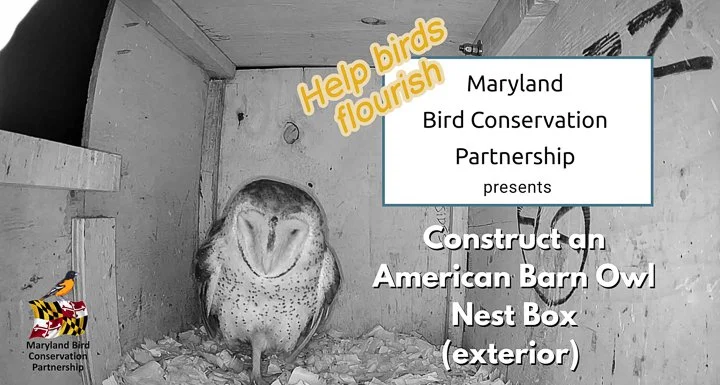
Title slide for the YouTube video, “Construct an American Barn Owl Nest Box (exterior)”
In the videos, Andy and Alex “talk and walk” viewers through gluing and screwing pre-cut wood pieces together to construct the nest boxes. They provide a simple step-by-step, visual “how-to” that anyone can follow. The videos complement professionally drawn schematics for each of the nest boxes that are also available on the MBCP website.
“I really think the videos are a time-saver,” said Matt Florez, a Scout who built eight exterior barn owl boxes for the program. “I would highly suggest anyone volunteering to build a nest box watch the videos.”
The edited videos are online and ready for viewing on MBCP’s YouTube channel. You can also view them right here on the website, at the bottom of this web page. The videos complement the schematics that are available here:
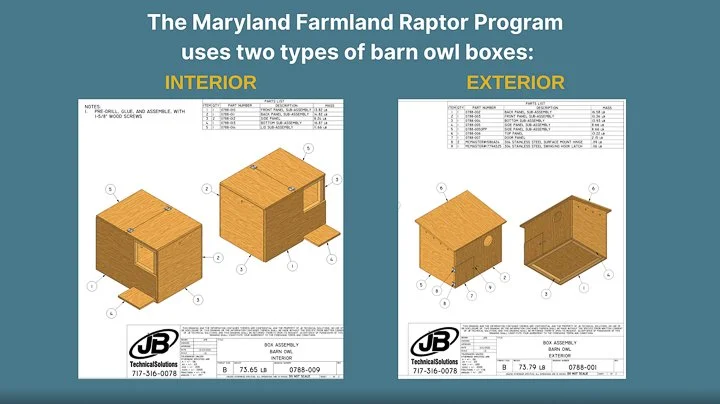
The videos complement the schematics available for downloading at the links above.
““I really think the videos are a time-saver. I would highly suggest anyone volunteering to build a nest box watch the videos.””
Read about how Scout Matt Florez led a Scout conservation project and built eight American Barn Owl nest boxes for the Farmland Raptor Program.
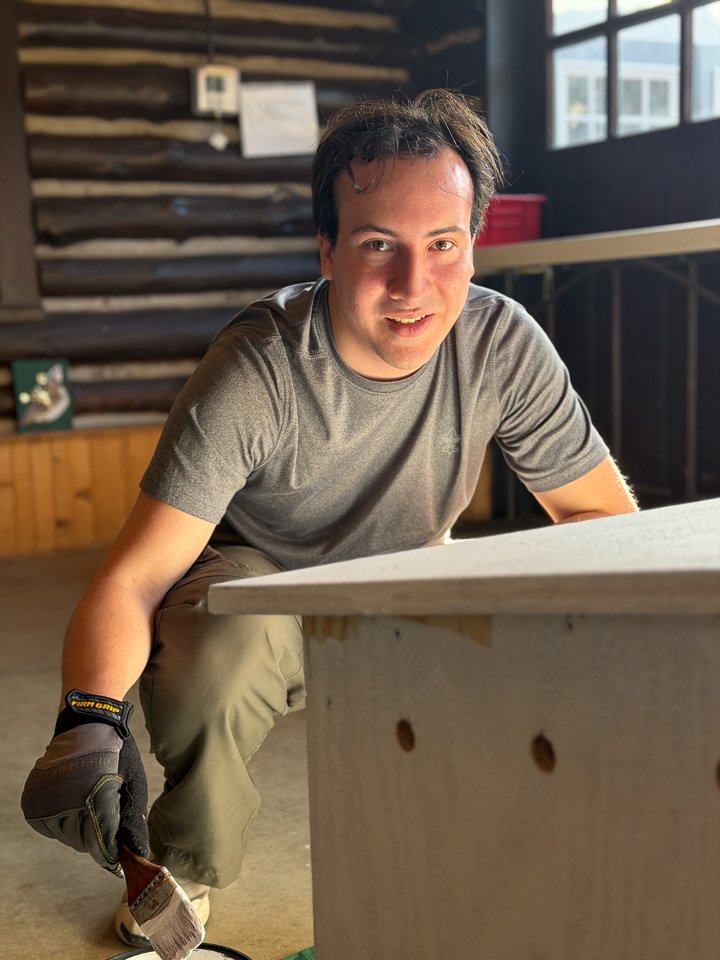
Scout Matt Florez paints a barn owl box.
Nest Box Installation and Monitoring
In a future article, we’ll discuss the nest box installation and monitoring activities. If this is something you’re interested in helping with, don’t hesitate to contact the program.
Donate Funds and Materials
The Farmland Raptor Program depends on grants and individual donations to fund the staff coordinator position, pay for expenses such as mileage reimbursement, and purchase materials, such as the lumber, glue, tools, screws, and other materials for the nest boxes. The program is also now in need of body cameras and telescoping poles that volunteers use to reach up and see into the boxes, which are placed more than 12 feet off the ground. The video from the body cams can be saved on a smart phone through a special app, and later reviewed to count the eggs and estimate the age of the nestlings so that banding can be planned before the birds fledge.
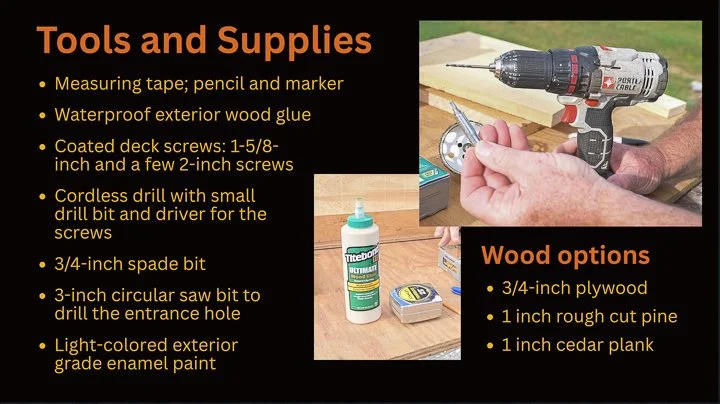
Slide from the YouTube video listing project materials needed for a kestrel box.
Contact Us
If you’re interested in putting together a kestrel box, or you’d prefer to help out with installation and monitoring, or you want to donate materials, contact Alex at frp_coordinator@marylandbirds.org. For financial donations, head over to marylandbirds.org/donate.