Matt Florez, a Scout, a Venturer, a Sea Scout, and a member of the Order of the Arrow (the Scouting National Honor Society) led a Scout project in December 2025 to build eight American Barn Owl nest boxes for the Maryland Farmland Raptor Program. This is Matt’s story about how he became inspired to take on this project.
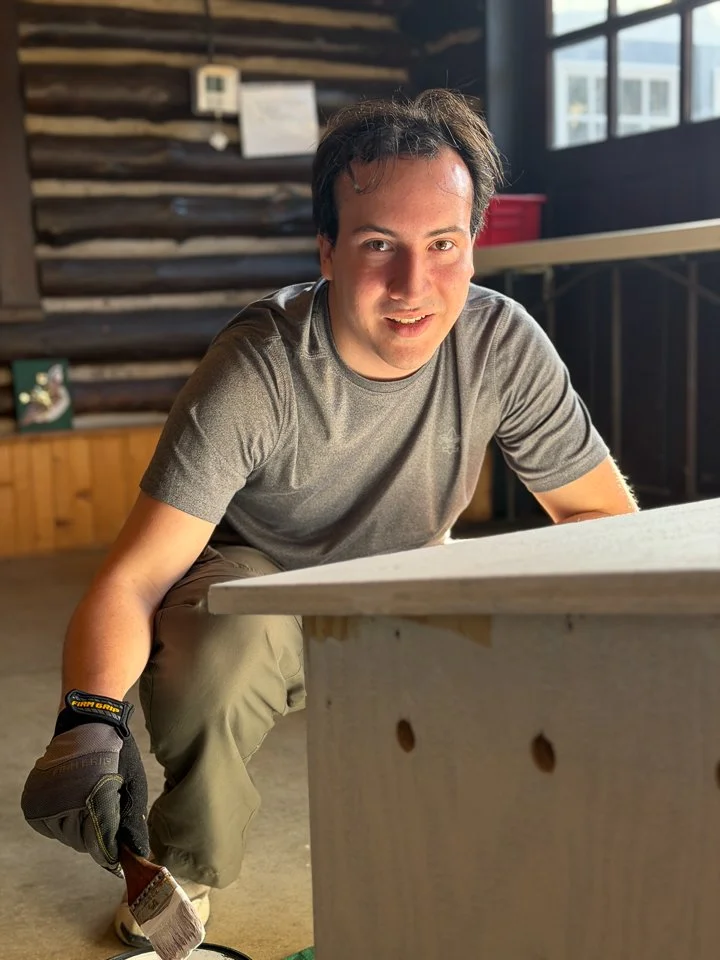
Scout Matt Florez, the author
I’m Matt Florez, a Scout from Potomac, Maryland, and I’ve been involved heavily in Scouting for the past seven years. Within Scouting there are multiple conservation awards, and many activities to participate in and contribute to conservation. The highest award is the Distinguished Conservation Service Award.
The basic requirements are that you have to complete nine merit badges in the specific area of conservation. After that you have to complete two different conservation projects that have to be planned and led all by you. So not just participate, but plan and lead them with other Scouts.
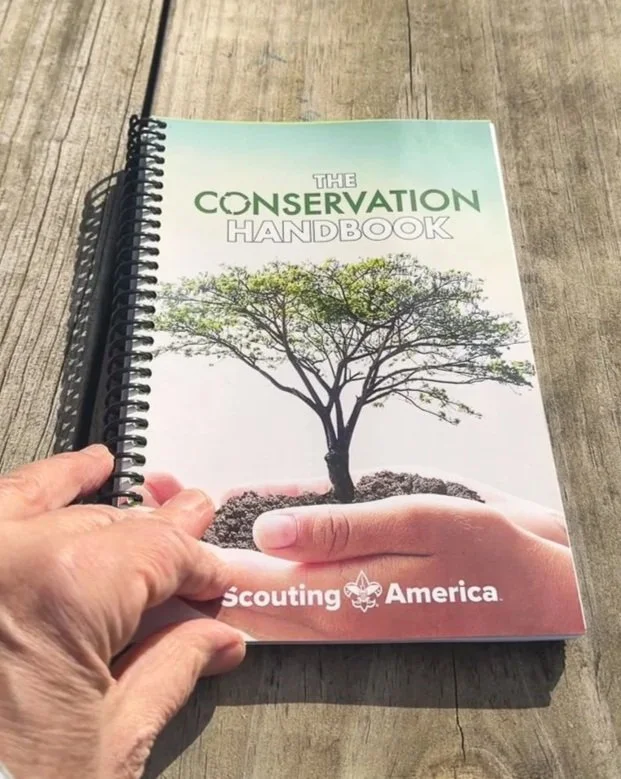
The Scouting America Conservation Handbook
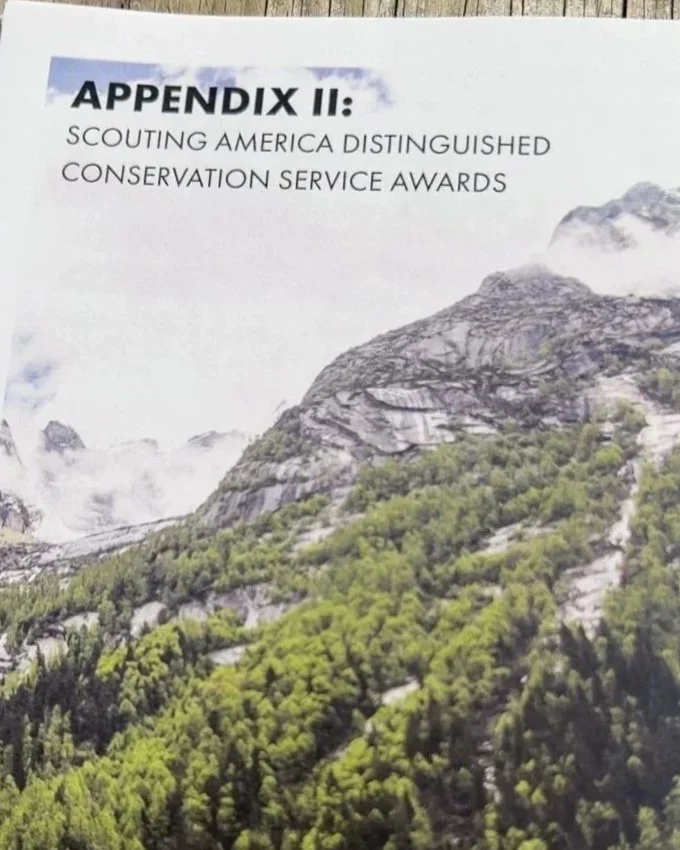
The handbook describes the requirements for earning the Distinguished Conservation Service Award.
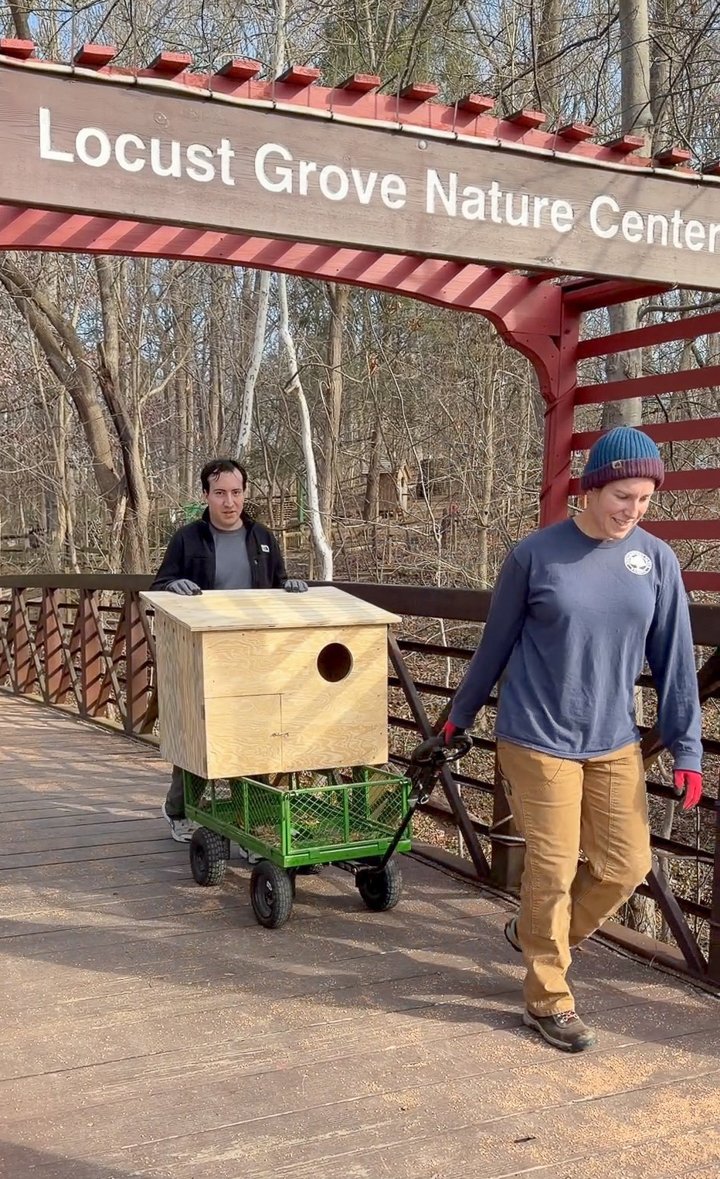
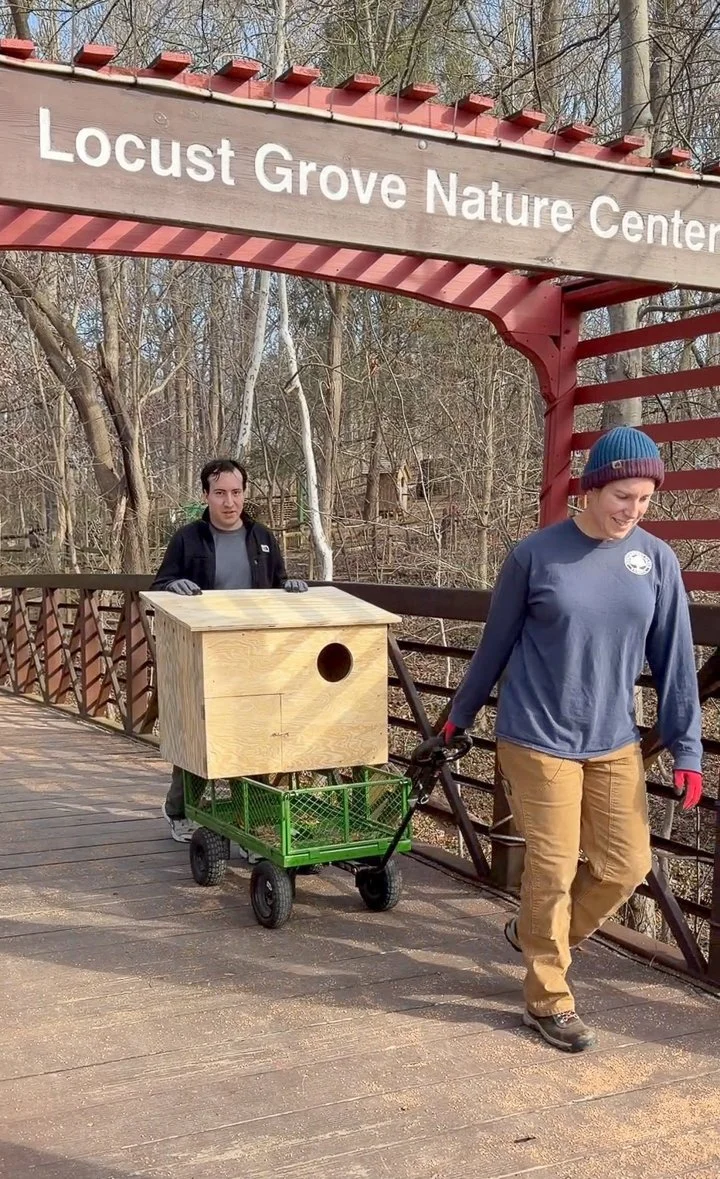
Scout Matt Florez and Jackie Raiford, naturalist at the Locust Grove Nature Center, transporting one of the barn owl nest boxes.
Before this, I hadn’t been that involved in conservation myself. But when I was young, I was fascinated with orca whales. I went with my family to Peninsula Valdez in Argentina. In that area the killer whales are famous; the beaches they have there are where sea lions breed. The whales beach themselves to hunt the seals, and then use the waves to get back to the water. That was one of the most astonishing things I’ve learned.
So going back to when I learned about this conservation award, I thought this was a good opportunity to get back into conservation, remembering how inspired I was by those animals.
This project took a lot more research and planning compared to other Scout projects. I had to write up a proposal with a lot of planning details for the conservation committee to approve. I did research on what needed help in Maryland. Jackie Raiford at Locust Grove Nature Center showed me a video that Andy Brown did. I learned all about barn owls. It reminded me about when I learned about orcas. Like orcas, barn owls are animals that can be found pretty much all over the world. {Jackie is a naturalist with Maryland National Park and Planning Commission and she helped guide Matt’s first conservation project, leading a group of Scouts to remove invasive porcelain berry plants and plant natives in the lower meadow at Locust Grove Nature Center.}
That instantly drove me to think I want to do something for this animal. I found that PDF {on the marylandbirds.org website} about the barn owl boxes – the technical drawings. I’ve been in the world of STEM, and I like engineering, and had a good time looking over it. I asked Jackie if I could be in touch with Mr. Andy Brown. I met with Andy and we decided the best project the Scouts could offer is to assemble seven barn owls boxes for this upcoming nesting season.
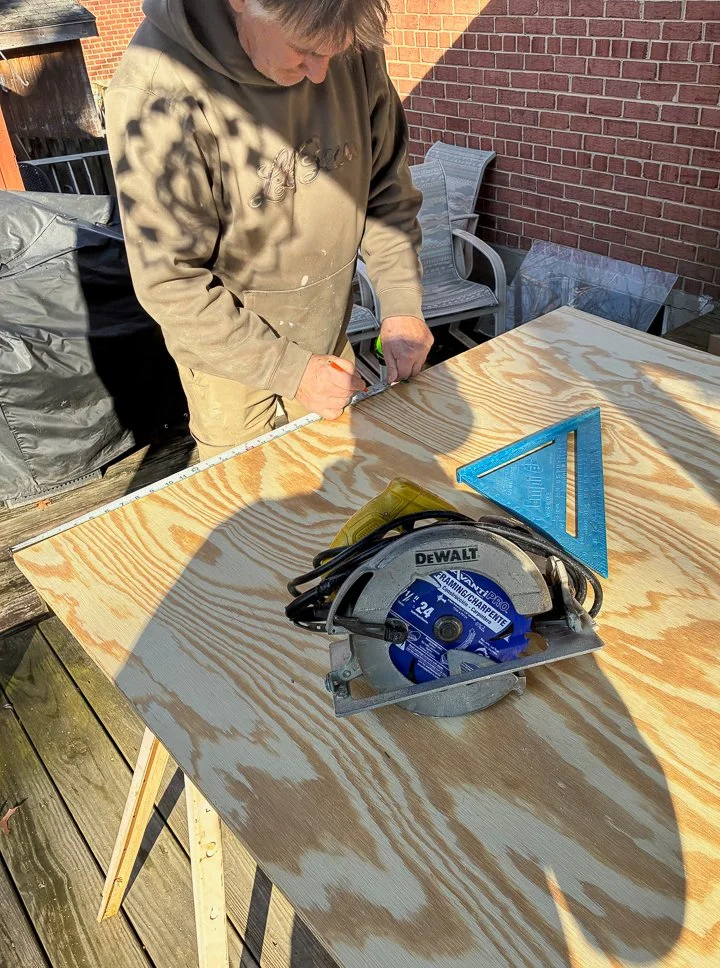
A former member of the Scout troop, Mr. McKinley, provided space and tools, and assisted with the woodworking.
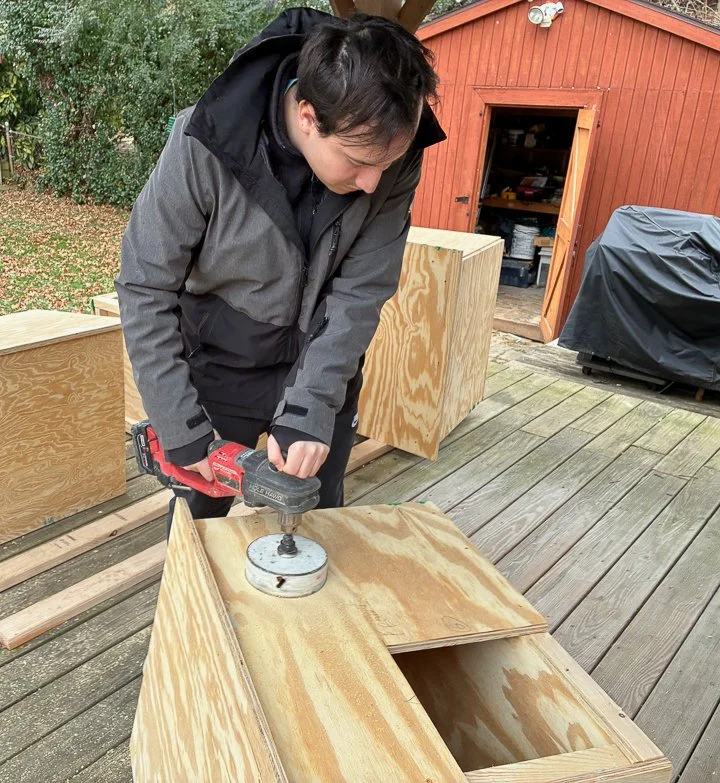
Matt drills the entrance hole for the barn owl nest box.
This project would involve a lot of woodworking, a lot of tools that I didn’t personally have access to. I was able to find adults who used to be members of my troop–Mr. McKinley and Mr. Gibbons. These individuals have a long history of woodworking, and they had the tools. So I went to them with the design. The first challenge we encountered was that there aren’t instructions for how many sheets and pieces of wood you are going to need. It took us a couple hours, sitting down and calculating it. After we figured out how much we needed, I went with Mr. McKinley to Home Depot to get the materials.
Mr. McKinley has a workshop, so we went and assembled the first of the boxes. But before we did that, we cut all the pieces that we needed for all the boxes. We determined that with the remaining wood we had enough to make an additional box. So I moved our deliverable from seven to eight barn owl boxes.
I recruited Scout volunteers to put the barn owl boxes together. We had a total of three adult volunteers and a total of five youth Scouts that have helped throughout this process of building boxes.
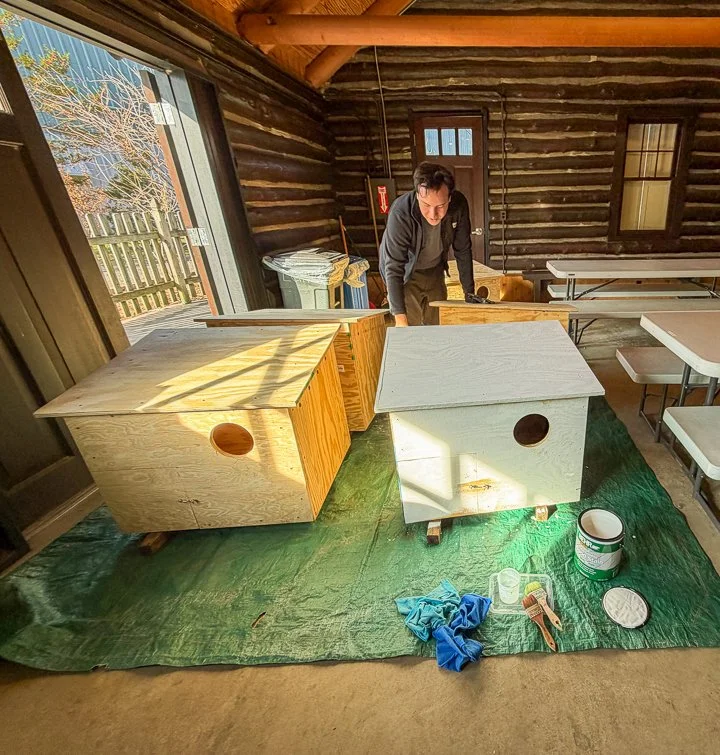
Matt applies an exterior grade paint to preserve the barn owl boxes from the weather.
This project is a great combination of woodworking, conservation, and environmental science. The thing that makes a difference between the Distinguished Conservation Service Award and an Eagle Scout project, is that with the Conservation Service Award, your project doesn’t end when the work is done. You spend some months gathering evidence that your project made a positive impact. So now that we’re done with these boxes, I’ll still be connecting with Andy to find out how they were used.
That inspired me, that we take an extra step forward to make sure that these projects do benefit the environment, and not just doing it to get signed off for an award.
Yours in Scouting,
Matt Florez
Postscript: As of this writing, Matt is coming up for the Eagle Board of Review in early 2026. Good luck Matt and many thanks for your contribution to conservation of farmland raptors. —From all of us at the Maryland Bird Conservation Partnership.
Construct a Farmland Raptor Nest Box…Who, Me?
Yes, you! Constructing a nest box for the Maryland Farmland Raptor Program is easier than ever. This fall, program manager Andy Brown and program coordinator Alex Pellegrini set up shop at a local park and demonstrated for the camera and for anyone with a drill how to construct nest boxes for the American Kestrel and the American Barn Owl. The edited videos are now online and ready for viewing on MBCP’s YouTube channel. If you’re interested in building nest boxes for the Farmland Raptor Program, contact Alex at frp_coordinator@marylandbirds.org. Read more about opportunities to support the Farmland Raptor Program.
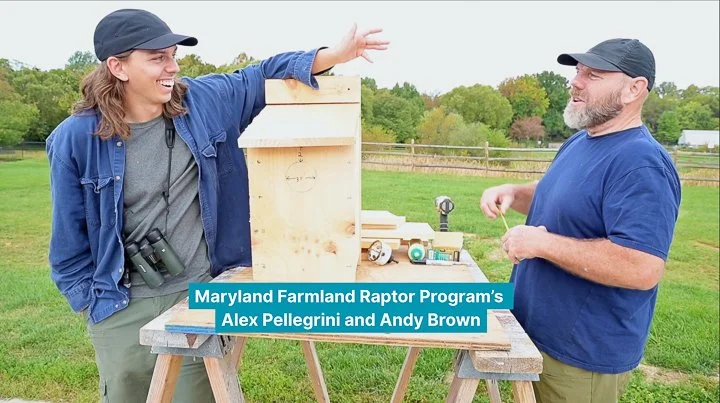
Farmland Raptor program coordinator Alex Pellegrini and program manager Andy Brown demonstration how to put an American Kestrel box together in one of the YouTube videos.
How Much Wood Do I Need for One Barn Owl Nest Box?
Andy Brown advises volunteers that one 4 x 8 foot sheet of plywood will yield one box. You will also need three 2-inch x 2-inch x 8-foot boards (not pressure treated) for the bracing pieces.
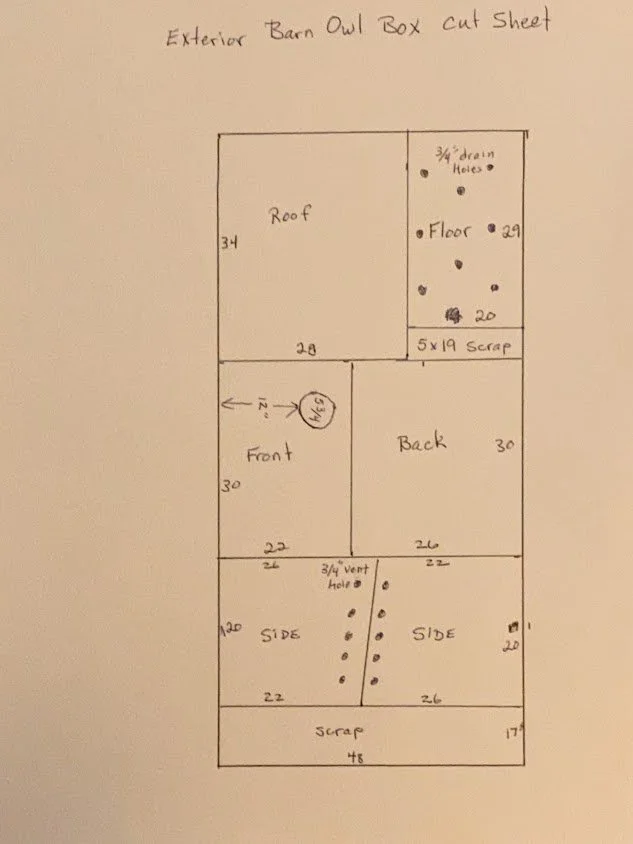
Andy Brown’s hand-drawn illustration of how to cut a 4 x 8 foot sheet of plywood into the parts needed for one exterior barn owl nest box.