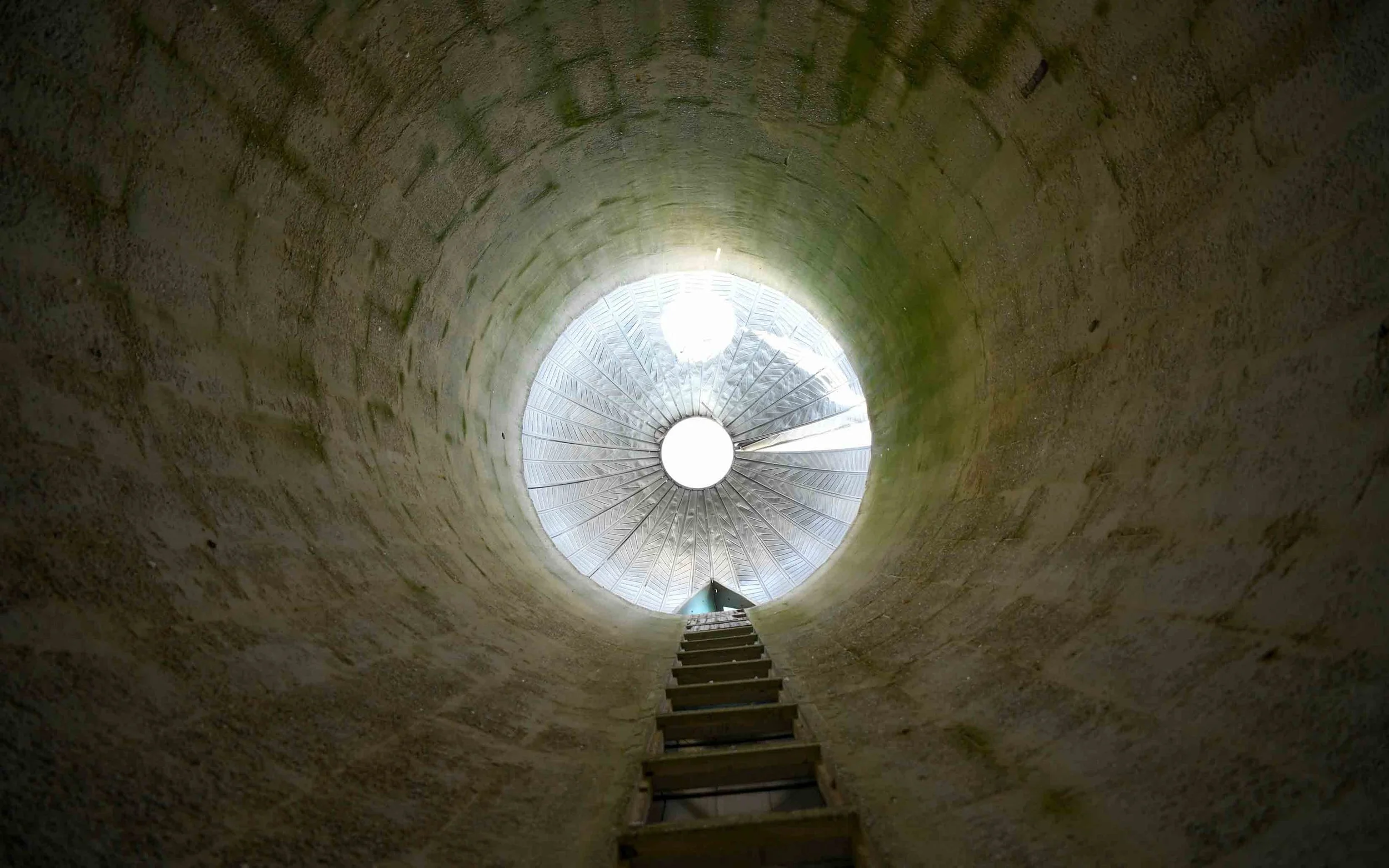
And you may find yourself exploring an abandoned barn
And you may find yourself in the middle of a frozen marsh
And you may find yourself at the top of an old silo, mounting a nest box
And you may ask yourself, "Well, how did I get here?!"
— “Once in a Lifetime” by the Talking Heads
(if they were Farmland Raptors Program volunteers)
This is one of the questions I asked myself while waiting in the top of an old silo in Somerset County in early January while my husband (Jayson Huston) and another Maryland Farmland Raptor Program (FRP) volunteer (Salisbury University grad student Rachel Stone) rigged and hoisted a barn owl nest box up to me. The short answer is that this was FRP nest box boot camp. By day, we were here to learn the types of nest boxes FRP uses and how to install them. By night, we went into the marshes to assist with short-eared owl trapping and banding. We had only very recently taken on the role of Co-Regional Box Managers for Washington County. Our marching orders? Expand FRP’s work into Washington County.
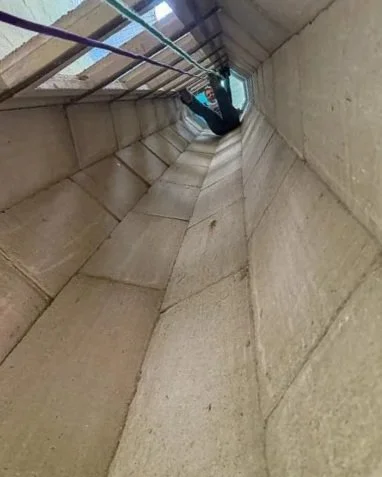
Michelle climbing up the silo chute. Photo by Margaret Poethig
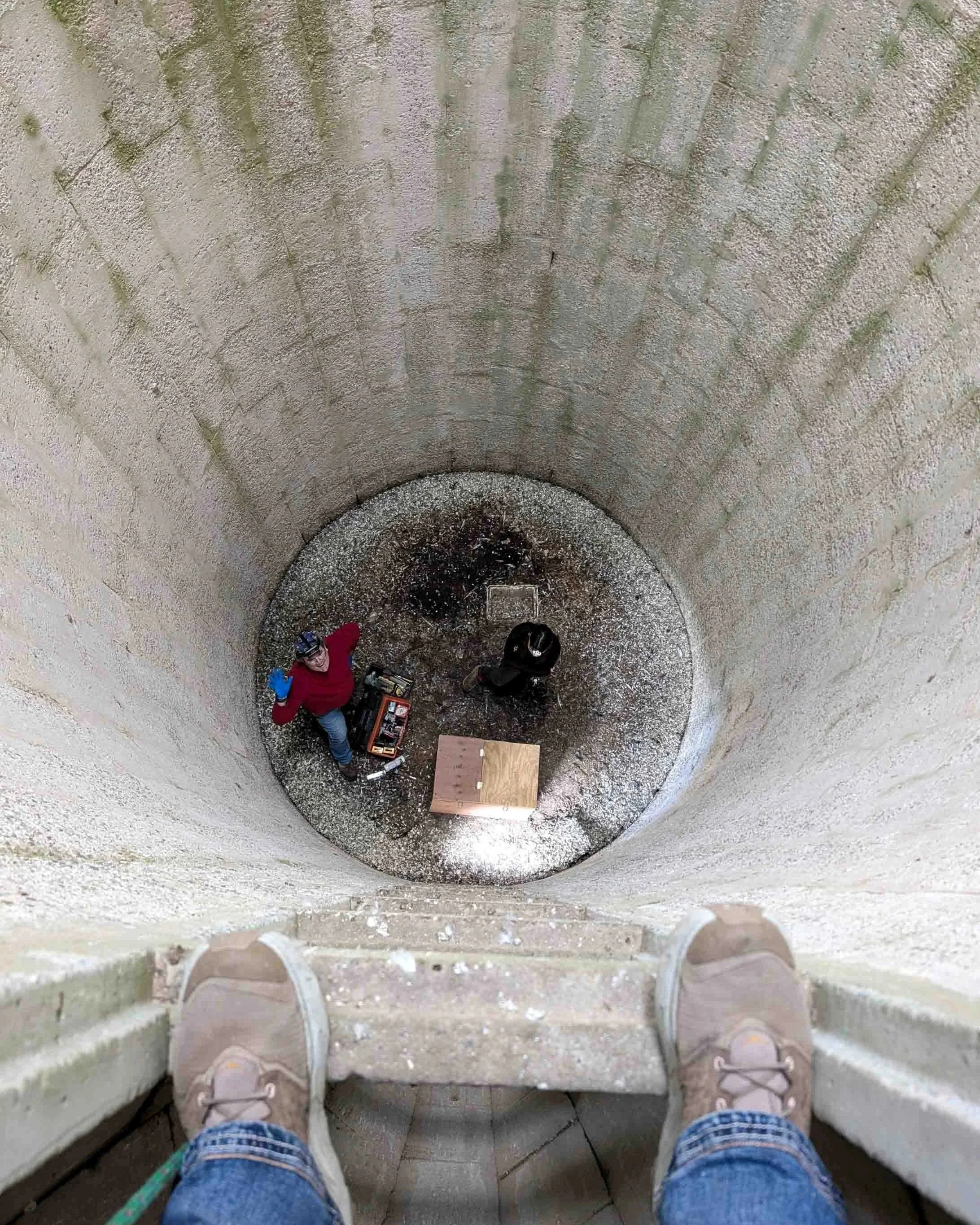
Michelle’s view looking down from the top of the silo. Photo by Michelle Huston
Watch Andy Brown, manager of the Farmland Raptor Program, teach Michelle and Jayson Huston how to install a barn owl nest box at the top of a silo.
But that only answers the present part of the question. The decade preceding is what actually got us to this point, and that was the result of raptor wizardry. You see, it all started with a merlin; one that Jayson and I saw land on a rock in the Potomac River one lazy summer afternoon near Dargan, Maryland. We were muskie fishing, and not adept birders at the time, so we didn’t know what it was. We watched (and filmed) it with much amusement, as it proceeded to take a bath. I later reached out to a colleague and birder who not only got us an answer on our bathing bird, but introduced us to Caretta Nature Tours (now Carretta Inspired Journeys), and its founder, Andy Brown (FRP Manager).
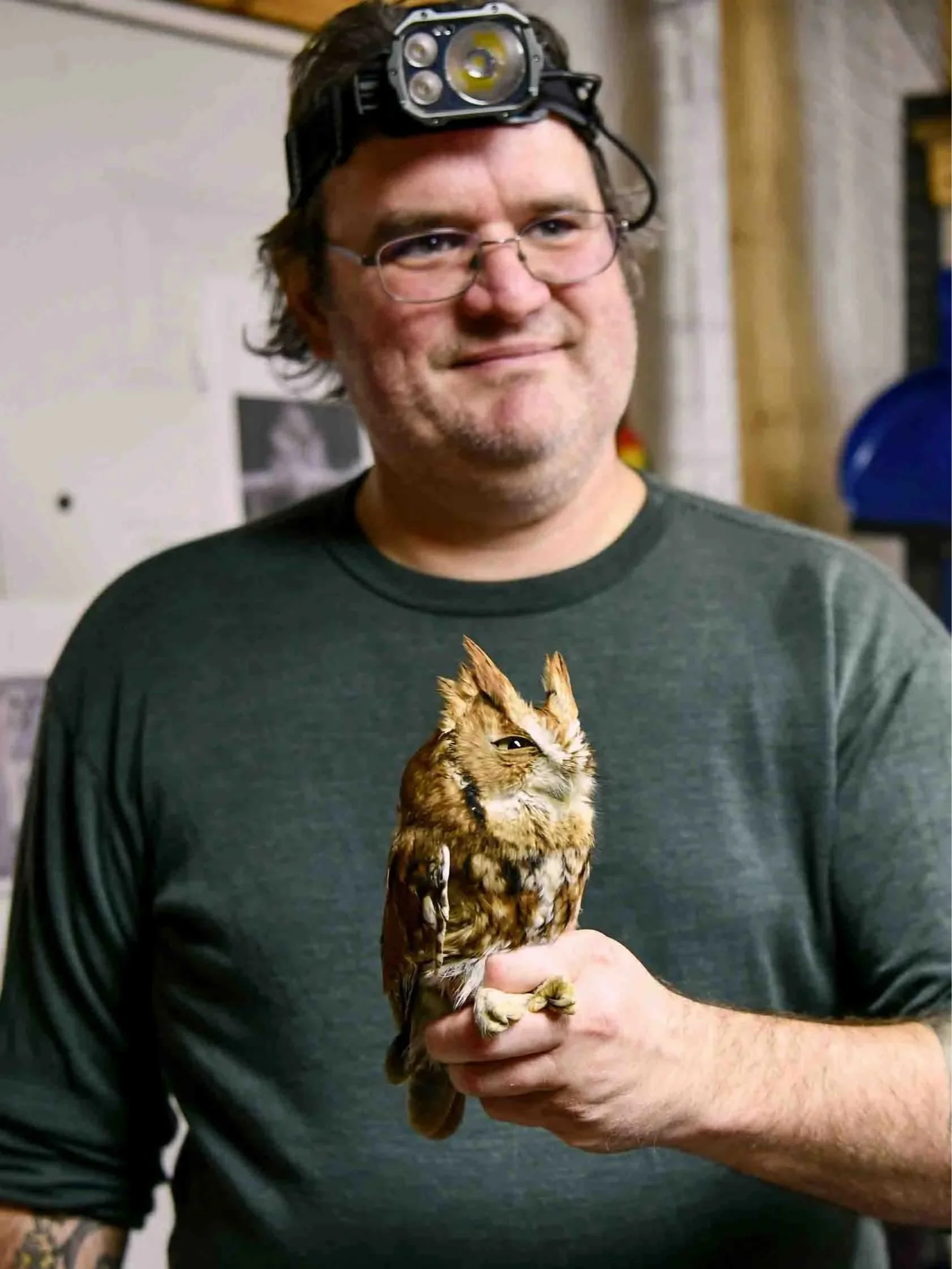
Jayson Huston holding an Eastern Screech Owl. Photo by Michelle Huston
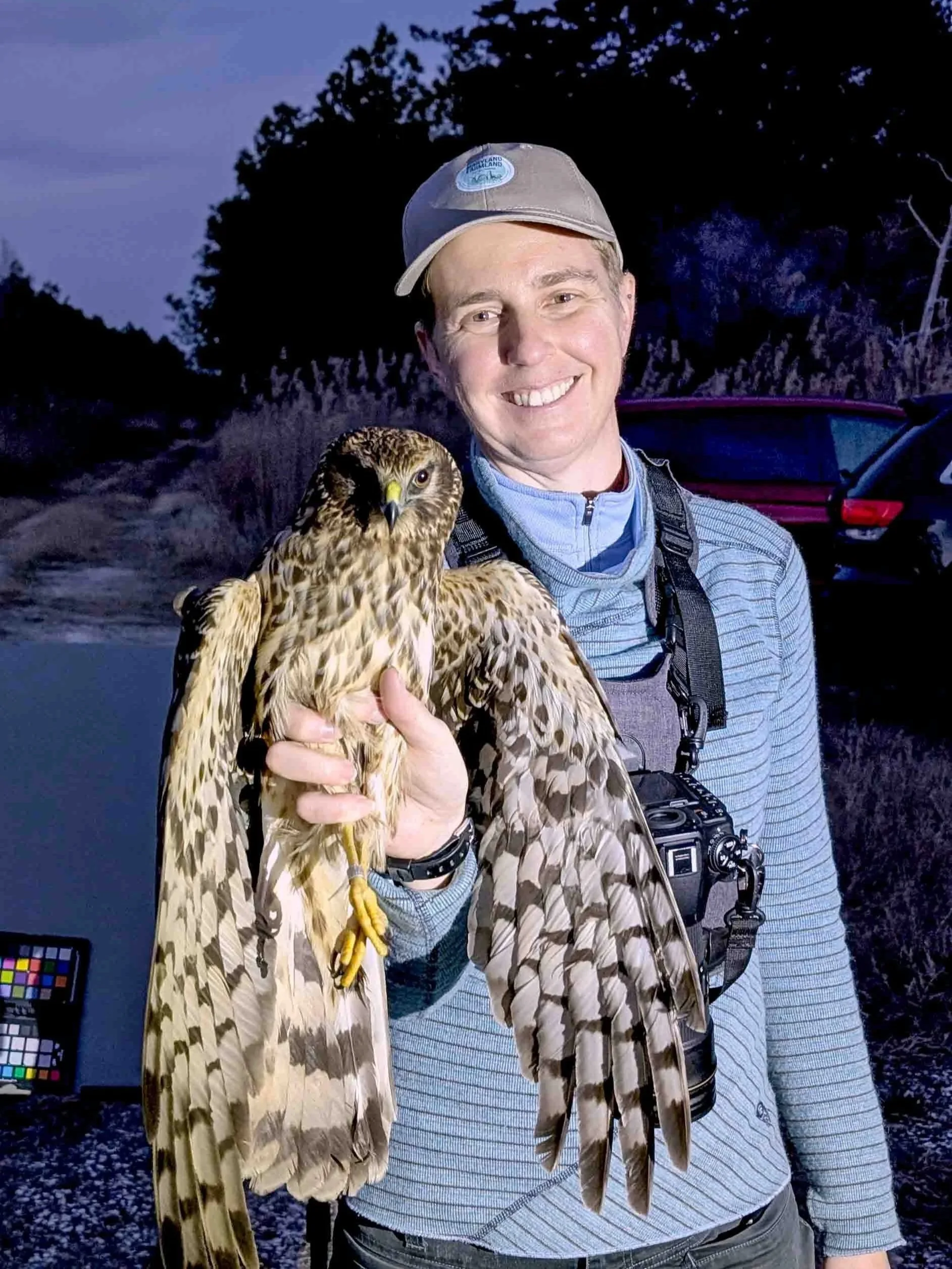
Michelle Huston holding a Northern Harrier. Photo by Sebastian Pennisi
In 2016, we went on our first adventure with Andy to the Delmarva Peninsula to look for owls (of course)! Our second adventure was a night at a Project Owlnet banding station in Virginia. Over the years more trips followed, and in the spring of 2025 we had the opportunity to help trap and band adult barn owls for the FRP in Frederick County. In the fall we volunteered at Lamb’s Knoll for Project Owlnet, and between net checks on one of those evenings, we were asked about helping with the FRP in Washington County. Let a barn owl look down at you from inside of a silo or close a talon on your gloved hand, or go nose-to-beak with an indignant 90-gram saw-whet owl, and try telling them, “No, I don’t want to help you.”
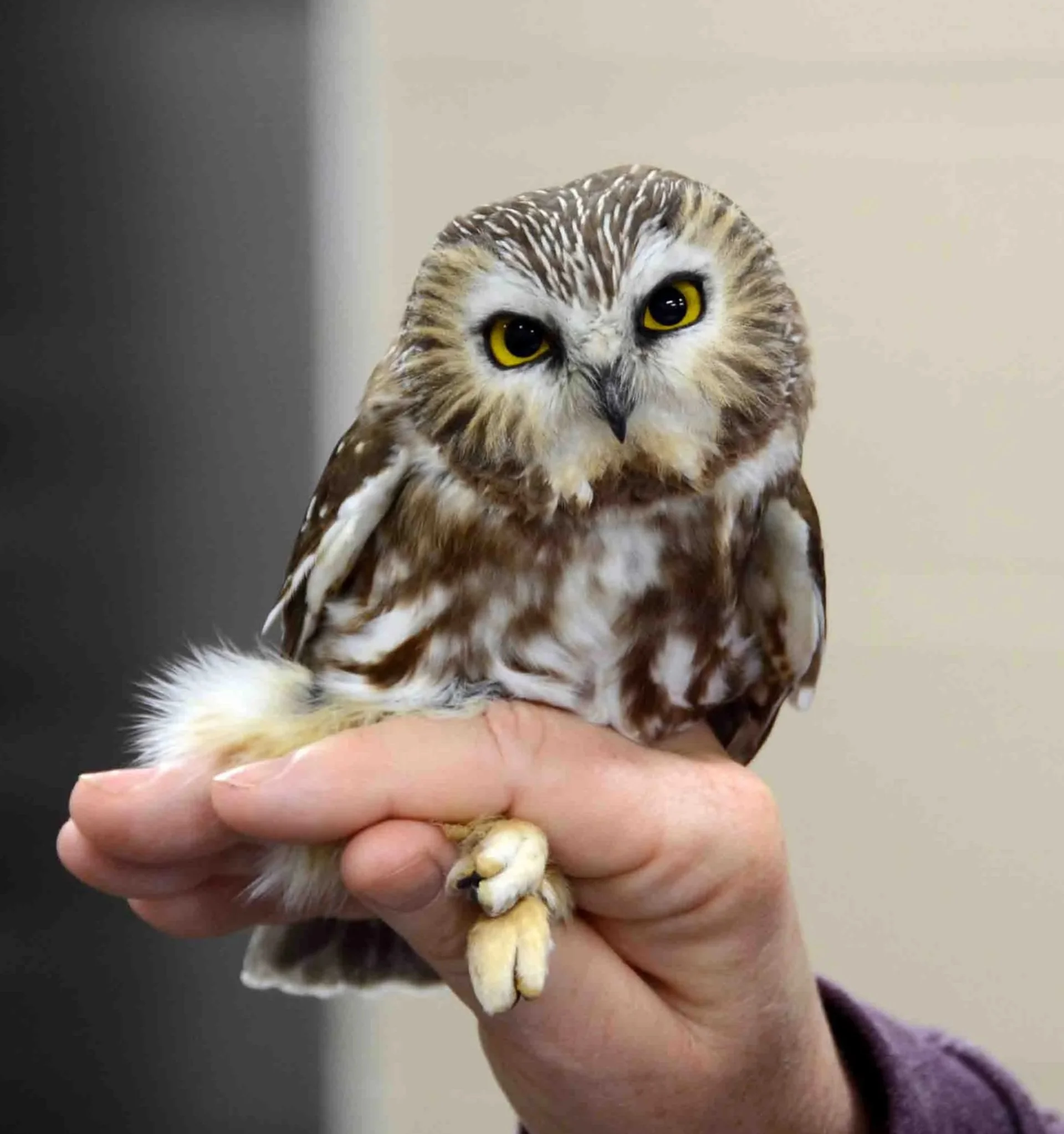
How do you resist a face like this? Saw-whet owl photo by Michelle Huston
For Jayson and me, it would not only be unthinkable not to help these conservation and research efforts when we can, but it is equally unthinkable to imagine pursuing them without each other. Maybe because our relationship began in a public online chatroom (1998) and was long distance for the next seven years, but working together at whatever we do is what we always do (and do well!). We often bring different skill sets and levels to the table, but they are complimentary (and we cross train each other, too). This is not just an interest or hobby norm, either. We have also worked professionally for the same employers, at different but related jobs, in our careers, twice. So far, FRP has been well-suited to our personal operations: I drive and spot, Jayson takes notes. We both review notes and rank prospective properties for nest box placement. Jayson finds land owners and contact info; I draft and send letters/emails to landowners and handle most of the follow-up contact and scheduling. When it comes to nest box building and installs we work nearly interchangeably on all tasks.
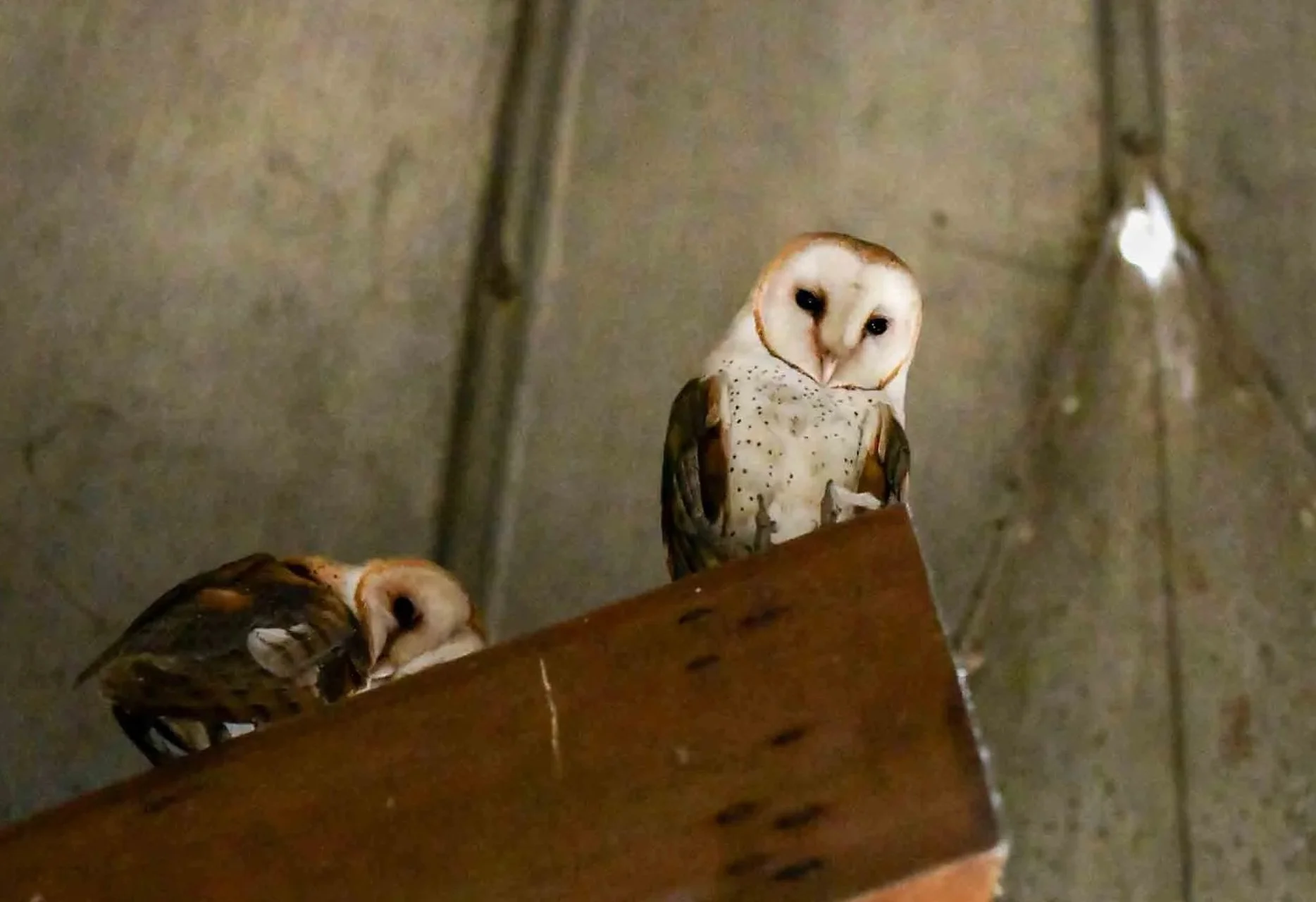
How do you resist faces like this? American Barn Owl photo by Michelle Huston
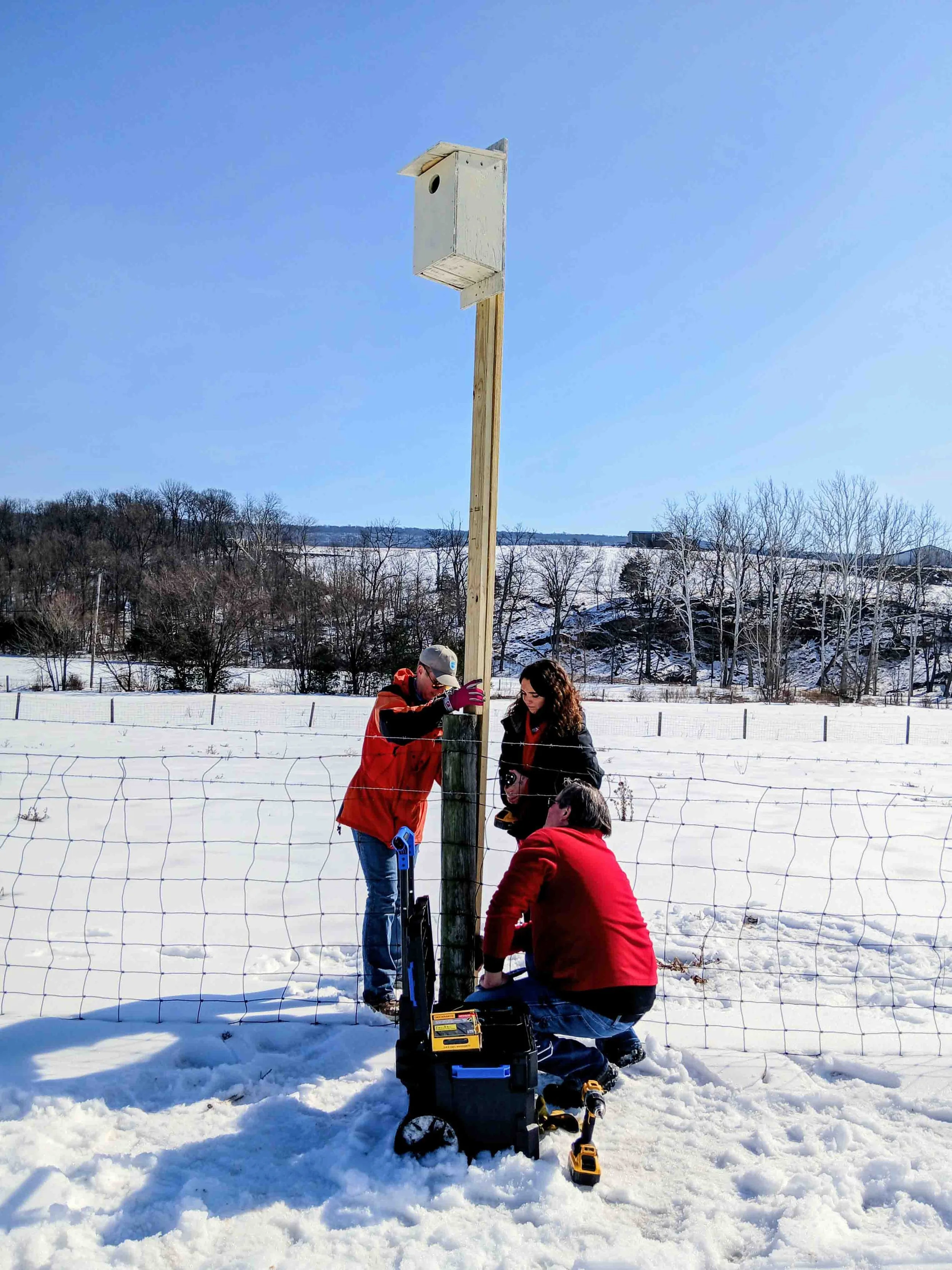
Michelle and Jayson Huston, and Hood College intern McKenna Bishop install a nest box for an American Kestrel in Washington County, Maryland. Photo courtesy of Michelle Huston
This winter we have been busy in Washington County: tracking down historical barn owl and known kestrel locations, and systematically surveying for new prospective locations and trying to make contact with landowners and get boxes installed and ready for spring. We actually got the very first two pairs of barn owl boxes and a trio of the kestrel boxes on my birthday, which was a pretty cool present (to me!). To date, we’ve installed five barn owl boxes and six kestrel boxes, are pursuing multiple new prospective sites, and are continuing outreach efforts for more locations (including help from some of the landowners and volunteers we have connected with). We’ve had one friend, three volunteers, and an intern currently involved in helping with installs, several of whom will be helping with monitoring efforts as we head into the breeding season.
It has been a hoot (figuratively speaking since barn owls don’t hoot, they scream), and we’re having a great time. We’re excited for the upcoming breeding season and hopeful that we’ll have some chicks raised, and both the chicks and adults banded from some of these nest boxes, which will serve to gain an even better understanding of these raptors and their movements in the future.
The actual merlin that started it (August 2014).