Showing Appreciation for the Farmland Raptor Program Volunteer Community
MBCP relies on volunteers to carry out its Farmland Raptor Program throughout the state of Maryland. One of the rewards of being a program volunteer is an invitation to attend a chick banding event, in which American Barn Owl or American Kestrel nestlings are weighed, aged, sexed, and outfitted with aluminum alloy leg bands that have a unique tracking number.
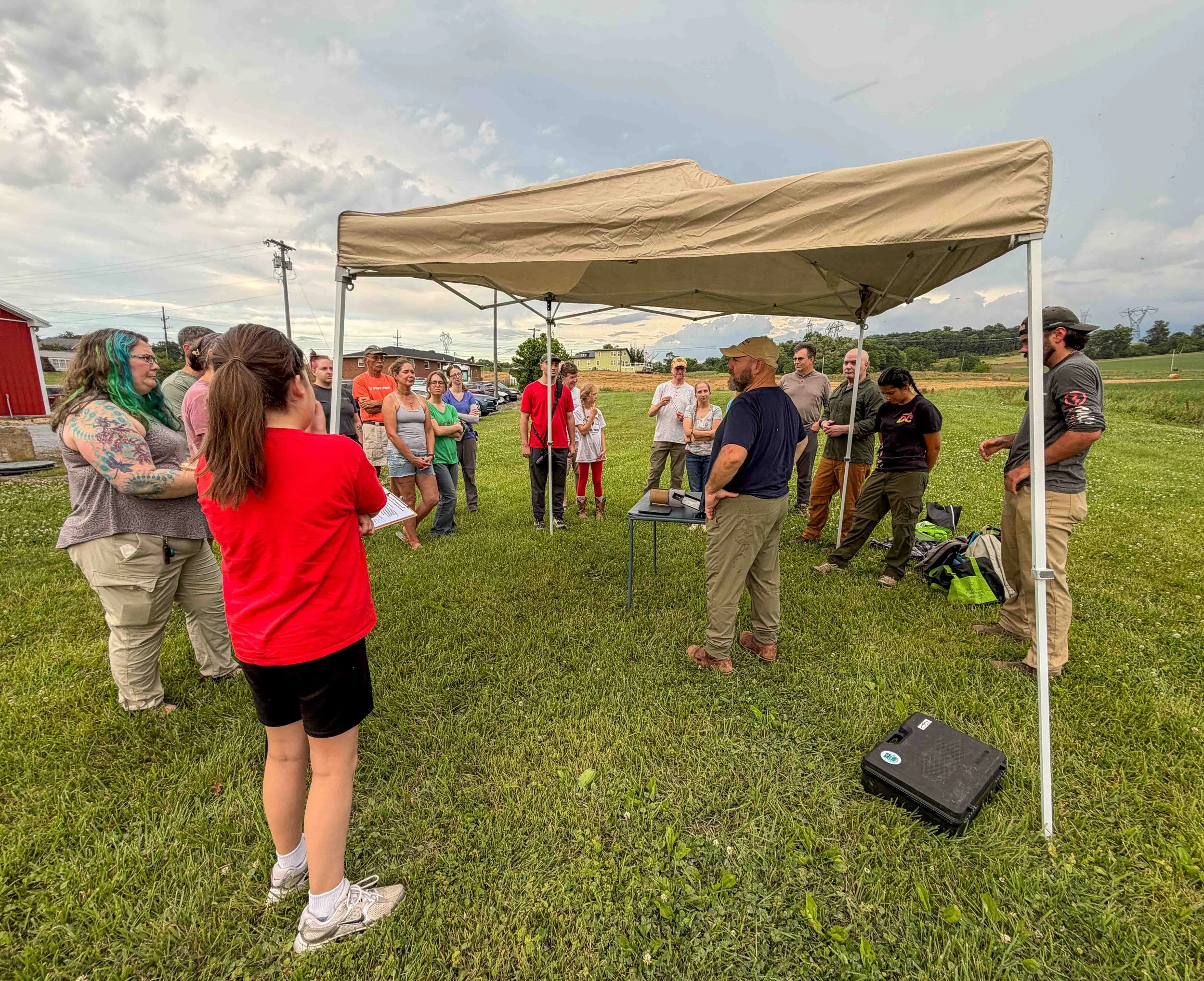
American Barn Owl chick. Photo by Farmland Raptor Program nest box monitor Jayden Ward.
At a recent barn owl chick-banding event in central Maryland, Frederick County volunteers shared their first impressions of the young birds:
“They’re kind of creepy and kind of cute at the same time,” said Blue Portner.
See more “creepy” and cute barn owls and meet the volunteers in this video of a chick banding event in central Maryland.
“They’re just so freaky looking, I love it. They’re little weirdos,” said Cait Tyndale.
“I enjoyed seeing them, but it was really something crazy to hear them,” said Jayden Ward. “The sheer power in their voice, it’s intense.”
A Celebration of Our Volunteers
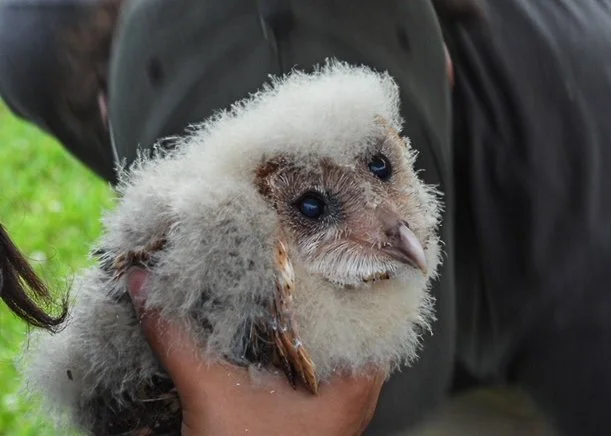
In addition to Farmland Raptor Program Manager Andy Brown and the volunteers, attendees included the landowners, Regional Box Managers (who coordinate the other volunteers and activities in an assigned area), and apprentice banders.
“We’re here as a celebration—celebrating the community of volunteers from Frederick, Carroll, Anne Arundel, Baltimore, and Washington counties, that have come together within the Farmland Raptor Program to help monitor nest boxes,” explained Tom Versichelli, one of the Regional Box Managers for Frederick County who is also being trained as a bander.
The group of 25-plus people represented all ages, including families with young children. “You’ve got retirees, you’ve got individuals graduating high school, you have people who are mid- to late-career professionals, with vastly different backgrounds and from different disciplines. But everybody is here for the love of conservation,” added Tom.
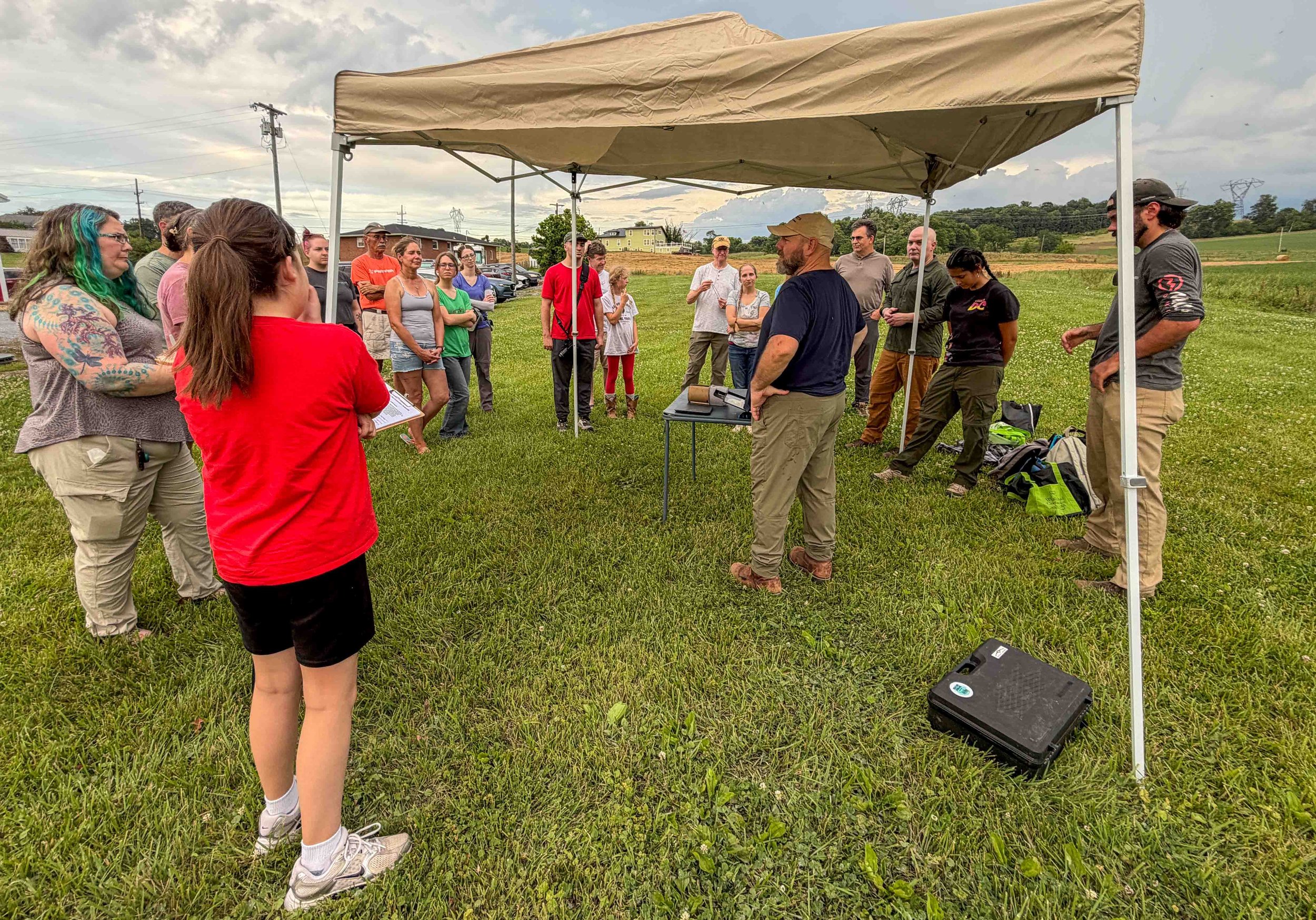
Farmland Raptor Program manager Andy Brown briefs volunteers who have gathered to watch a brood of barn owl chicks receive unique identification leg bands.
A Rare Opportunity
It would be outrageously good luck if every volunteer had the good fortune to find barn owls or kestrels nesting in the boxes that they monitor, but that is not the case. Roughly 30% of nest boxes become occupied, which means that many volunteers are encountering empty boxes when they look inside the nest box.
“Many of our volunteers are not seeing any evidence that their efforts are working,” said Andy Brown, manager of the Farmland Raptor Program. “When I can organize an event where our volunteers come and observe us banding the chicks, it helps them feel part of our organization, that their work is appreciated, and that it does lead to conservation results with these birds.”
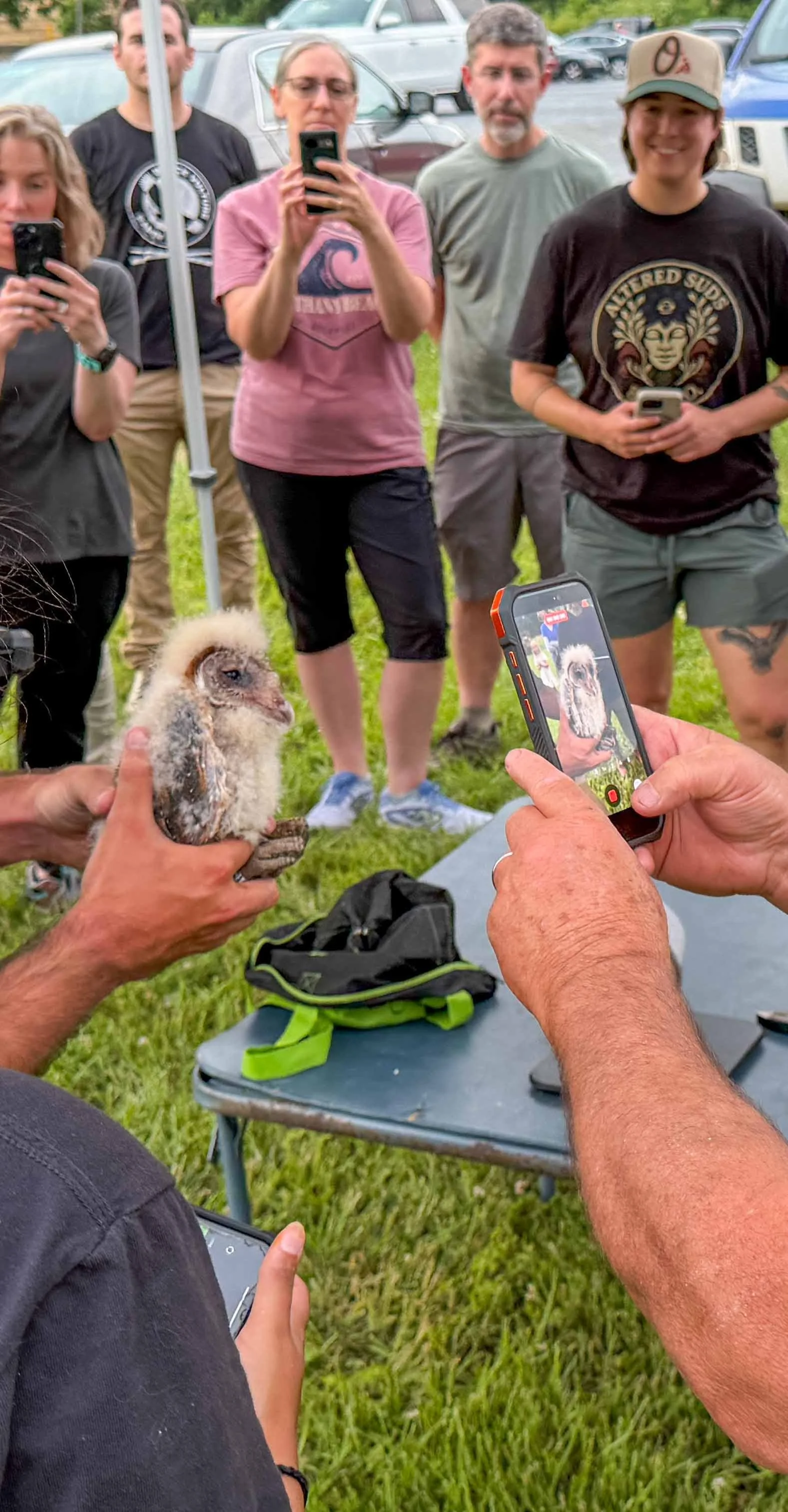
Lots of smart phone photos are taken of the chicks during the event.
During the event, participants watched as the apprentices weighed the birds and attached the leg bands. Andy explained each step of the process. He also showed participants how to use the feather coloring on the chicks to age and sex them. In the case of the chicks banded at the central Maryland event, Andy estimated that the six chicks were two weeks apart in age. This is the result of the asynchronous egg laying and hatching strategy that barn owls use to ensure maximum brood success.
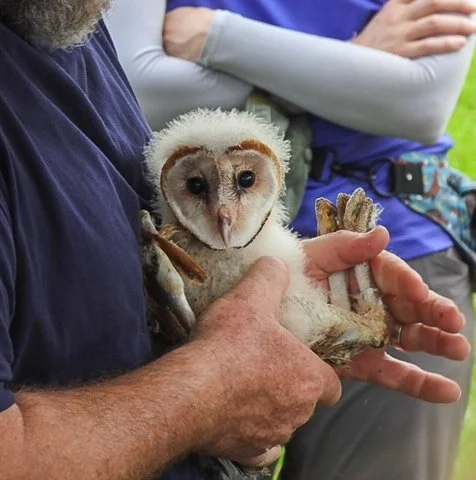
American Barn Owl chick with new leg band. Photo by Jayden Ward.
“It’s amazing to see the different sizes among the same nestlings,” Charissa Hipp, a first-year Washington County volunteer. “I had no idea they could vary so much in size.”
This is not the first time Christy Conley, the Regional Box Manager for Baltimore County, has seen barn owl chicks, but she loves how fuzzy they are and doesn’t want to miss an opportunity to see them.
“Especially with how badly they are struggling in Maryland, any opportunity to get to see one is really special,” Christy added. In Maryland, American Barn Owls are listed as a Species of Greatest Conservation Need.
Camaraderie for Conservation
One of the main purposes of the banding events is to create camaraderie among the volunteers. Jayden Ward is a graduating high school junior and volunteer for Frederick County. He understands the importance of outreach, so he brought his camera and plans to help the Farmland Raptor Program with creating a new brochure.
“This program does connect people, as you can see with this chick-banding event,” Jayden said. “It also helps with conservation. If you have a bunch of people caring about one issue, it helps to get that issue resolved.”
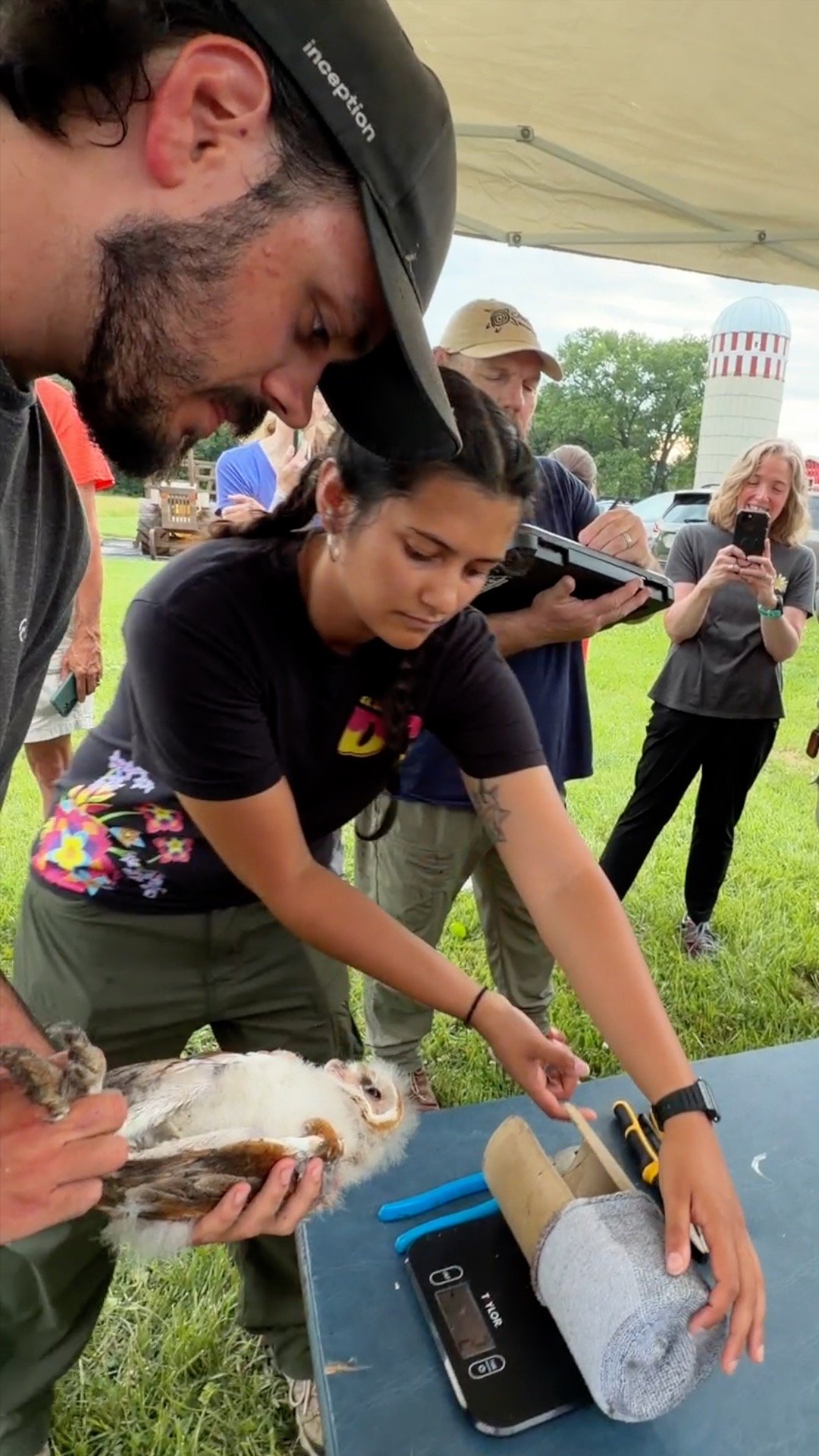
Sebass and Sofia are banding apprentices, working under Andy Brown’s master banding license issued by the USGS Bird Banding Lab.
Sofia Dindyal and Sebass (short for Sebastian) Pennisi are two of a handful of volunteers who help Andy capture and band barn owls for the research aspect of the program. They are apprentices under Andy, who is a master bander and holds the permit from the U.S. Geological Survey’s Bird Banding Laboratory.
“With Andy and Alex teaching us, they’ve been extremely patient. They are very open to us handling birds and banding them, and we’re really grateful for that,” said Sofia. Alex Pellegrini is the coordinator of the Farmland Raptor Program and the only paid staff.
“This is my first year being a full-time volunteer and the community is awesome,” said Sebass. “Everyone is here to learn. Everyone comes in with a joyful attitude: What are we going to find today?” Recently, Sebass reported, they found a barn owl that had been banded in another state. Recapturing banded birds provides a great deal of insight into barn owls’ habitat needs and changes in the ecosystem over time. It’s the reason the program bands the birds in the first place.
“I see the excitement that all of these folks have. It may be the first time they’ve ever seen a barn owl or a kestrel (and they are pretty darn cute),” said Andy. “It really gets the volunteers excited about the program when they get to see these fun and humorous birds, and they want to do more. And that makes me feel fantastic.”