Maryland & DC Breeding Bird Atlas 3 Moves From Data Collection to Conservation
For the 2,500+ volunteers who contributed data to the atlas, the completion of data collection was not the end of the project — it was the beginning of what we can learn from it. Their collective effort created an unparalleled resource for understanding Maryland’s birds, and Maryland Bird Conservation Partnership (MBCP) has been hard at work reviewing the millions of data points collected by atlasers and preparing the dataset for use in practical applications.

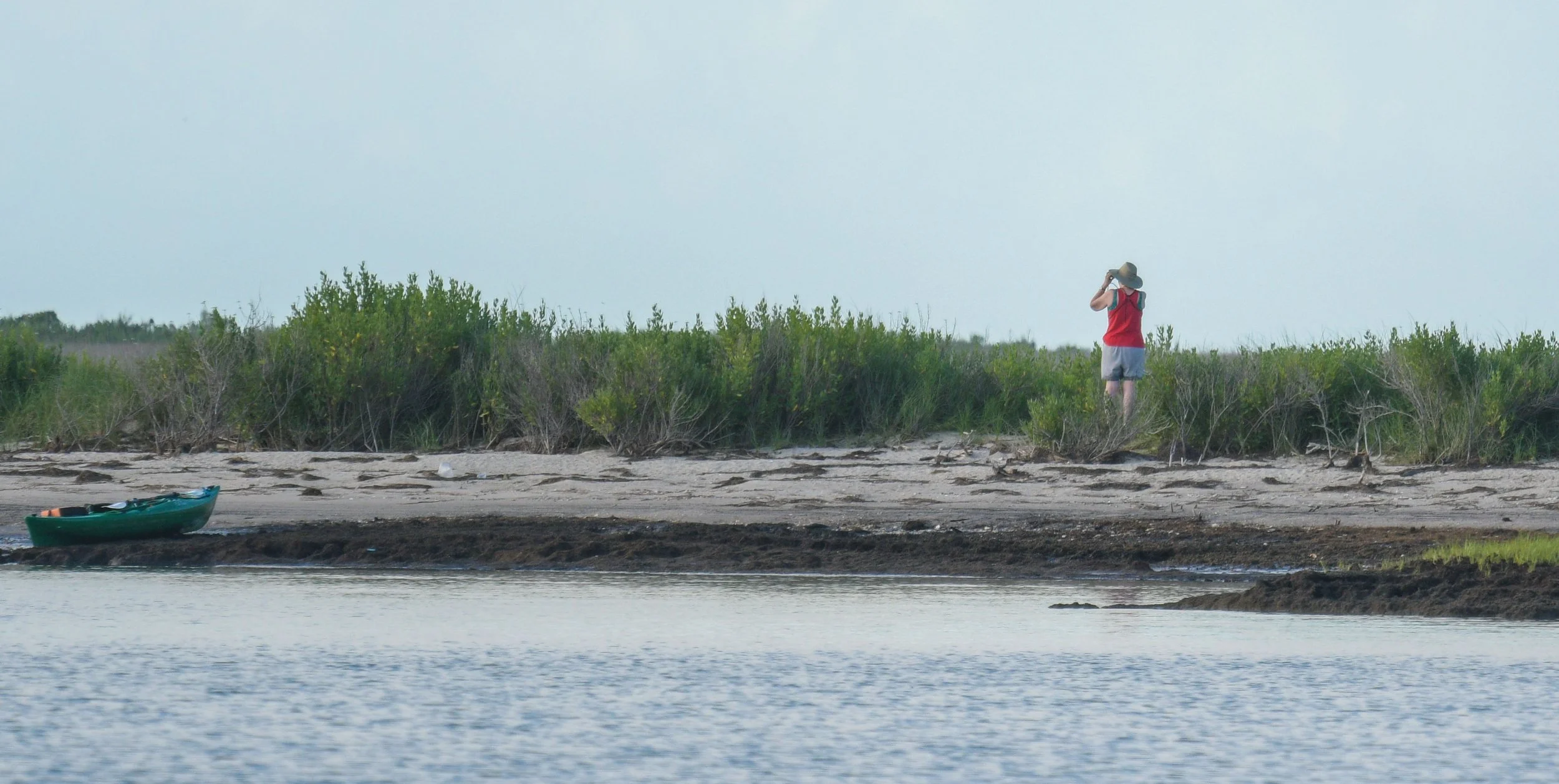
Atlas volunteers Margaret and Emily don bug nets to collect data in the far reaches of Somerset County. Photo by Margaret Poethig.
That work is now complete. The raw atlas dataset has been reviewed and is ready for analysis. The analysis will take effort and habitat variables into account and provide a more complete picture than the raw data are able to show. But, the raw data are already making a real difference in Maryland bird conservation.
MARYLAND’S 2025 STATE WILDLIFE ACTION PLAN
One of the first major applications of the atlas dataset has been updating Maryland’s State Wildlife Action Plan (SWAP), now available from the Maryland Department of Natural Resources. The SWAP is the state’s 10-year blueprint for identifying conservation priorities and guiding efforts to protect wildlife and their habitats. It’s a key document for Maryland, and MBCP is proud to have been a part of its update, using the atlas data to help inform the plan’s bird conservation priorities.
The atlas data have also been used to inform survey protocols for the state’s guide to forest interior dwelling bird conservation, and MBCP has shared relevant parts of the dataset with other organizations and researchers whose work can benefit from information collected through the atlas.
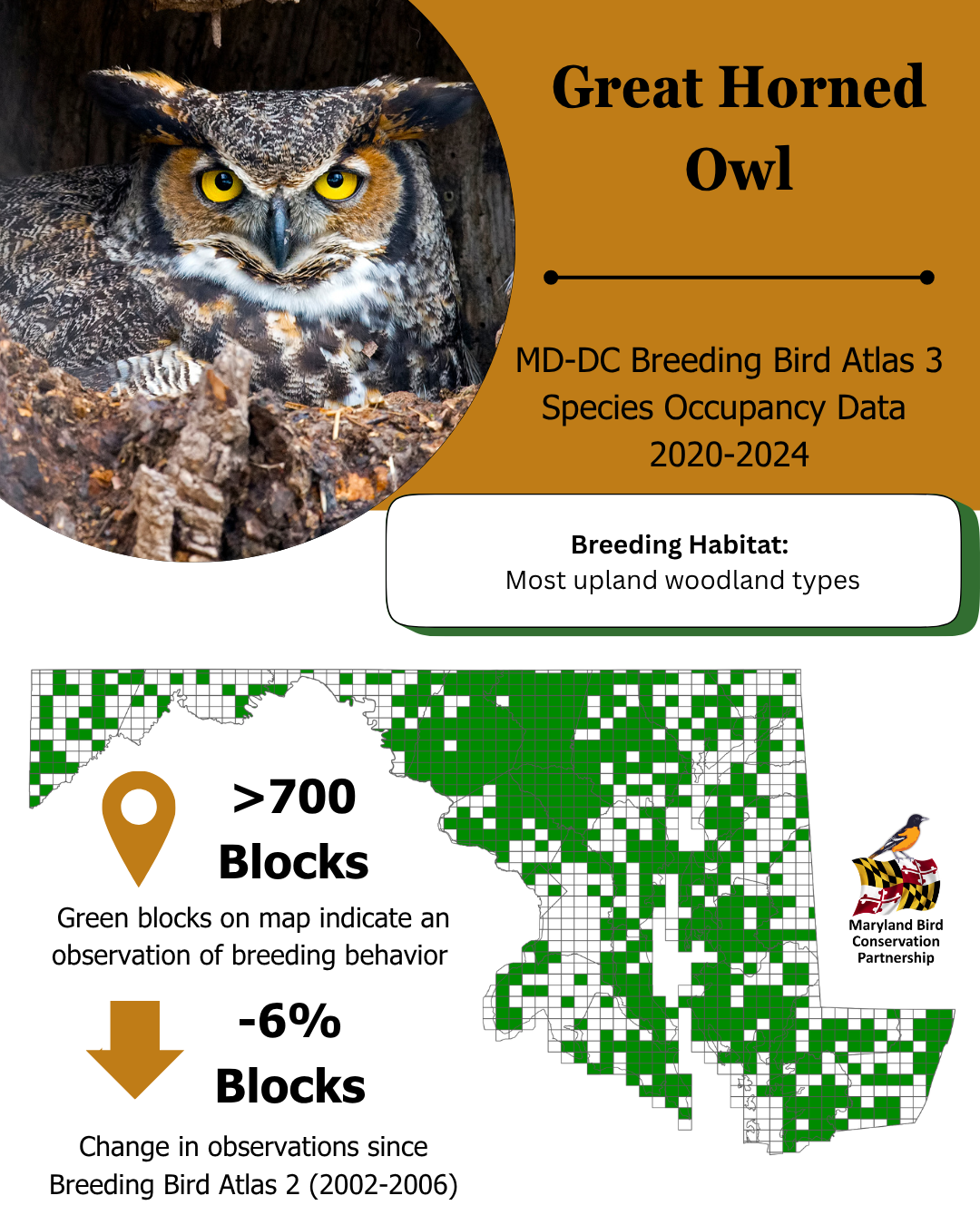
Now that the review is complete, the next step is analyzing the data to take into account variables like effort and habitat. MBCP will be partnering with the New York Breeding Bird Atlas III to analyze both states’ datasets concurrently. The two atlases collected data over the same time period, used nearly identical methods, and share much of the same avifauna, making this an opportunity to cut costs and learn more by working together.
ATLAS ANALYSIS
A postdoctoral researcher affiliated with the New York atlas will lead the modeling effort. Modeling is expected to begin soon and take approximately a year to complete. While the raw data show where a bird was detected, it doesn’t show where a bird occurred but went undetected. Alongside the bird observations, the analysis will take into account variables like effort and habitat. It will use statistics to predict how likely it was that a place without a detection was a true absence, or simply a non-detection of the bird. This takes us beyond simply documenting where birds were found and helps us understand patterns in Maryland’s breeding bird populations and how they are changing across the landscape.
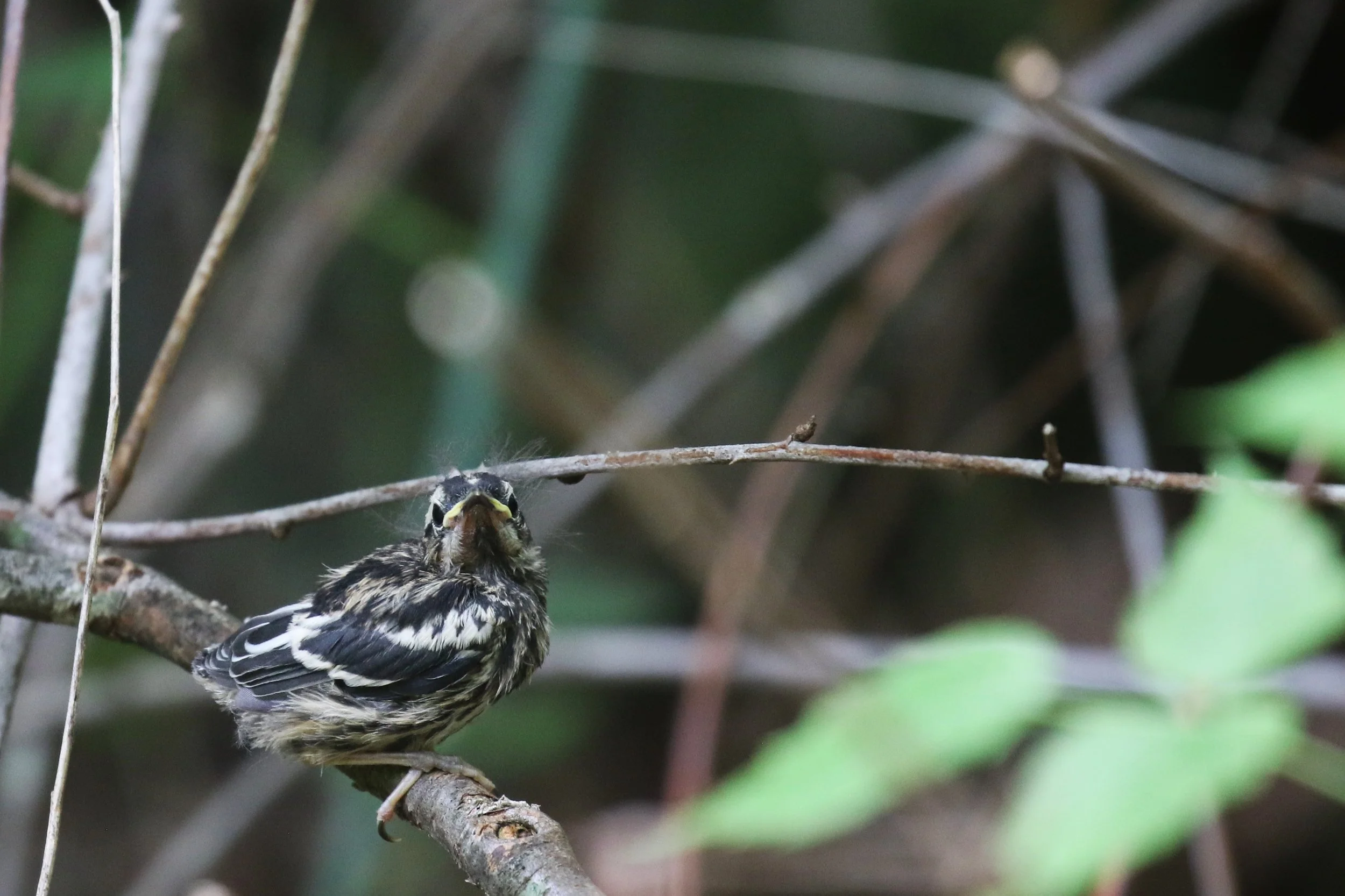
A freshly fledged Black-and-white Warbler perches on a branch. Photo by Gabriel Foley.
MBCP is also pulling together a “final product” committee, which will guide the publication process for the data. This will be chaired by John McKitterick, who was on the atlas steering committee and is past-president of Maryland Ornithological Society and their current executive secretary.