MBCP Sows Native Garden Stories to Inspire New Habitat for Birds
This summer, Maryland Bird Conservation Partnership has been searching out and filming stories about native plant gardens. Through these stories, we are inspiring folks to take simple actions to make their spaces—whether that’s an apartment balcony or a working farm—more beneficial to the ecosystem.
We tracked down people from all over the state, from western Maryland to the Lower Shore, and asked them to show us how they were improving habitat for birds. These kind folks let us into their farms, fields, and backyards. They told us that to make a difference for birds, sometimes it starts with something small like a few native plants, a decision to leave an aging tree standing, or turning a front yard lawn into a charming message of conservation. Their approaches are different, but their stories share the common thread of meaningful conservation beginning right at home.
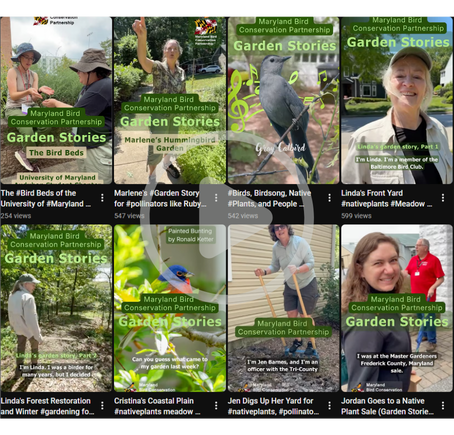
MBCP’s Garden Story playlist shares short videos of people from across Maryland taking action to make their yards more diverse and bird-friendly. Videos by Margaret Poethig.
The stories
For Cristina, it began with removing an invasive grass. When she and her husband Lou moved to a property along the edge of a marsh, they discovered that the tall ornamental grasses in their meadow were invasive miscanthus. As they removed the grasses, native goldenrods and asters returned from the existing seed bank. The meadow soon attracted insects, pollinators, and birds. Years later, a male Painted Bunting appeared—a welcome visitor and a memorable reminder of how a landscape can change when native plants have room to grow.
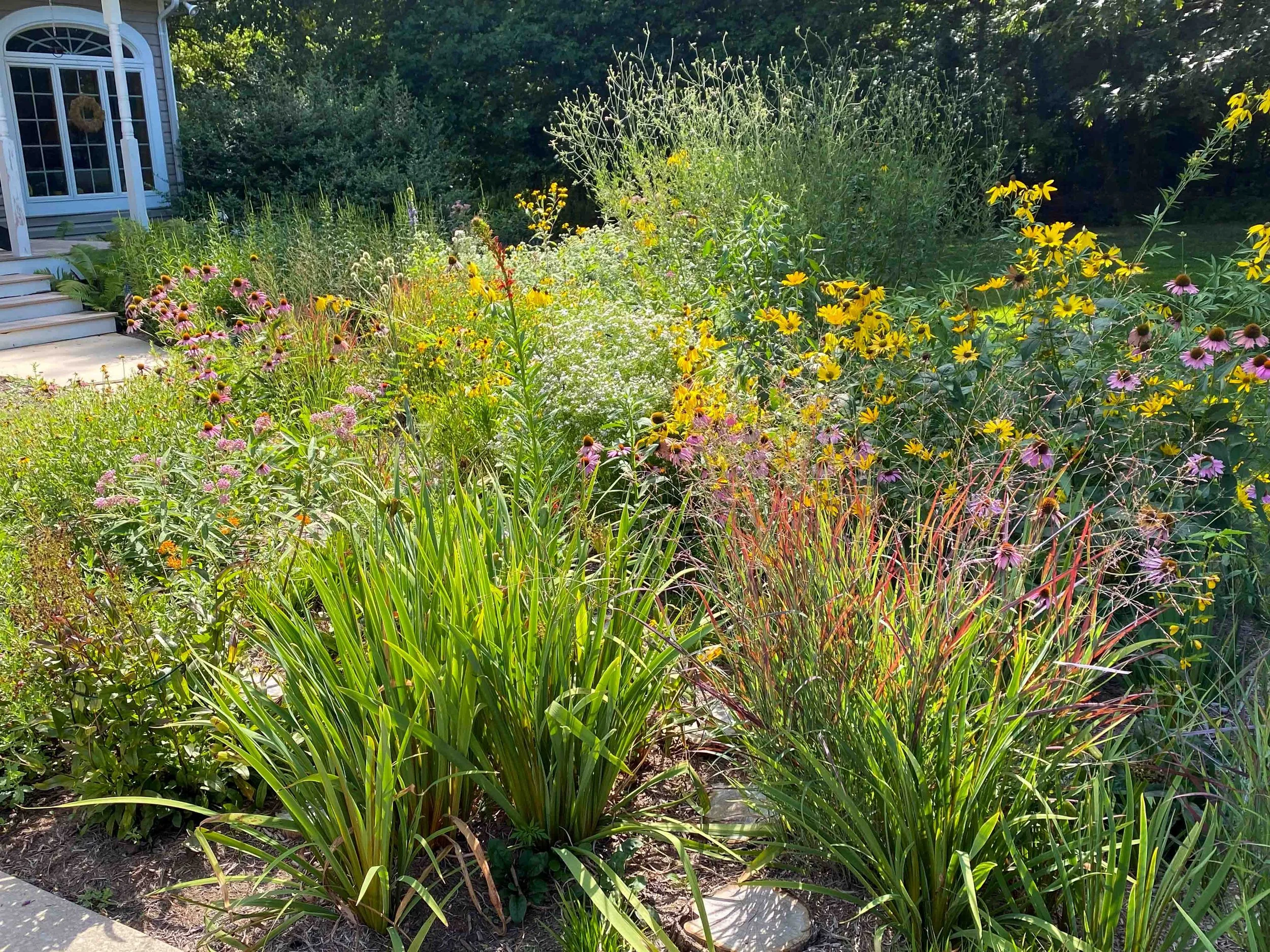
Cristina’s front yard is an explosion of color, texture, and biodiversity. Photo by Cristina Niciporciukas.
Other gardeners found inspiration in learning and connecting with others. Jen started with a small native garden after reading about the relationships between native plants and insects. Before long, she was looking around her property for places to add more. Jordan found confidence at a local native plant sale, where knowledgeable growers helped her choose plants suited to Maryland ecosystems. When Emily decided to create a bird garden of her own, she turned to her neighbor Karen, who shared both her gardening experience and plants from her own garden. A little knowledge and a few transplants helped another garden take root.
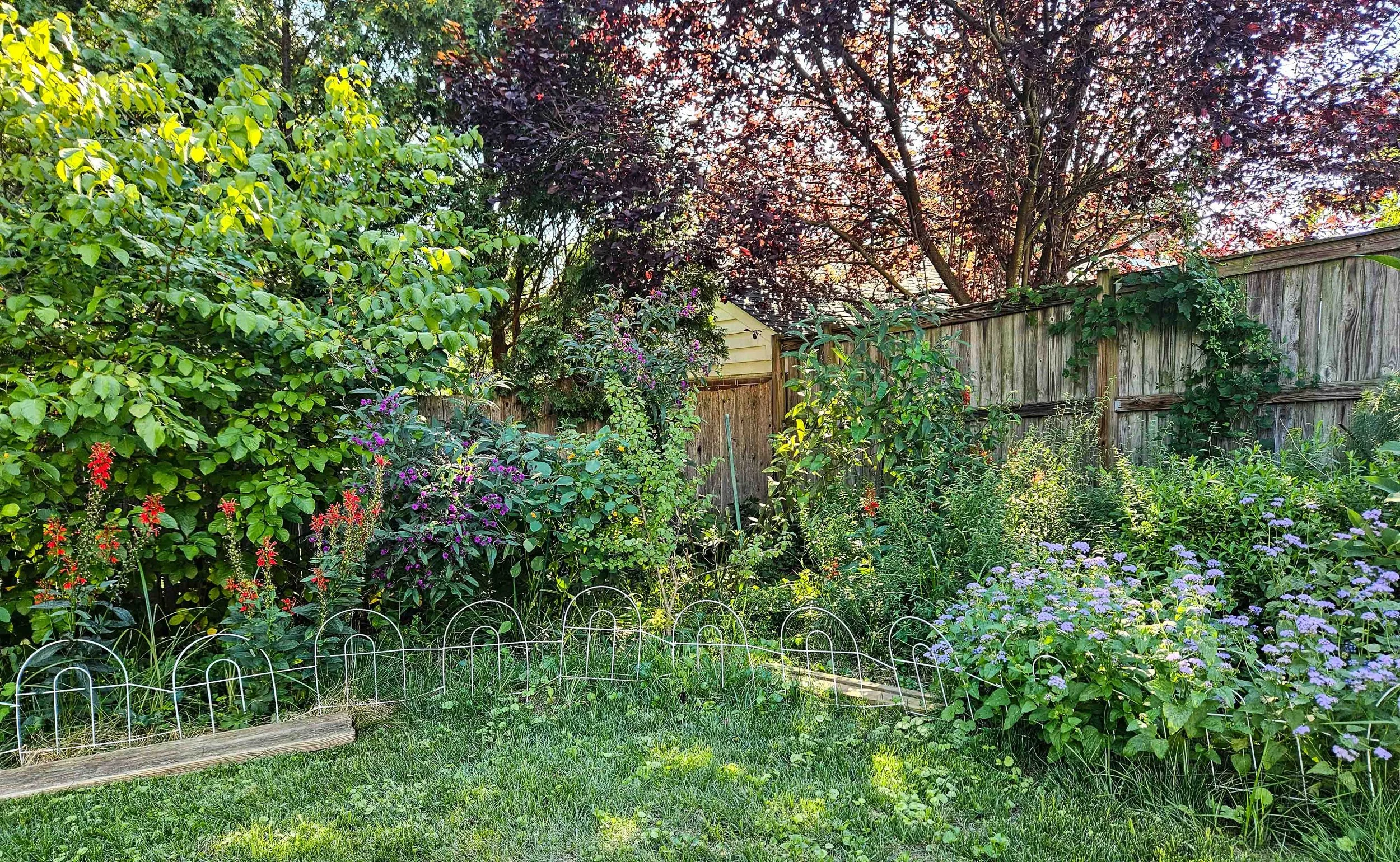
Emily’s native plant garden, helped out by transplants from her neighbor Karen’s garden. Photo by Emily Huang.
Sometimes, supporting birds means rethinking what we already have. Karen’s aging red maple became a nesting site for Northern Flickers, which excavated a cavity in the tree’s softer, declining wood. Rather than seeing the tree only as something nearing the end of its life, Karen recognized the habitat it provided. Linda took a different approach by replacing lawn with native plantings that provide insects, nectar, seeds, and berries for birds. After emerald ash borer killed many trees in her backyard, she began restoring the area one section at a time, removing invasive plants and adding trees and native species. Progress has been gradual, but native plants are beginning to return and spread.
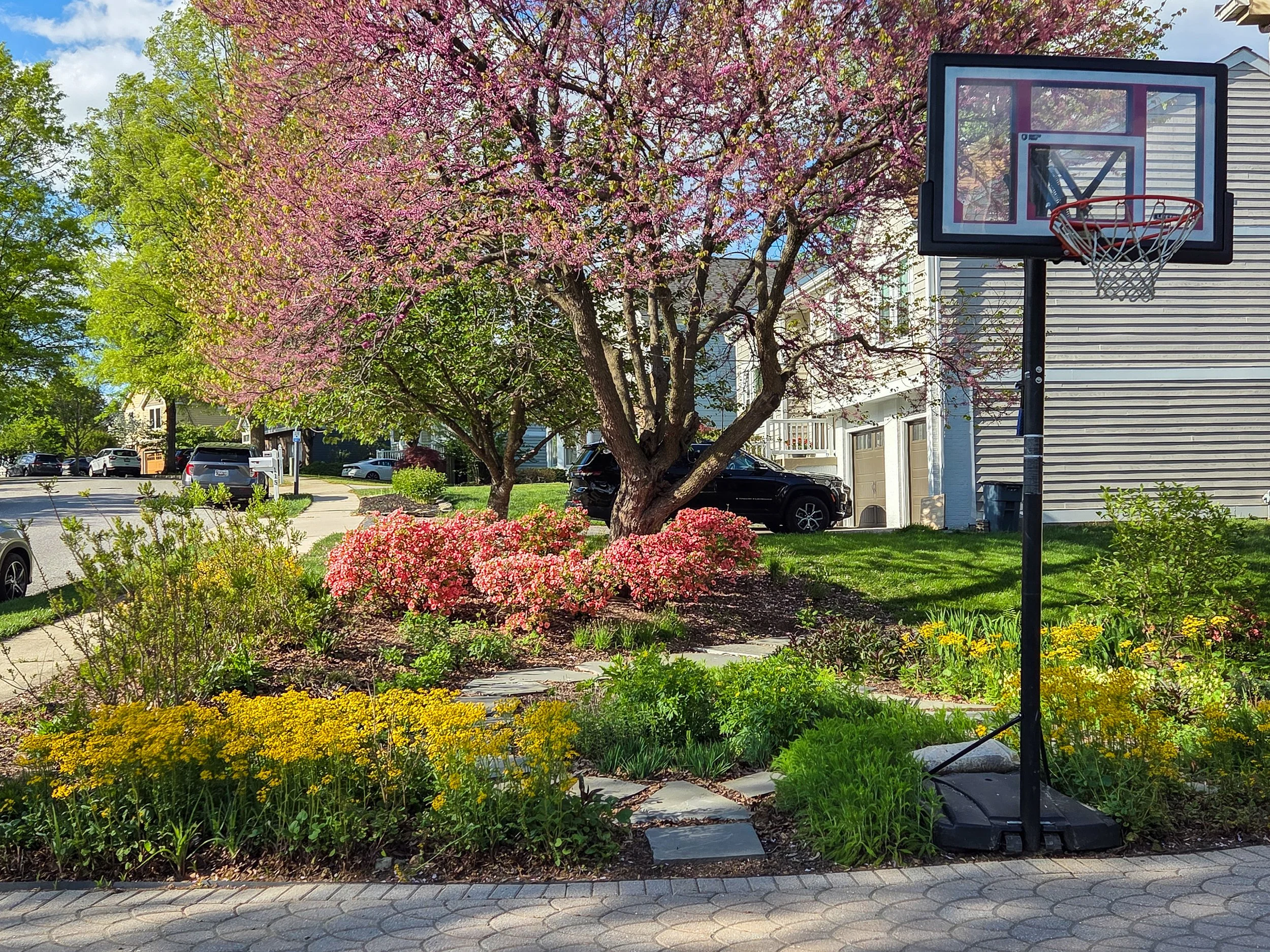
Linda’s front yard, transformed from lawn into a gorgeous texture of native plants complete with basketball hoop for the grandkids. Photo by Linda Corcoran.
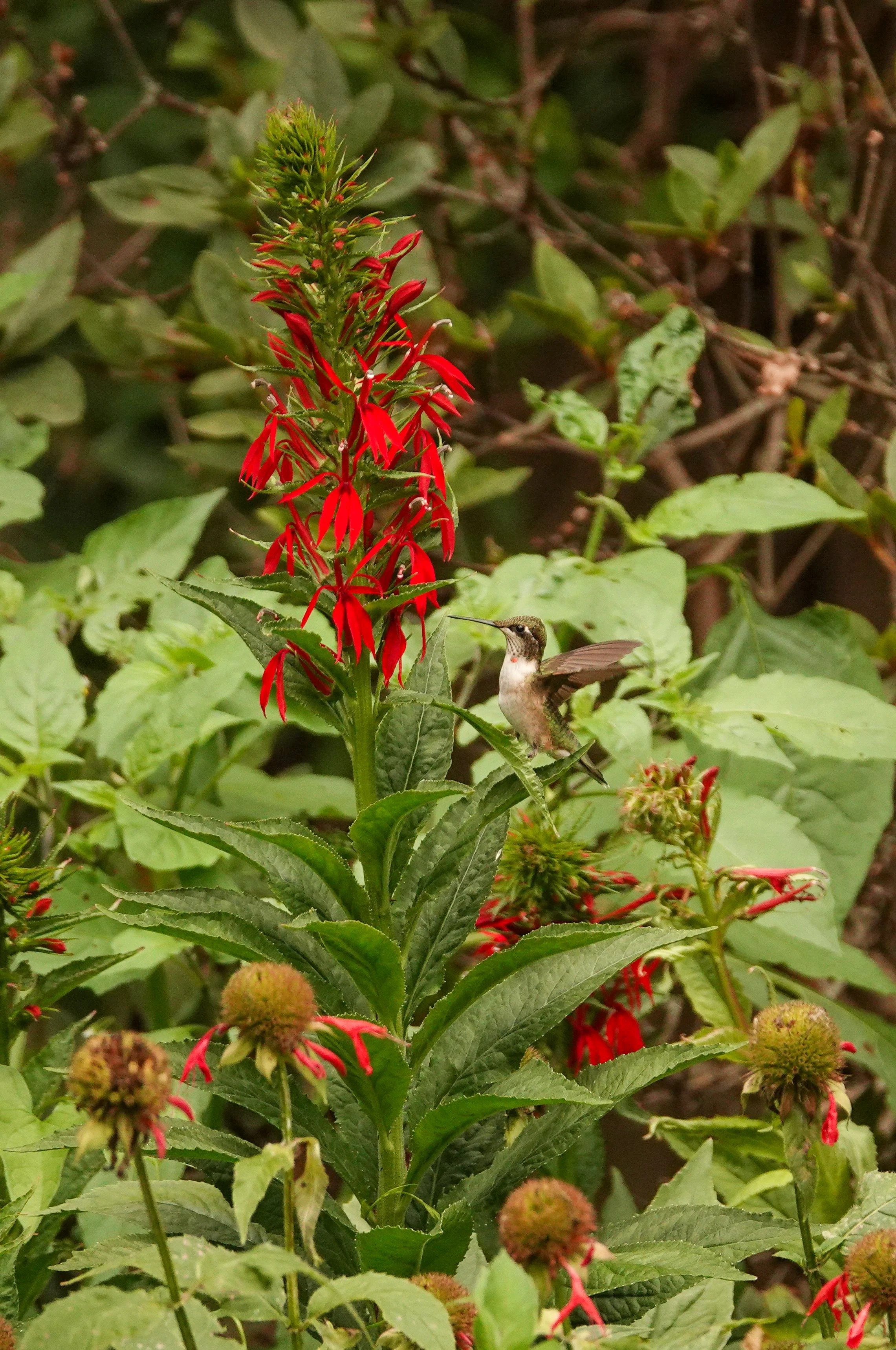
A Ruby-throated Hummingbird visits a cardinal flower. Photo by Karen Cyr.
For Marlene, native gardening brought the unexpected pleasure of Ruby-throated Hummingbirds returning year after year. By planting different flowers that together provide continuous blooms from spring through fall, she provides nectar for hummingbirds and habitat for the insects they need. Through community events, she also shares what she has learned and helps others discover plants that can support these backyard ecosystems.
Fin and Andrew are students at the University of Maryland, and they both recognize the often grim challenges our environment is facing. But rather than let these challenges overwhelm them, they have taken action where they can. They believe that our landscapes can and should be habitat, and they manage these Bird Beds through their Audubon student chapter (which became an action item in the university’s successful Bird City Maryland application). The students saw sterile patches of crabgrass and rose of Sharon isolated in an urban setting and turned the plots into a lush pollinator oasis. Fin and Andrew believe that exposure to the beauty of natural landscapes brimming with native plants and bustling insects is one of the first steps in repairing humanity’s relationship with nature, and they’re undertaking the work to showcase the beauty of that life.
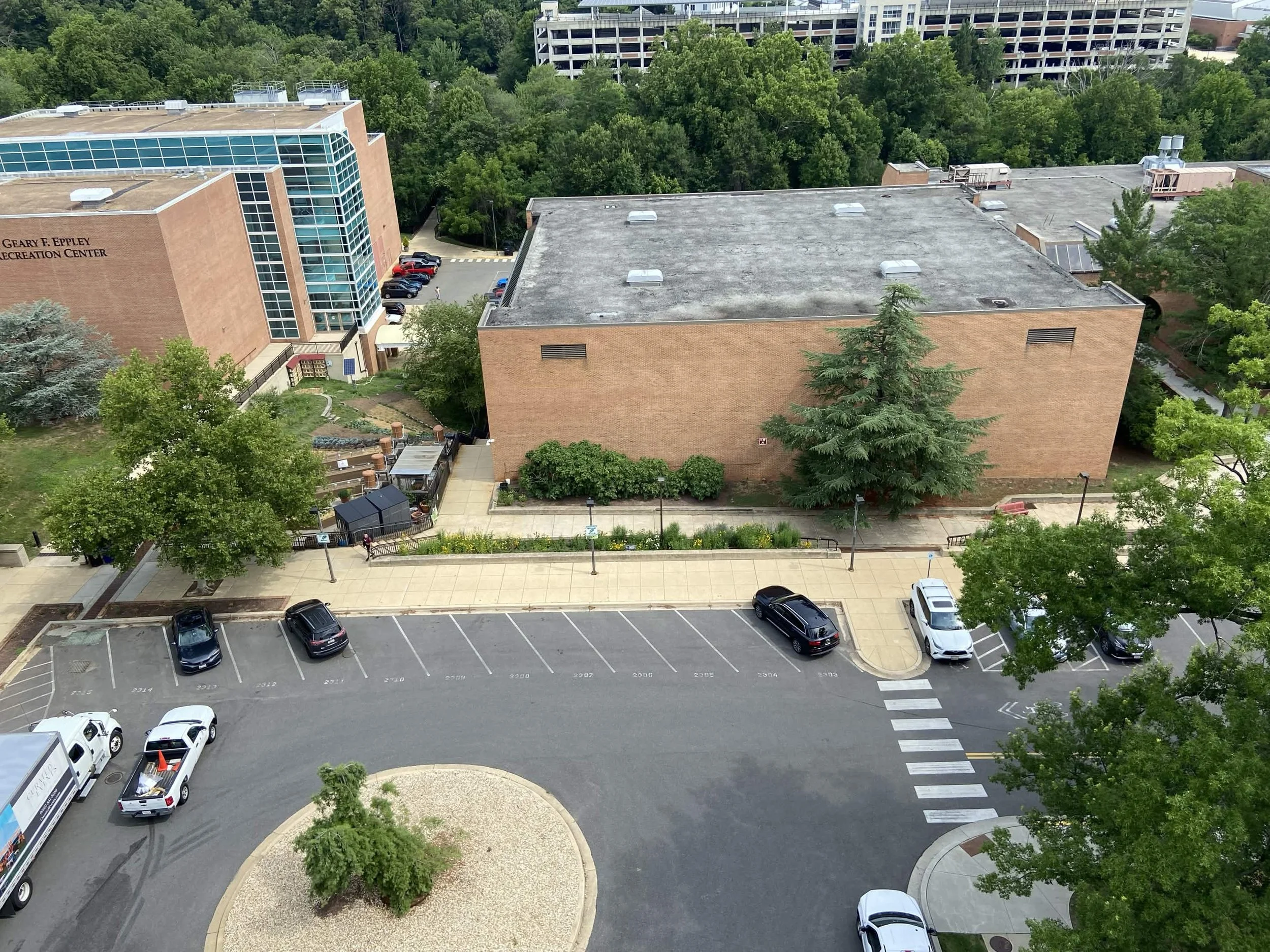
A bird’s-eye view of some of the Bird Beds Andrew and Fin are managing—patches of crucial habitat woven through an urban environment. Photo by Andrew Heffner.
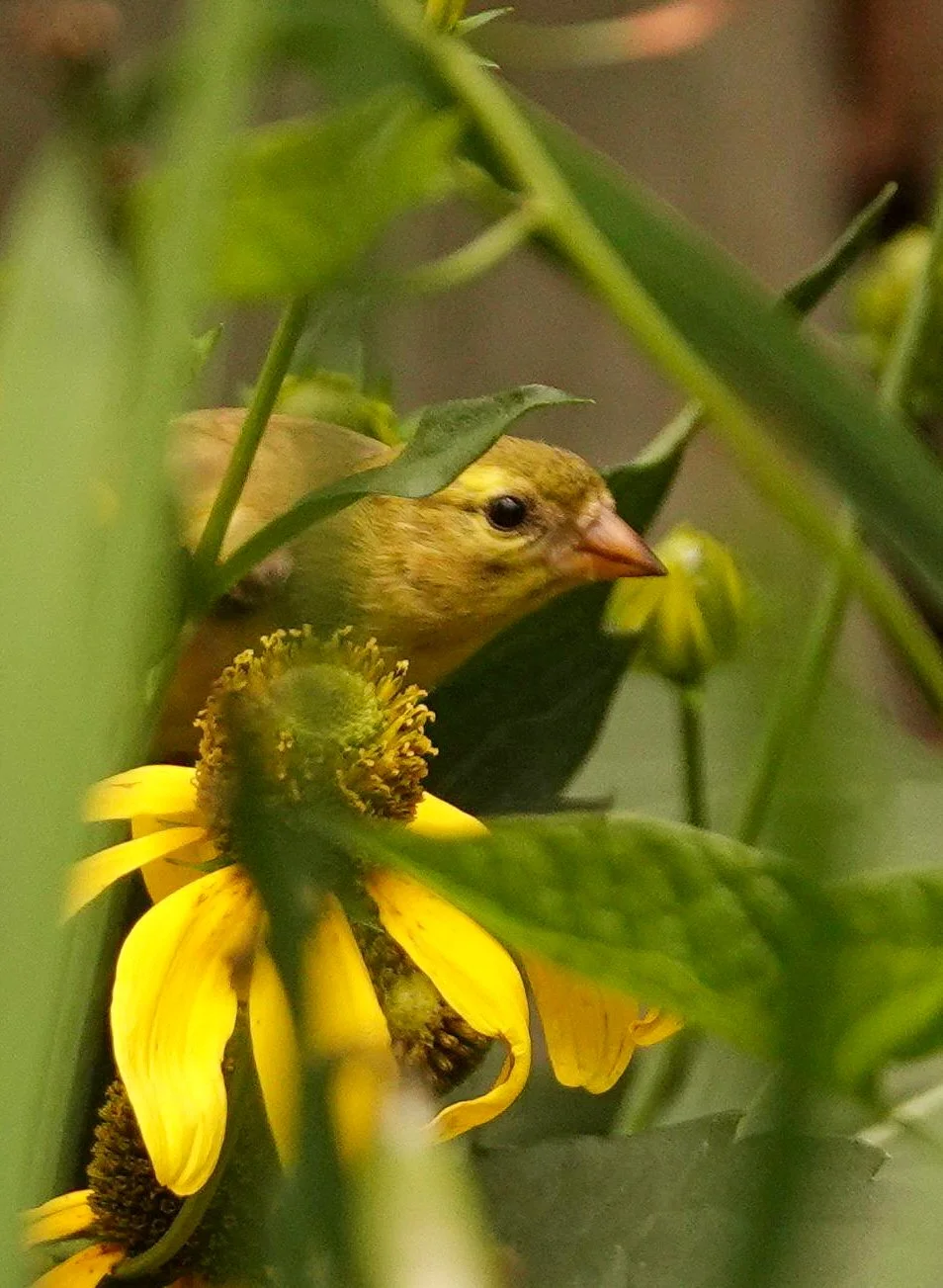
An American Goldfinch peeks through a patch of coneflower. Photo by Karen Cyr.
The Lower Shore Land Trust’s 2026 Pollinator Tour offered an even broader look at what these efforts can become. Participants included a Salisbury resident who transformed a small, crabgrass-covered city yard into an urban forest, a landowner who converted a hayfield into a native meadow, a family adding a pollinator garden to increase the biodiversity in their landscape, and a multigenerational farm replacing turf fields with native plants and managing it with the hope of restoring habitat for Northern Bobwhite. Each project reflects a different property, purpose, and scale, but all provide the foundation for a robust ecosystem.
growing together
Taken together, these stories show that there is no single blueprint for helping birds. A garden does not need to be large, perfectly planned, or finished all at once. It can begin with a single native plant, a patch of lawn converted to meadow, or a decision to leave an aging tree standing. Each action creates an opportunity for birds and other wildlife, and each one is a meaningful place to start.
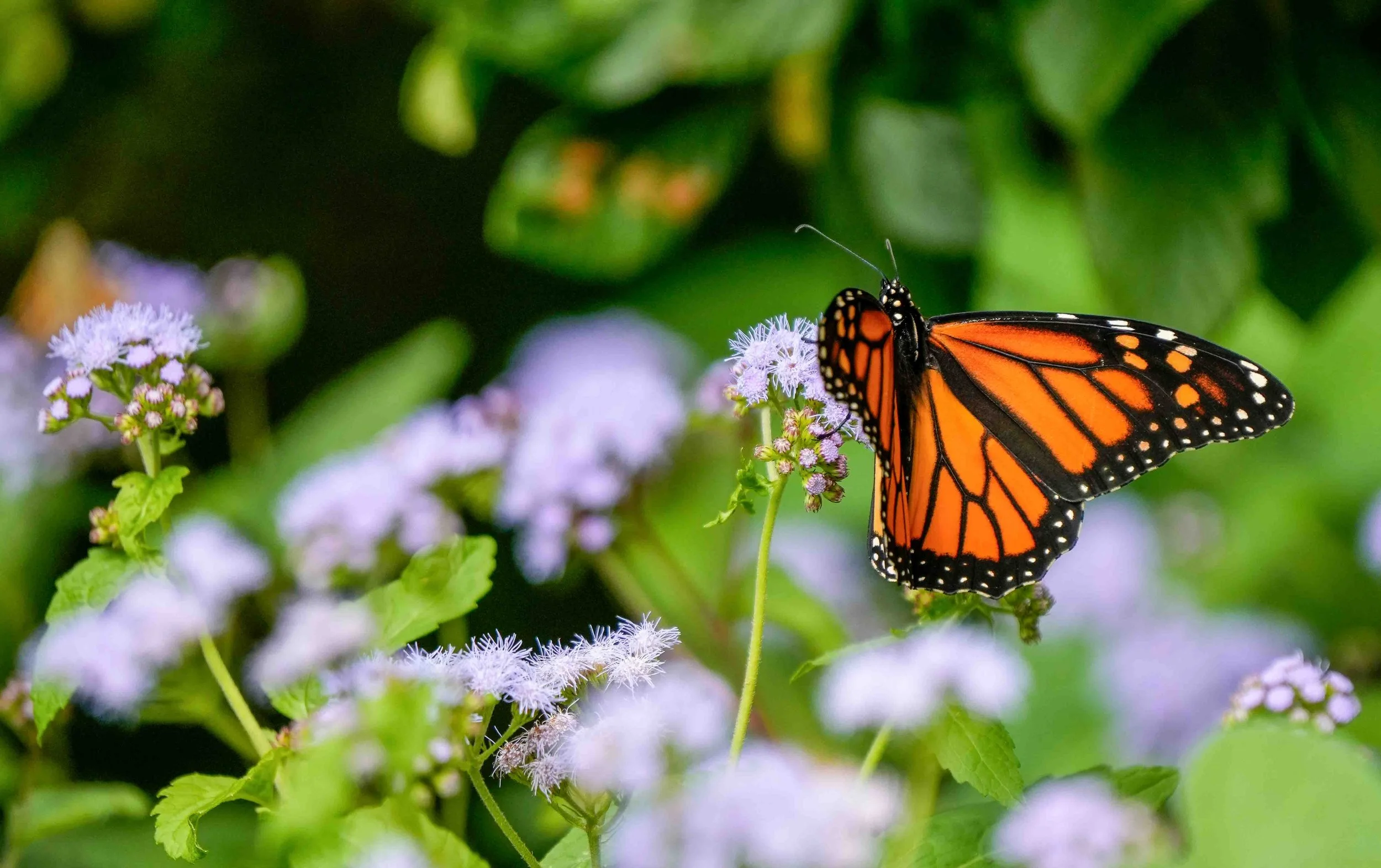
A monarch butterfly visiting a mist flower. Photo by Karen Cyr.
These stories highlight that we accomplish more when we work together, and that together, our individually small actions can have collectively big impacts. A neighbor shares plants and gardening advice, a local organization connects landowners with resources and expertise, and one small patch of habitat becomes several patches in a neighborhood. People learn from one another, build on each other’s efforts, and find new ways to make a difference in their own communities.
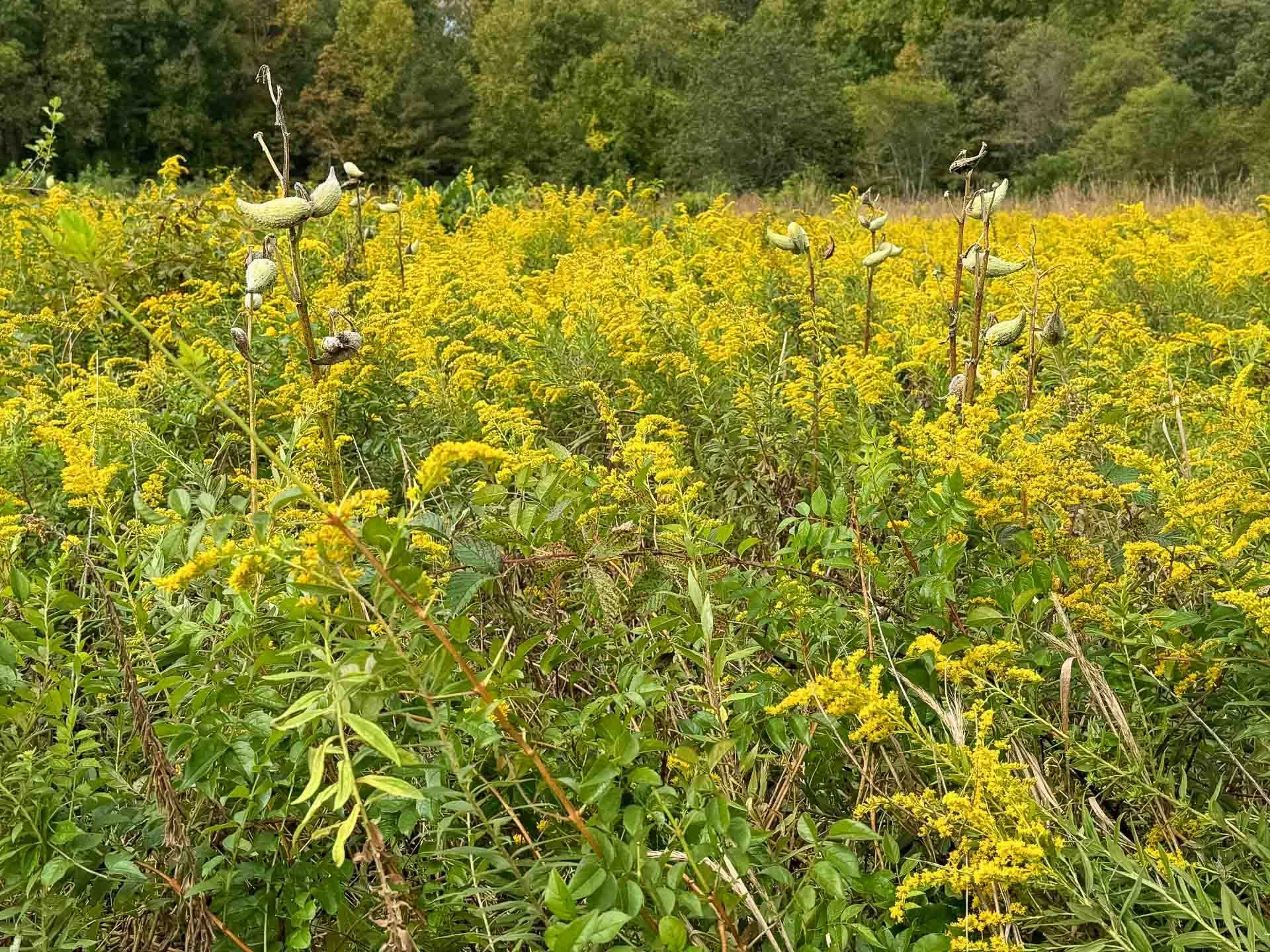
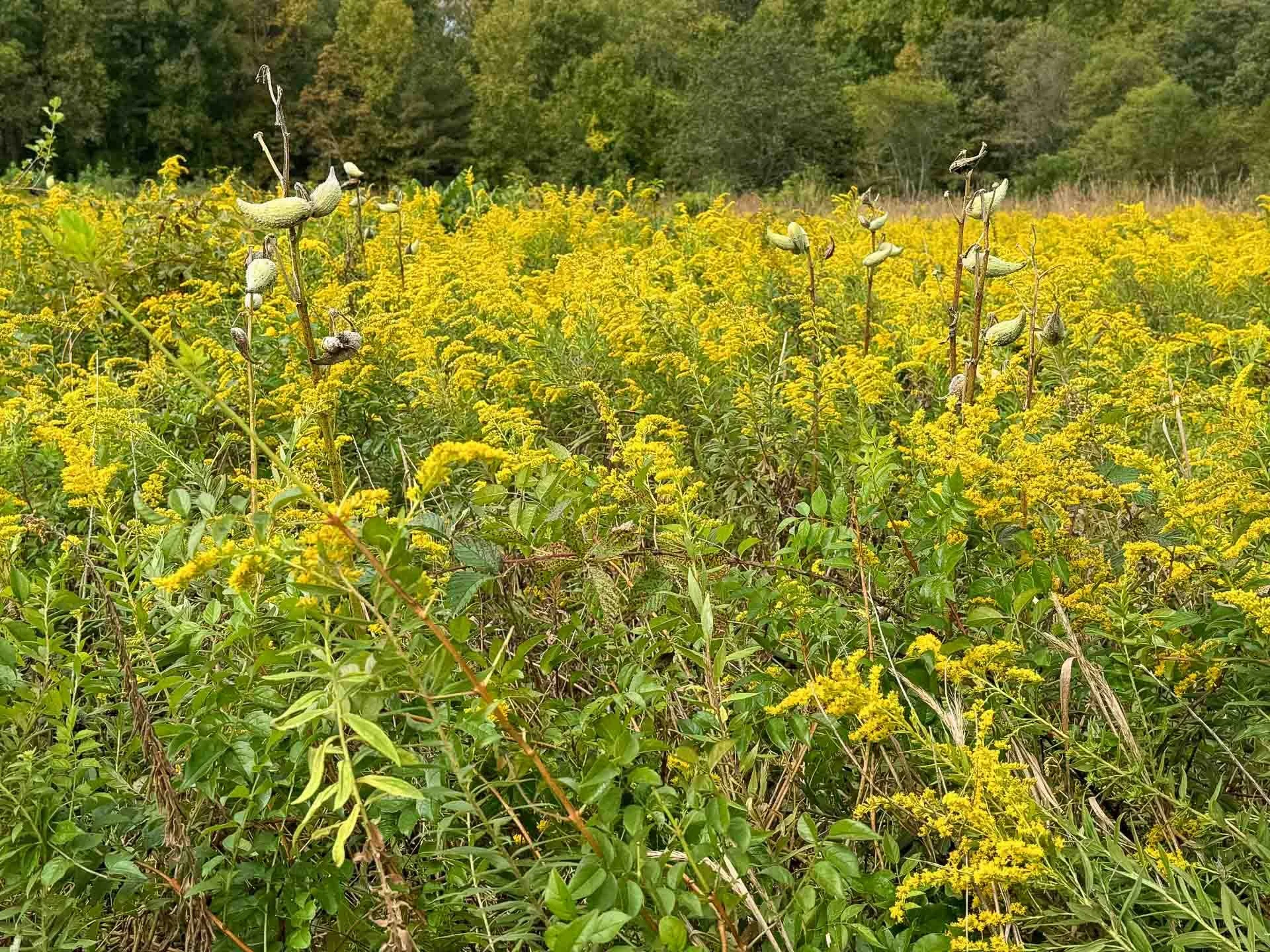
A field of goldenrod and milkweed supports biodiversity—and looks magnificent. Photo by Cristina Niciporciukas.
Maryland Bird Conservation Partnership excels in connecting people, sharing information, and strengthening communities to support both birds and people. MBCP brings together conservation organizations, community groups, professionals, and individuals who share a commitment to Maryland’s birds. Through this work, MBCP is helping turn individual interest into collective action. Whether someone is planting a backyard garden, restoring a meadow, or improving habitat across a working landscape, those efforts are strengthened by a community working towards a common purpose.
There is no action too small to be a starting point, and no reason to do it alone. Together, we can make more places welcoming to birds and build a stronger future for Maryland’s ecosystems.