How We Decided to Fund a Study on the American Barn Owl in Maryland
The barn owl is one of the most beloved farmland raptors worldwide, but in Maryland, it’s in deep trouble. The American Barn Owl lives and nests in the state’s conserved grasslands, agricultural areas, and marshes. As these habitats are becoming scarce, the species has suffered steep declines, and it is now listed in Maryland as a Species of Greatest Conservation Need.
Much about the ecology of the American Barn Owl is a mystery. We still know relatively little about the home ranges and seasonal movements of these strictly nocturnal owls, and understanding more would greatly improve measures for their conservation. With this in mind, Andy Brown and Alex Pellegrini of Maryland Bird Conservation Partnership (MBCP) have proposed a groundbreaking project to study how the American Barn Owl moves across the landscape in Maryland. By attaching tiny transmitters to barn owls captured on their breeding grounds, MBCP hopes to track the movements of the tagged owls throughout a full annual cycle. My husband, Solomon Woods, and I have funded this project in memory of our son, Eli Woods.
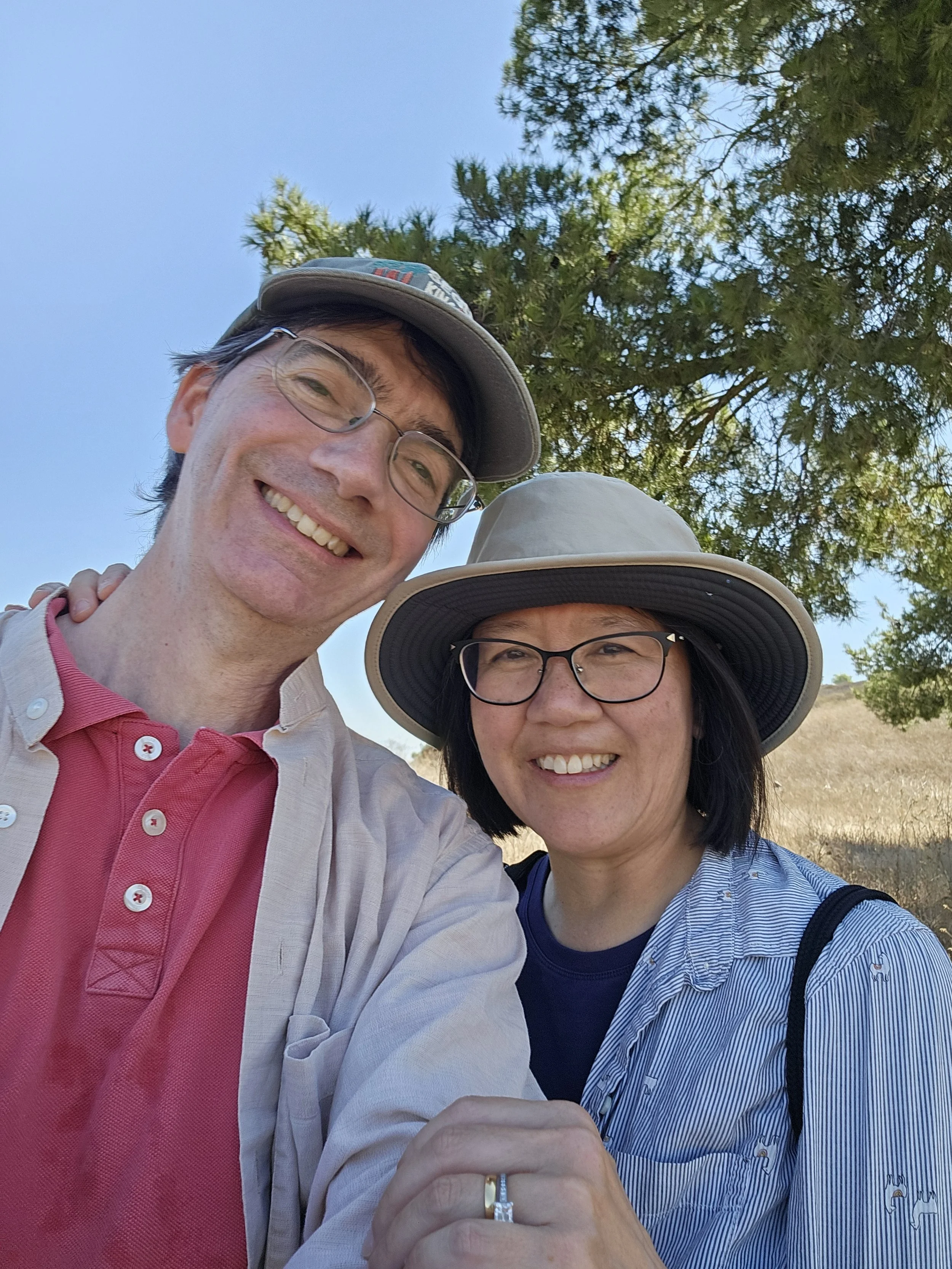
Solomon Woods (left) and Emily Huang (right) have funded an MBCP study on American Barn Owl movement ecology in memory of their son, Eli. Photo courtesy of Emily Huang.
Our decision to support this research is the result of months of exploration and discussion, but it is a decision with deep roots in our past, in our love of birds and wildlife, and especially in our love for our children.
As a kid, I was fascinated by animals. I drew owls and horses, hoarded World Wildlife Fund photo cards, and devoured books about animal behavior in the wild. Then I grew up. I studied to become a physicist, then a neuroscientist — and my interactions with animals became focused on laboratory studies with genetically modified mice.
It was our younger child Eli who drew me back to that earlier, more pure relationship with animals. I saw how Eli reacted to every creature he saw, big and small — sometimes with fear, many times with joy — but always with profound recognition and connection. Eli instinctively knew about the interdependence of all living things, and if he had grown to adulthood, he would now be a powerful advocate for nature. He would be a good friend to barn owls. He would love their heart-shaped faces, be awed by their eerie screams, and have a profound respect for their role as predator (of rodents) and prey (of larger raptors).
When Eli died of brain cancer at the age of eight, after a five-year fight with the disease, a light went out of our lives. We loved and still love him so much that my husband and I never waver in our desire to stay connected to him. Our love of wild birds and passion for conserving them has sprung up from that desire. It’s when I’m with birds that I feel most deeply the flutter of Eli’s heart.
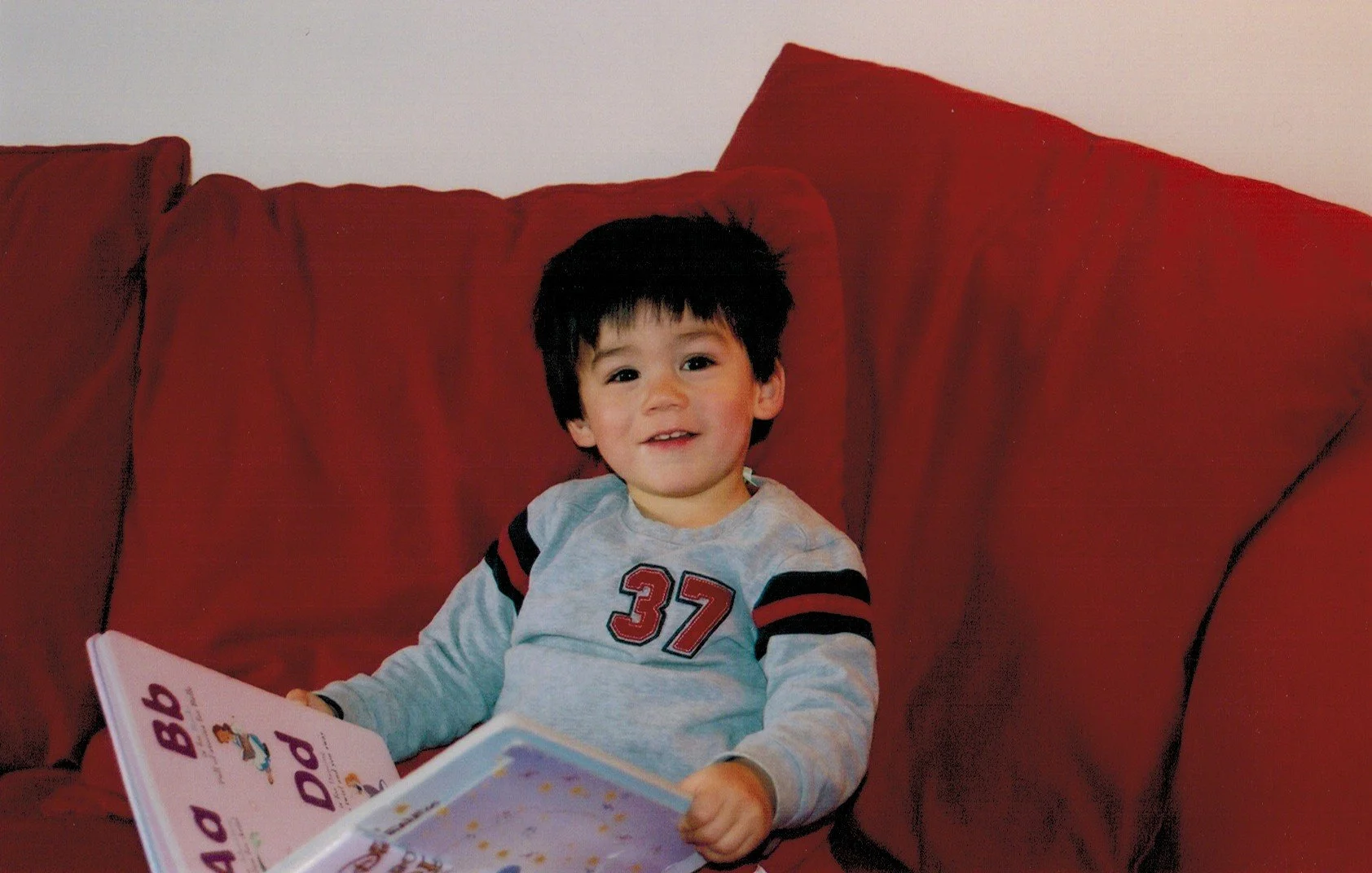
Eli Woods loved nature and wildlife, and would be a good friend to barn owls. Photo courtesy of Emily Huang.
Eli would be twenty-one today, and the time has come to dispose of his college funds, generously increased by family members. Eli loved all his family, and, as all our family loves him back, everyone agreed we should use the funds to honor him and his boundless spirit. And so, this year I began the task of donating half of Eli’s college funds to conserve local birds.
It was an easy decision to contact Gabriel; MBCP embodies the local boots-on-the-ground conservation energy that we want to support. He and I had worked together before, when I acted as a county coordinator for the Maryland-DC Breeding Bird Atlas from 2020-2024. Gabriel was kind and receptive, and together we wrestled with several project ideas. My hope was that our funds would have a near-term impact with results that we could see and appreciate for ourselves.
In retrospect, I realize this was a rather vague request that must have caused Gabriel some consternation. However, we persisted through one or two false starts, and when he rather tentatively suggested funding a transmitter project to study the movement ecology of American Barn Owls, I knew we’d found our project. The fragments of fifty years of personal history came together and clicked to form one picture. A picture of Eli fighting for owls and their future.
Solomon and I are honored to support this study, which leverages Maryland’s unique landscapes and aims to answer important and specific questions about American Barn Owl movement ecology. For example, after the breeding season, do owls remain local, establish distinct seasonal home ranges, or undertake longer-distance movements? Do marsh-breeding birds utilize farmland in the winter months, or vice versa? Ever-improving technology for tracking animal movements has put the answers to these questions within reach, giving us renewed hope for helping Maryland’s barn owls.
Would you like to contribute to this gift to Maryland’s barn owls? Support Eli’s project here.