A Community Resource that Benefits Birds
Did you know that you can help Maryland’s birds by going to the library? Communities that are recognized by Bird City Maryland, an initiative of the Maryland Bird Conservation Partnership, are creatively completing actions in the “Education and Engagement” category with seed libraries.
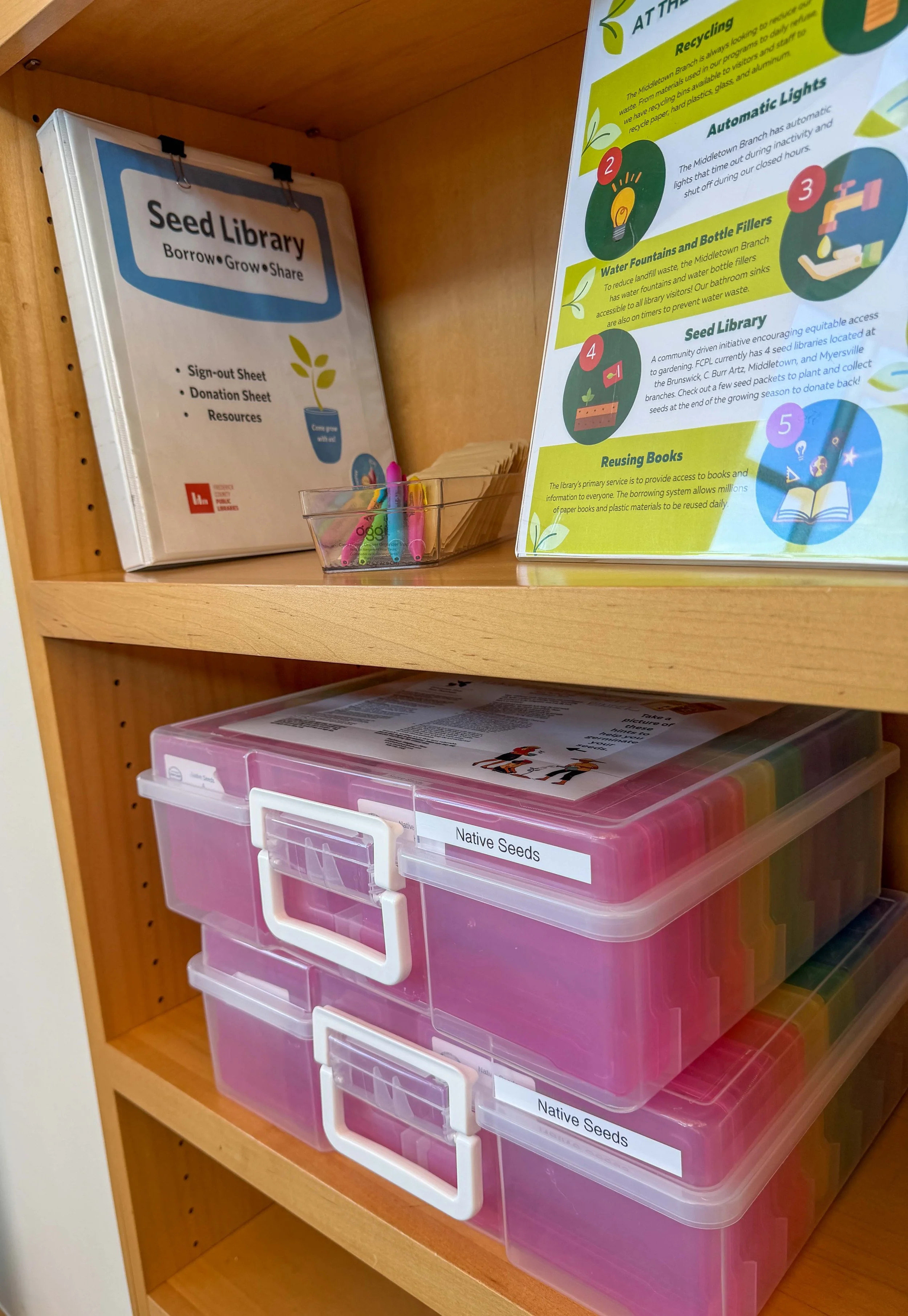
“Borrow-Grow-Share” is the motto of the Seed Library at the Middletown branch of the Frederick County Public Libraries. Photo by MBCP.
A seed library is a community resource, usually hosted in a public library, that provides free flower, vegetable, herb, grasses, shrub, and tree seeds to anyone who would like to sow and grow them. Seed libraries are important to birds because plants, especially native plants, provide food in the form of host insects, seeds, and nectar. Plants also provide vital habitat for breeding and migrating birds.
For humans, seed libraries improve food security and increase access to locally grown food, preserve food heritage by saving local heirloom seeds, and educate and engage communities about gardening, seed saving, and the benefits of native plants. The goal is to have borrowers ultimately “return” collected seeds to the library for new gardeners to “check out.” Seeds from native plants that are collected from local ecosystems are more adaptable, healthy, and likely to thrive.
Courtney Ward, a librarian at the Middletown branch of Frederick County Public Libraries explained how the seed library fits into Middletown’s status as a Bird City: “it’s one wonderful resource that adds to the small but very impactful initiatives we have.” The seed library is an action in the Bird City application “that positively affects our community and our local wildlife.”
Three Bird City Maryland communities have seed libraries: Middletown, Brunswick, and the College of Southern Maryland. Each library has a unique approach to “checking out” seeds and also provides education to community members about seed planting and sowing, native plants and their benefits, companion planting, pollinator gardens, and invasive species removal.
The Middletown Library: Growing Community Through Gardening
Middletown divides their seed library into three categories: herbs and annual flowers, vegetables, and native plants. Homeschool groups and independent study groups from schools come to borrow seeds for projects. A library card is not necessary to check out seeds. Seed saving classes are offered through the Master Gardeners of Frederick and the “check out” binder includes instructions for planting and sowing.
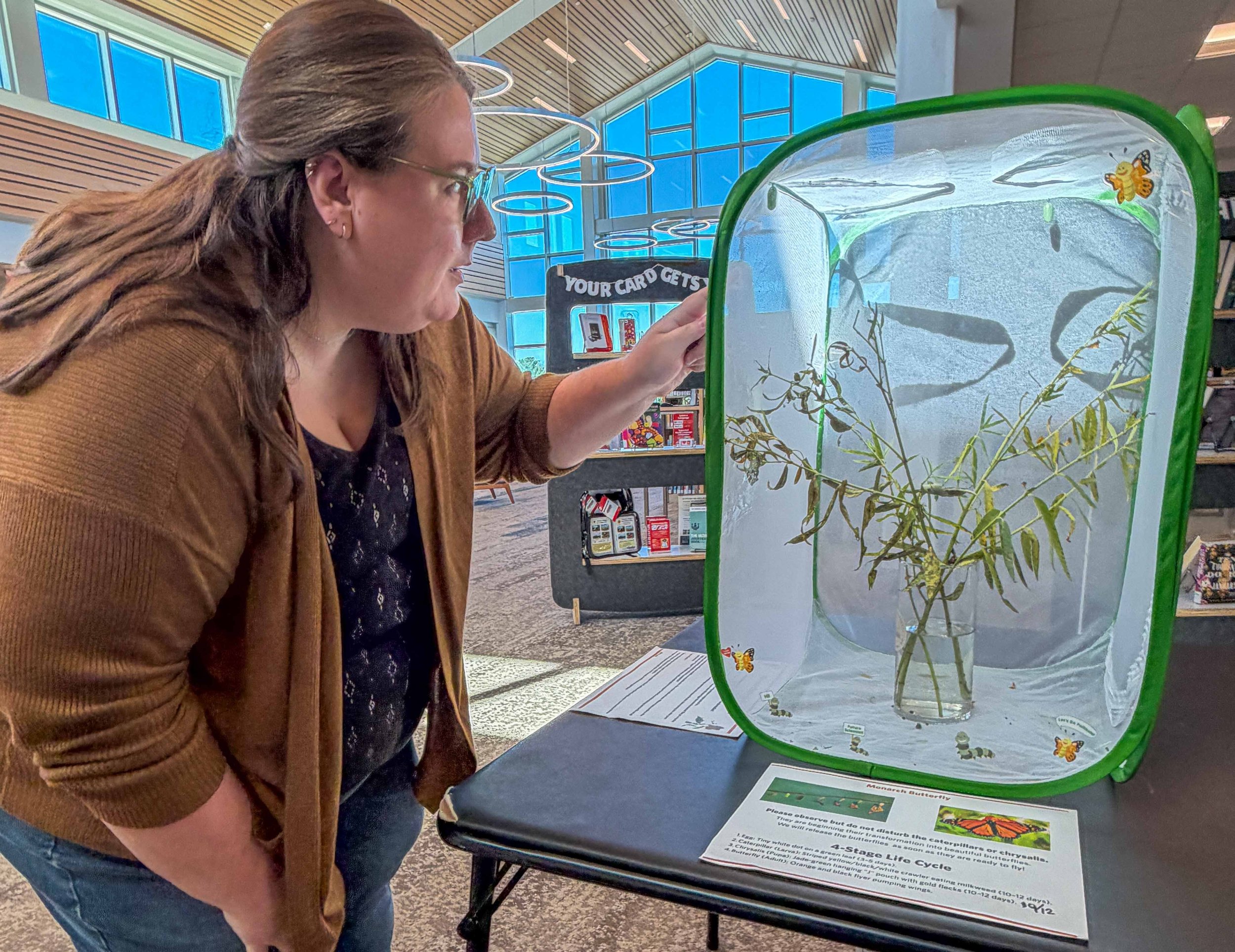
Librarian Courtney Ward points to the Monarch chrysalis in the Middletown branch library display. Monarch butterflies depend on native plants to grown from caterpillars into butterflies and complete their lifecycle. Photo by MBCP.
The library is committed to helping community members successfully garden with native plant seeds. The native seeds are donated by the Middletown Sustainability Committee. The average distribution of seed packets is one thousand per year. In addition to the inside seed library educational space, the Middletown branch has native plants in the drainage system field outside the building. Coneflower and yarrow provide natural filtration, attract birds such as the American Goldfinch, and allow library patrons to see the plants “in action.”
Ward, who is also a Master Gardener and a Master Naturalist, sums up her favorite thing about the seed library: “anybody can get involved with the environment and enjoy themselves in it, which I believe is a human right.”
College of Southern Maryland: Saving Seed and Sharing Abundance
The College of Southern Maryland (CSM) is Bird City Maryland’s first recognized “Bird Campus.” It is home to the “Seed Box,” a free seed library open to students, faculty, staff, and community members. Patrons can use the Seed Box once per season and check out up to fourteen seed packets per season. A QR code on the seed packets takes the gardener to the CSM website with a growing guide and other resources. The seed packets themselves are creatively upcycled envelopes made by Maddie Kaba, the Seed Box coordinator and CSM library assistant. Fruits, vegetables, herbs, flowers, and native plants including flowers, grasses, shrubs, and trees are all available. The Seed Box was started in 2025 and over two thousand seed packets have been “checked out.”
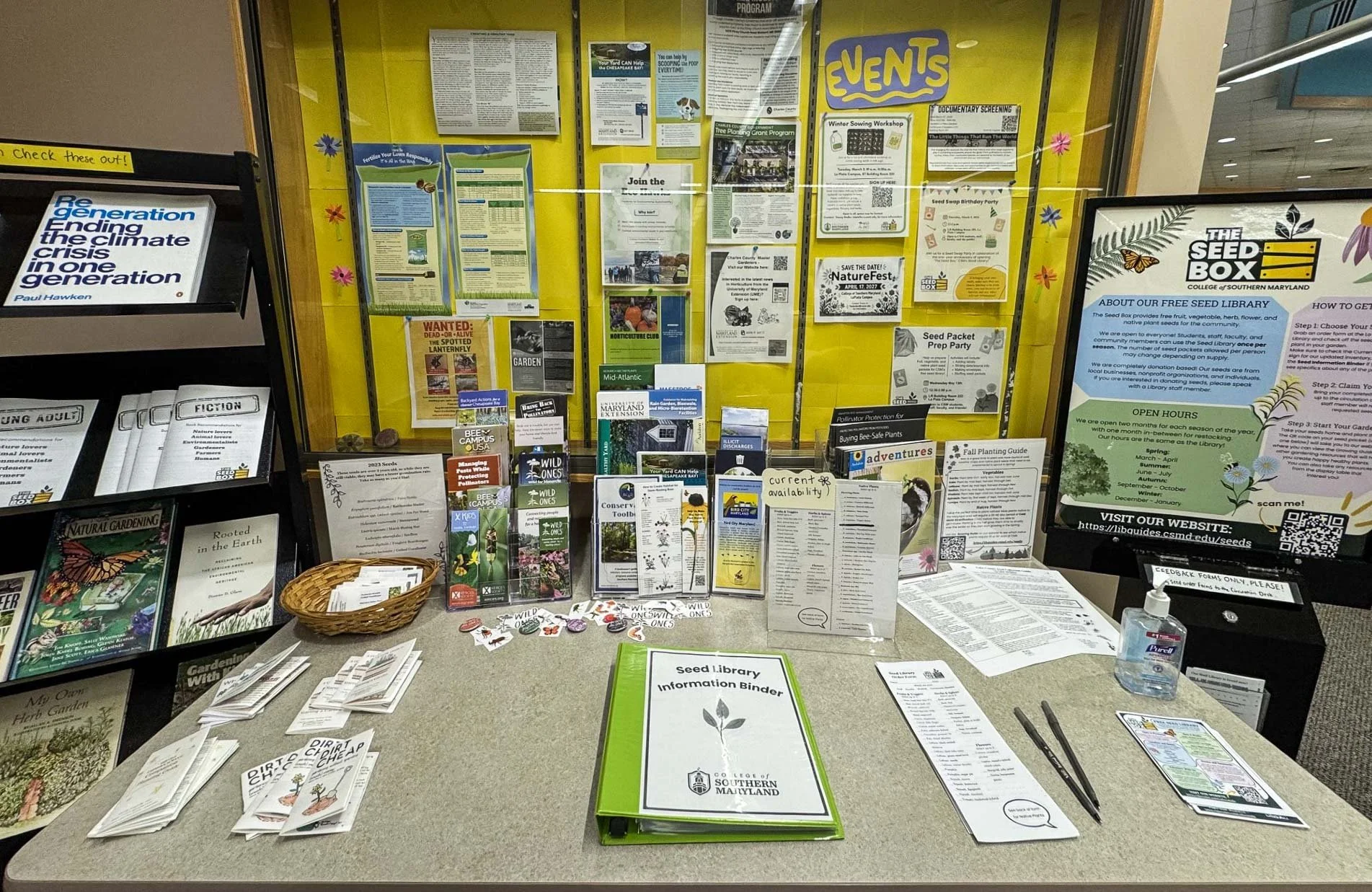
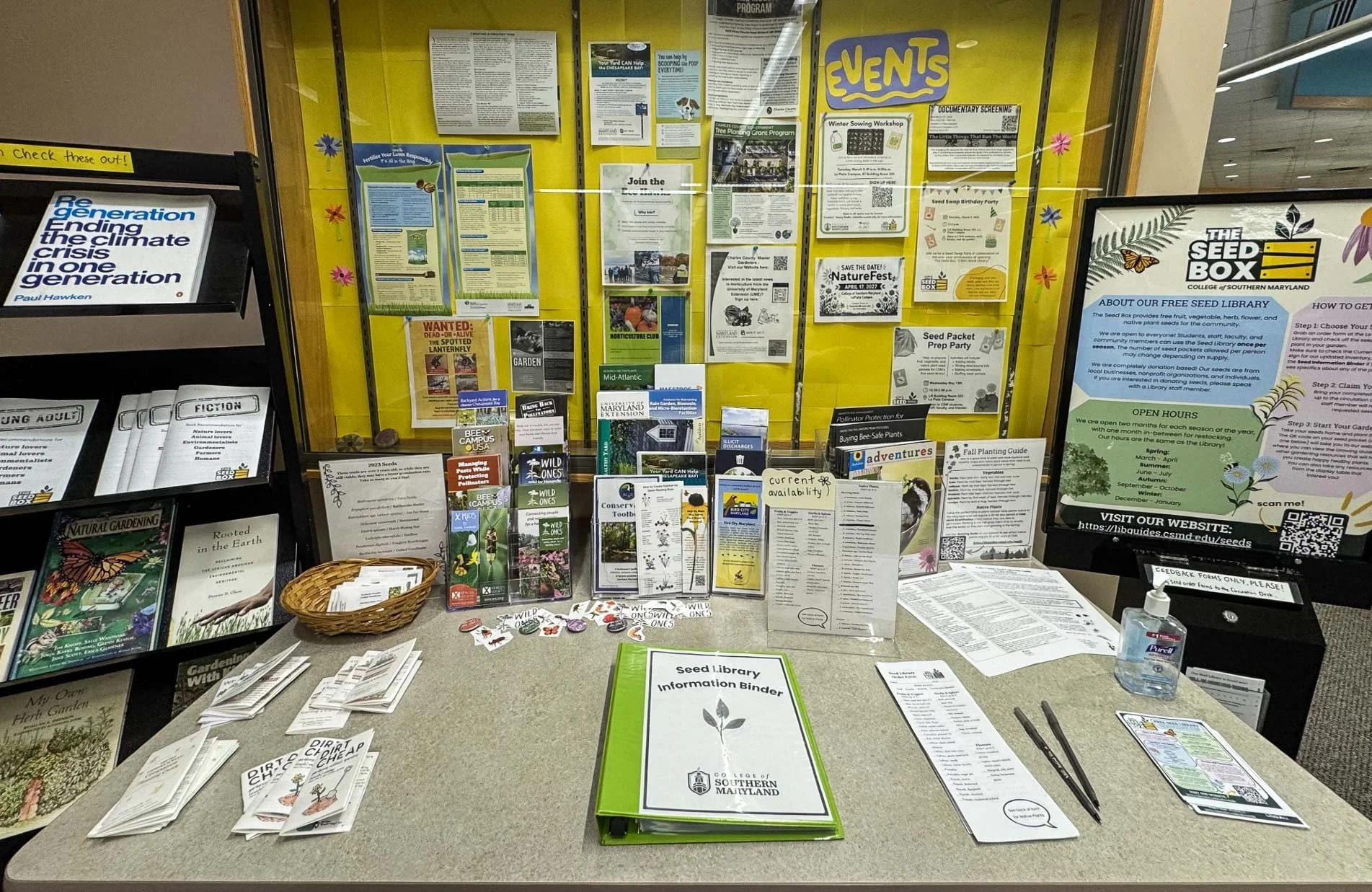
The Seed Box seed library, located in the campus library at the College of Southern Maryland. Photo courtesy of Maddie Kaba.
Professor Tracey Stuller, who is the Bird Campus community lead, brought the idea to the library after it was suggested to her by Marlene Smith, president of Wild Ones Chesapeake Bay. Seeds are donated by local organizations and individuals, and CSM students collect seeds from the Bee Campus/Bird Campus pollinator garden. September through November is the best time to harvest seeds.
Kaba describes the process at the Seed Box: “Seeds are donated to the library or collected from campus and stored on the shelves in dark, dry conditions. We’ll host a seed cleaning workshop to remove seeds from flower heads if needed, and package or repackage the seeds into our CSM seed packets. By dividing the abundance of seeds from our plants and commercial packets into smaller amounts, we are able to share the joy of growing plants with so many people.”
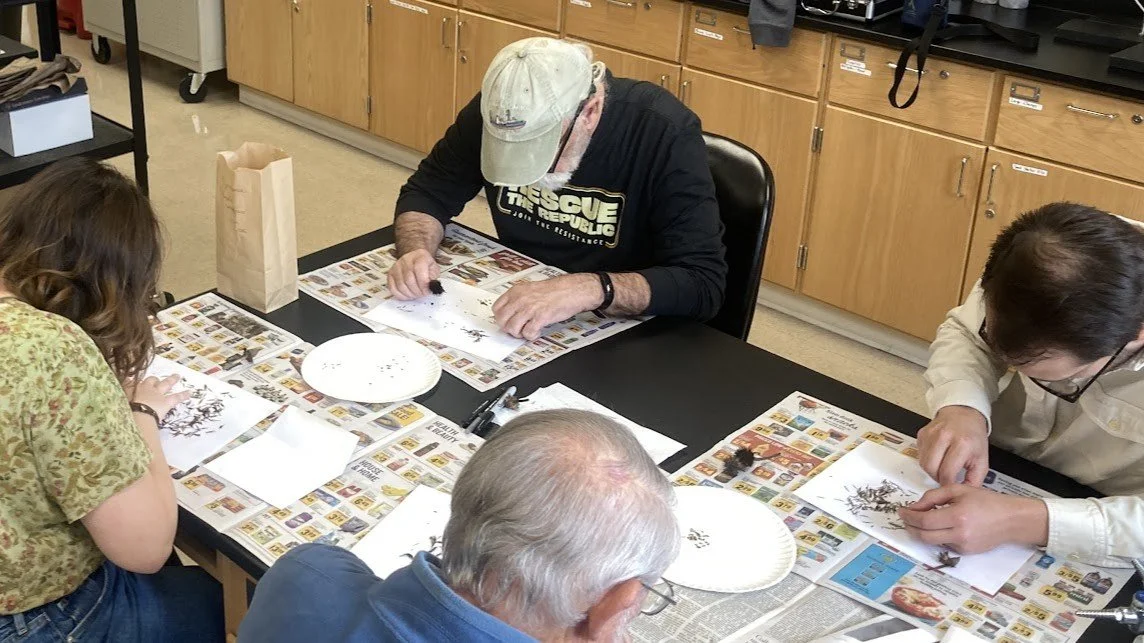
Volunteers clean seeds collected for the Seed Box, the seed library on the College of Southern Maryland’s campus. Photo courtesy of Bill Smith/Wild Ones Chesapeake Bay.
The Seed Box display table in the library has seed order forms, as well as brochures and handouts for Wild Ones Chesapeake Bay, University of Maryland Master Gardeners, Xerces Society Bee Campus, and Bird City Maryland Bird Campus. Seed packets are also distributed at both on- and off-campus community events such as NatureFest 2026, which was hosted by the Town of La Plata, Bird City Maryland’s first recognized Bird City. The Seed Box will participate in an upcoming seed collecting event at the Bird City Pocket Park in La Plata, a wonderful example of the partnership and collaboration between CSM and the Town of La Plata.
The Brunswick Library: Bird-Friendly Inside and Out
The seed library in the Brunswick branch of the Frederick County Public Libraries “provides as many options as possible” says associate librarian Susan Singley. She believes that “food security and the emotional and mental health benefits of going outside” are also important benefits. The seed library was started by circulation clerk Shelly Potts, and it was an action that helped with Brunswick’s Bird City recognition. The library offers vegetable, flower, and herb seeds and is incorporating native plant seeds as much as possible.
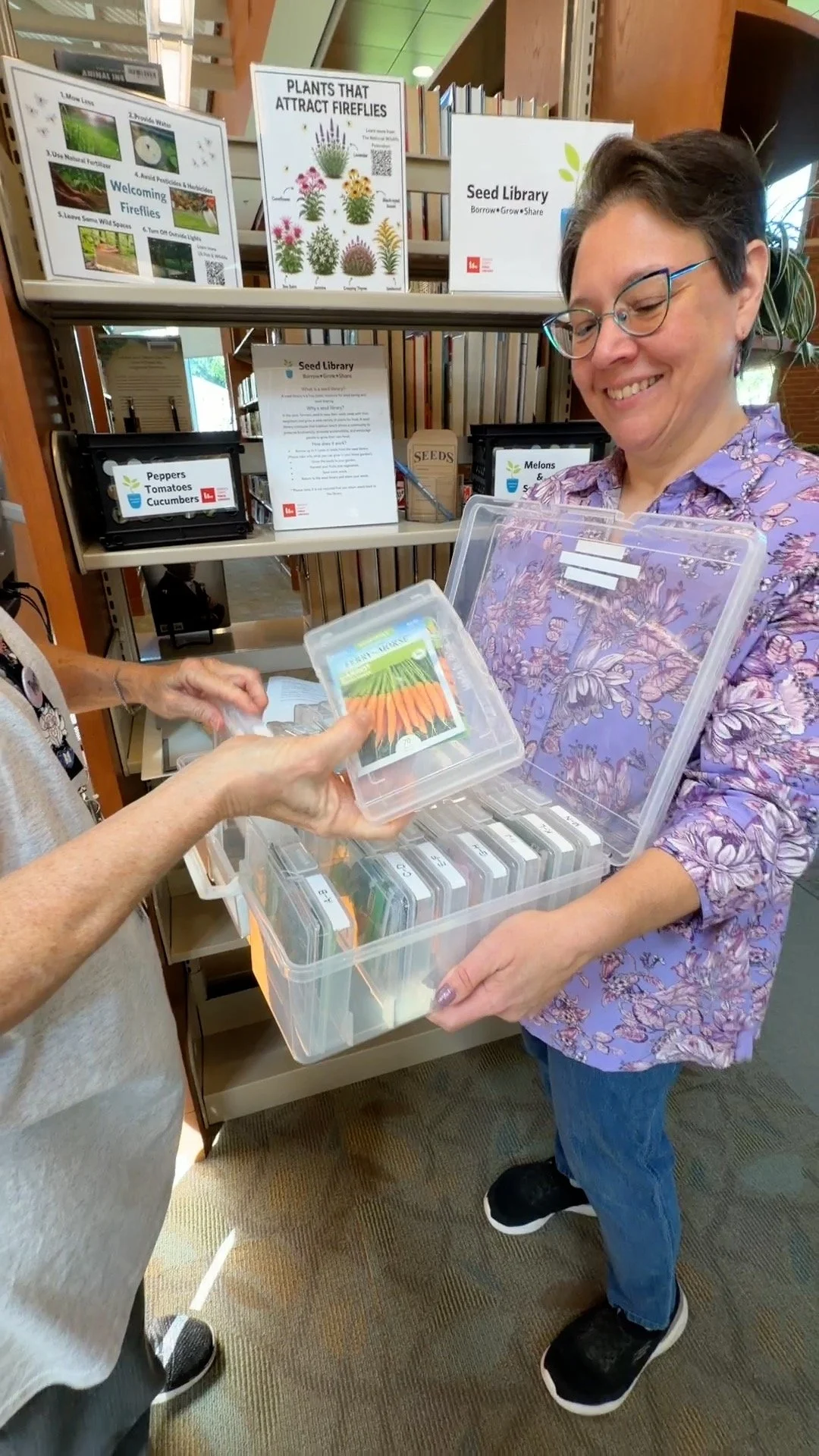
Circulation Clerk Shelly Potts shows off the seed collection in the Seed Library of the Brunswick branch of the Frederick County Public Libraries. Photo by MBCP.
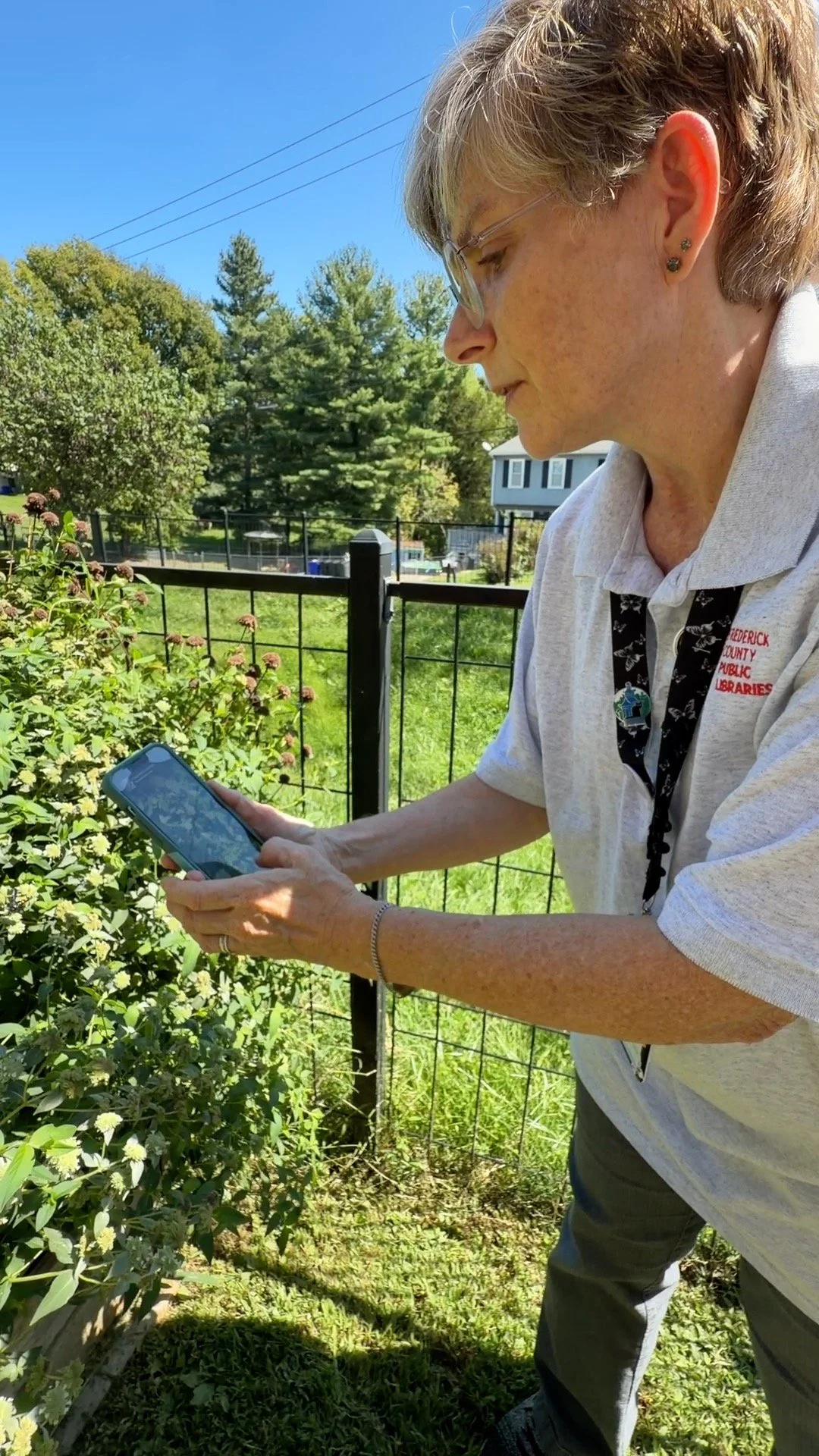
Associate Librarian Susan Singley identifies an insect feeding on the flowers in the Brunswick branch native plant pollinator garden. Photo by MBCP.
Check out is available to both library patrons and non-patrons and is done through a sign-out sheet in a binder that includes educational information about the seeds. Potts relates that as the program has grown, it is “really fun to see families come to the seed library. They take the whole organizer to a table and they start sorting through them and deciding what they want to plant. You know the next generation is learning about gardening and the seed library.”
Singley enthusiastically took on the project of installing a native plants pollinator garden at the library to provide food, cover, and nesting material for local wildlife. The garden contains bee balm, black-eyed Susan, purple coneflower, butterfly weed, and many other natives that are beneficial to bees, butterflies, hummingbirds, and seed-eating birds. Seeds will be collected from the garden to become part of the library. She hopes that the seed collection will “spread wider and benefit all the birds and insects in Brunswick,” as more people plant native seeds and then collect seeds from their own gardens and share them through the library.
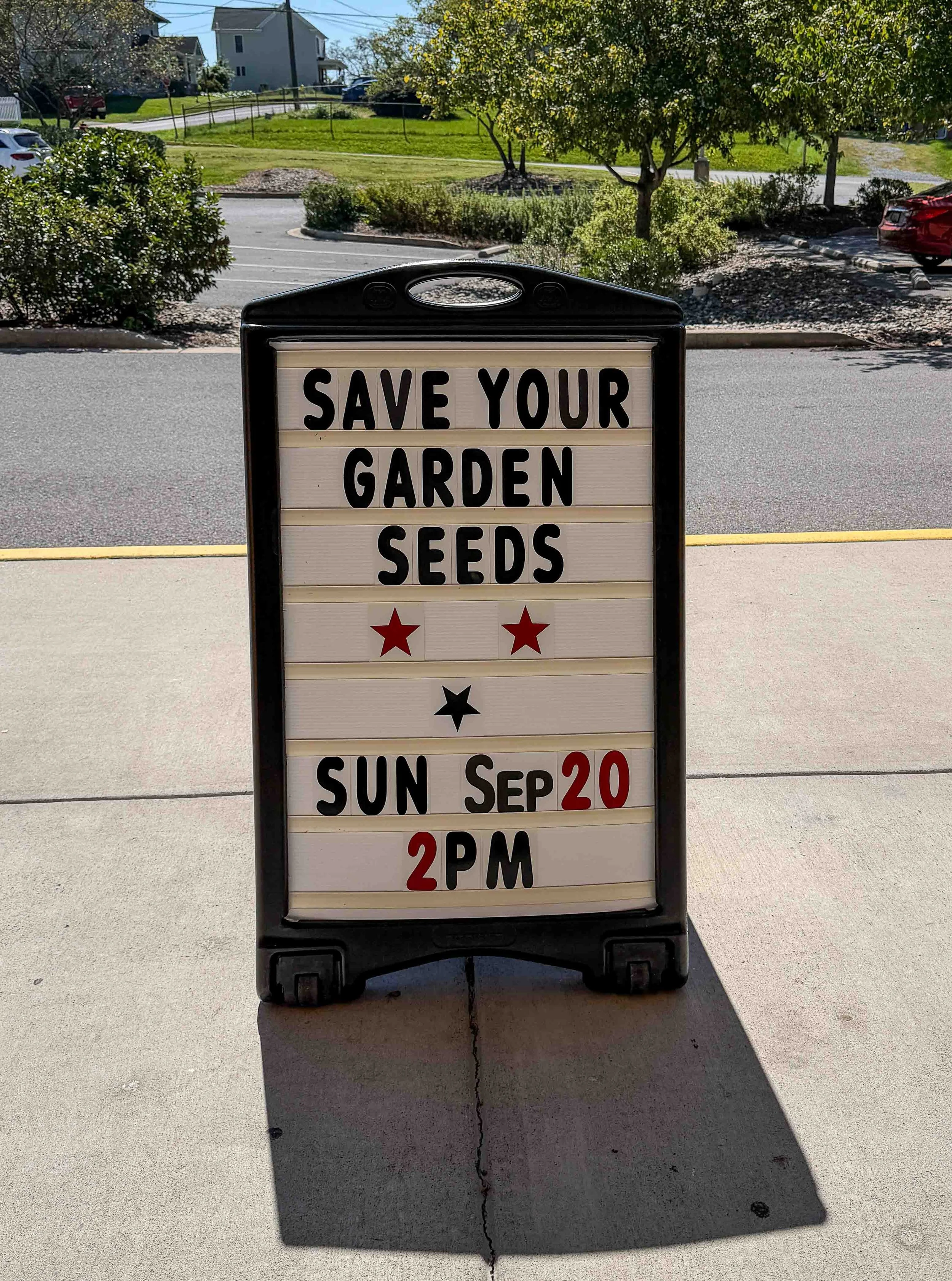
The Brunswick branch hosted a Seed Saving workshop in September to teach the community how to harvest and prepare seeds for future planting. Photo by MBCP.
The library is implementing many other bird-friendly actions. A section of the library’s windows have anti-collision decals to prevent bird strikes. The library offers extensive programming related to sustainability such as “Flip your Lawn,” “Benefits of Companion Planting,” and “Seed Saving.” The library has also hosted the screening of “The World is a Dangerous Place for Birds, We Can Make a Difference,” and “What’s the Rush?” about biodiversity, natives, and invasives.
Seed libraries fulfill the goal of Bird City Maryland: “to make communities healthy for birds and people.”
Visit: https://www.seedlibrarynetwork.org/explore-the-map.html to see if there is a seed library in your community. Their website: https://www.seedlibrarynetwork.org/
Check out and plant some seeds to benefit Maryland’s birds!